All the latest quantum computer articles

See the latest stories on quantum computing from eeNews Europe
Showing posts with label NFC. Show all posts

Tuesday, August 09, 2011

TI introduces industry’s lowest power NFC transceiver

The TRF7970A evaluation module 
By Nick Flaherty www.flaherty.co.uk

TRF7970A NFC platform speeds designs with easy-to-configure software

Texas Instruments has launched what it claims is industry’s lowest-power contactless short-range communication transceiver. Aimed at infrastructure devices, the TRF7970A extends battery life through eight selectable power modes ranging from under 1µA in power-down mode to 120mA in full-power mode. This gives it twice the battery life of competing products, says TI.
The transceiver comes with easy-to-configure software to help developers get started quickly. Royalty-free stacks are compatible across a broad range of ultra-low-power MSP microcontrollers. Additionally, developers are able to directly access all control registers, allowing for easy fine-tuning of various parameters for the highest performance in every application.
The new transceiver builds on TI’s platform of RFID products by supporting peer-to-peer communication and card emulation in addition to reader/writer capability while maintaining pin-for-pin compatibility with the previous TRF7960. Peer-to-peer communication continues to increase in popularity in applications including medical equipment, secure pairing and payments. This allows users to more easily take advantage of continuously evolving features and apps. For example, NFC devices can configure Wi-Fi and Bluetooth technology sessions between devices without consumer interaction, share and interact with feature- and content- rich data such as coupons at point of sale, and allow consumer devices to easily exchange files and contacts.

Features and benefits:
  • Eight selectable power modes (Power modes range from <1 µA to 120 mA)
  • Supports peer-to-peer communication, reader/writer capability and card emulation
  • Supports two crystal oscillator frequencies: 13.56MHz or 27.12MHz frequencies give engineers more flexibility in speed and cost options for their designs
  • Large 128 byte FIFO buffer for NFC communications allows developers using microcontrollers with low MHz to create products capable of handling large data transfers
  • Compliance with ISO/IEC 18092 and ISO/IEC 21481 standards gives developers the ability to create globally interoperable products
  • NFC software stack libraries and an innovative RF field detector allow for easy development efforts and robust, cost effective designs
  • NFC Peer-to-Peer Initiator as well as Active and Passive Target Operation are available for MSP430™ microcontrollers
  • Supports multiple reader/writer protocols and includes demo software stacks for reader/writer mode ISO/IEC 15693, ISO/IEC 18000-3, ISO/IEC 14443A/B and FeliCa
With more than 1 billion RFID tags and more than 100 million RFID reader devices manufactured, TI’s RFID technology is used in a broad range of applications worldwide. Designers can accelerate time to market by tapping into TI's complete software and hardware tools, extensive third-party offerings and technical support.
The TRF7970A NFC development kit is immediately available for order at www.ti.com/nfc-pr-es and priced at USD $99.
Related articles
Enhanced by Zemanta

Tuesday, April 26, 2011

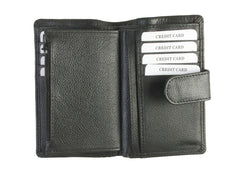
New line of shielded wallets to protect RFID and NFC credit cards from skimming


Faraday caged apparel to protect credit cards

By Nick Flaherty www.flaherty.co.uk

DIFRwear in the US has launched the first line of wallets, ID badge holders, and passport cases specially designed to protect sensitive information now found on many major credit cards and other forms of identification. These chips often contain private financial and other personal information that can be easily swiped without any person-to-person contact – also known as "card skimming." Resound will target the mainstream media to raise awareness about how the DIFRwear line of wallets can help consumers maintain privacy and ensure security, wherever they go.
RFID and NFC (near field connunications) add convenience by making it easy to remotely and wirelessly transmit information from credit cards, passports, and more. Yet it has also opened the door to more unauthorized data snooping, credit card skimming, and identity theft than ever before – especially for people who are constantly on-the-go. With summertime travel rapidly approaching, many consumers are paying high prices for credit protection, or choosing to leave certain cards at home. Now, they can just put their items in a DIFRwear wallet or passport case, and rest assured that the lining's built-in blocking shield will prevent hacking attempts – from the most rudimentary to the most sophisticated.
"As credit cards become 'smart cards' thanks to RFID technology, the wallets we carry them in need to be even smarter – making sure there's no chance of anyone stealing critical personal information," said Kevin McLaughlin, Principal and Co-Founder of Resound Marketing which is promoting the range. "We think consumers will be excited – and relieved – to know that there's a proven and trusted line of products out there that will keep that information safe, whether they're traveling across the country or around the corner."

Enhanced by Zemanta

Wednesday, April 21, 2010

Online retail site goes live for Topaz NFC tags

Cirencester-based IP provider Innovision Research & Technology is bringing NFC (Near Field Communication) RFID tags based on its Topaz technology direct to the market in one of the first online retail sites dedicated to the purchasing of such  tags and related NFC items. The site, www.buynfc.com  was officially launched to developers and consumers at WIMA, the global NFC business and technical developers’ summit.
Buynfc.com offers a one-stop-shop for NFC application developers’ and consumers’ needs and will help create a strong community of NFC developers online.  The site will provide a wealth of advice on how to use NFC tags, how to develop applications, and practical issues like which tags are best suited for a variety of applications.
Selling the Innovision Topaz tags in a wide range of form factors, including paper, labels, plastic discs, key fobs and reels, buynfc.com is aimed primarily at those looking to develop non-payment applications of NFC and to create mass-market opportunities for the emerging short-range wireless technology as well as meeting the tag needs of consumers.
Innovision believes the market for non-payment applications has huge potential, and includes smart posters, which allow users to access digital content via an NFC-enabled handset, and ‘tag in a box’, where tags are included as part of a mobile phone package.
“The opportunities are endless – payments and ticketing have been grabbing the headlines, but it’s the simple, clever and innovative applications that often capture application developers’ and consumers’ imaginations,” said Innovision’s VP Marketing, Stephen Graham.  “Tags have the potential to turn everything into a smart object, which will interact with commonly available mobile handsets, whether it’s a photograph, a business card or even a key fob!”
Innovision’s Topaz tag initially offers 96 Bytes of user programmable memory and is mandated by the NFC Forum as the Type 1 NFC Forum Tag Format.  Topaz is designed to be flexible and cost-effective for a very broad range of applications, whether in stand-alone NFC tags or as part of a more complex system.


Reblog this post [with Zemanta]

Tuesday, April 20, 2010

Open Android API to drive NFC RFID apps

NXP and Trusted Logic lead the integration of NFC technology into Android

Chip makers NXP and Trusted Logic have developed and launched an open source API for NFC RFID chips on the Android operating system. This will enable mobile phone users to access a new range of contactless applications such as mobile payments, transport and event ticketing as well as data sharing directly from their Android phones via the short range NFC standards.

NXP and Trusted Logic say they pioneered the integration of NFC technology into Android with the first versions implemented and showcased last year. The companies are now using the open source community to define an industry standard for the integration of NFC technology within Android. Opening this API to the community will enable application and service providers to develop their NFC applications with a standard framework as they did with the JSR 257 specification. This will drive the creation of compelling NFC applications by handset manufacturers and independent application developers alike.

The API has been released following consultation with various eco-system partners, including mobile network operators, handset manufacturers and NFC controller providers.

A second-generation NFC Android stack based on this Open NFC API is now available from NXP and Trusted Logic. It provides a complete integration into the Android framework, comparable to the Bluetooth and Wi-Fi services already integrated in Android.

“This is the most complete Android proposal on the market. Our key partners in Android confirm this is a solid proposal and that release of this open NFC API is essential for a successful deployment of NFC applications,” said Henri Ardevol, general manager secure transactions, NXP Semiconductors. “We are excited to contribute to this industry standard and are looking forward to propose a reference implementation above the Android Hardware Abstraction Layer to the Open Handset Alliance (OHA)”.

“With our second generation NFC Android API, our solution is mature enough to be broadly shared with all the players,” said Philippe Dubois, general manager professional and consumer devices, Trusted Logic. “This allows each of them to propose further enhancements and contribute through the Apache License model. Application developers can also have access to our Android™ environment on PC and make use of the latest API version.”

The API specification is accessible via a single mail request to NFCforAndroid@trusted-logic.com. An Apache License 2.0 model was selected in order to provide a legal framework to new contributions.
Reblog this post [with Zemanta]