All the latest quantum computer articles

See the latest stories on quantum computing from eeNews Europe
Showing posts with label RFID. Show all posts

Friday, May 13, 2016

Paper gets smart - video

By Nick Flaherty www.flaherty.co.uk


IMAGE
THE SPEED OF THE SPINNING TAG ON THE PINWHEEL IS MAPPED TO ONSCREEN GRAPHICS. 
CREDIT: ERIC BROCKMEYER/DISNEY RESEARCH

One of the key developments for the Internet of things is to simplify the interface, so the news that researchers from the University of Washington, Disney Research and Carnegie Mellon University have created ways to give a simple piece of paper sensing capabilities that allows it to respond to gesture commands and connect to the digital world is significant. 
The method relies on small radio frequency (RFID) tags that are stuck on, printed or drawn onto the paper to create interactive, lightweight interfaces that can do anything from controlling music using a paper baton, to live polling in a classroom.
"Paper is our inspiration for this technology," said lead author Hanchuan Li, a UW doctoral student in computer science and engineering. "A piece of paper is still by far one of the most ubiquitous mediums. If RFID tags can make interfaces as simple, flexible and cheap as paper, it makes good sense to deploy those tags anywhere."
The technology -- PaperID -- uses off-the-shelf RFID tags, which function without batteries but can be detected through a reader device placed in the same room as the tags. Each tag has a unique identification, so a reader's antenna can pick out an individual among many. These tags only cost about 10 cents each and can be stuck onto paper. Alternatively, the simple pattern of a tag's antenna can also be drawn on paper with conductive ink.
When a person's hand waves, touches, swipes or covers a tag, the hand disturbs the signal path between an individual tag and its reader. Algorithms can recognize the specific movements, then classify a signal interruption as a specific command. For example, swiping a hand over a tag placed on a pop-up book might cause the book to play a specific, programmed sound.
"These little tags, by applying our signal processing and machine learning algorithms, can be turned into a multi-gesture sensor," Li said. "Our research is pushing the boundaries of using commodity hardware to do something it wasn't able to do before."
The researchers developed different interaction methods to adapt RFID tags depending on the type of interaction that the user wants to achieve. For example, a simple sticker tag works well for an on/off button command, while multiple tags drawn side-by-side on paper in an array or circle can serve as sliders and knobs.
"The interesting aspect of PaperID is that it leverages commodity RFID technology thereby expanding the use cases for RFID in general and allowing researchers to prototype these kind of interactive systems without having to build custom hardware," said Shwetak Patel, the Washington Research Foundation Entrepreneurship Endowed Professor in Computer Science & Engineering and Electrical Engineering.
They also can track the velocity of objects in movement, such as following the motion of a tagged paper conductor's wand and adjusting the pace of the music based on the tempo of the wand in mid-air.
This technique can be used on other mediums besides paper to enable gesture-based sensing capabilities. The researchers chose to demonstrate on paper in part because it's ubiquitous, flexible and recyclable, fitting the intended goal of creating simple, cost-effective interfaces that can be made quickly on demand for small tasks.
"Ultimately, these techniques can be extended beyond paper to a wide range of materials and usage scenarios," said Alanson Sample, research scientist at Disney Research. "What's exciting is that PaperID provides a new way to link the real and virtual worlds through low cost and ubiquitous gesture interfaces."

Thursday, February 04, 2016

MIT and TI develop hack-proof ferroelectric RFID chips

By Nick Flaherty www.flaherty.co.uk

Researchers at the Massachusetts Institute of Technology and Texas Instruments have developed a new type of radio frequency identification (RFID) chip that they believe is virtually impossible to hack.
This is a key embedded technology to avoid spoofing an Internet of Things (IoT) network node or accessing contactless credit cards without permission
TI has built several prototypes of the new chip using its ferroelectric process technology to keep power to the device. This is to avoid side-channel attacks that analyze patterns of memory access or fluctuations in power usage when a device is performing a cryptographic operation, in order to extract its cryptographic key.
Interestingly, the MIT research work was also funded by the Japanese automotive company Denso, which raises the question of how it plans to use hack-proof FRAM devices in car systems.
"The idea in a side-channel attack is that a given execution of the cryptographic algorithm only leaks a slight amount of information," said Chiraag Juvekar, a graduate student in electrical engineering at MIT and part of the research team. "So you need to execute the cryptographic algorithm with the same secret many, many times to get enough leakage to extract a complete secret."
One way to thwart side-channel attacks is to regularly change secret keys. In that case, the RFID chip would run a random-number generator that would spit out a new secret key after each transaction. A central server would run the same generator, and every time an RFID scanner queried the tag, it would relay the results to the server, to see if the current key was valid.
Blackout
Such a system would still, however, be vulnerable to a "power glitch" attack, in which the RFID chip's power would be repeatedly cut right before it changed its secret key. An attacker could then run the same side-channel attack thousands of times, with the same key. Power-glitch attacks have been used to circumvent limits on the number of incorrect password entries in password-protected devices, but RFID tags are particularly vulnerable to them, since they're charged by tag readers and have no onboard power supplies.
Two design innovations allow the MIT researchers' chip to thwart power-glitch attacks: One is an on-chip power supply whose connection to the chip circuitry would be virtually impossible to cut, and the other is a set of "nonvolatile" memory cells that can store whatever data the chip is working on when it begins to lose power.
For both of these issues, the researchers used ferroelectric crystals, which TI is highly experienced in making with its FRAM-based microcontrollers for non-volatile storage. A ferroelectric crystal can also be thought of as a capacitor, an electrical component that separates charges and is characterized by the voltage between its negative and positive poles. Texas Instruments' manufacturing process can produce ferroelectric cells with either of two voltages: 1.5 volts or 3.3 volts.
The researchers' new chip uses a bank of 3.3-volt capacitors as an on-chip energy source. But it also features 571 1.5-volt cells that are discretely integrated into the chip's circuitry. When the chip's power source -- the external scanner -- is removed, the chip taps the 3.3-volt capacitors and completes as many operations as it can, then stores the data it's working on in the 1.5-volt cells.
When power returns, before doing anything else the chip recharges the 3.3-volt capacitors, so that if it's interrupted again, it will have enough power to store data. Then it resumes its previous computation. If that computation was an update of the secret key, it will complete the update before responding to a query from the scanner. Power-glitch attacks won't work.
Because the chip has to charge capacitors and complete computations every time it powers on, it's somewhat slower than conventional RFID chips. But in tests, the researchers found that they could get readouts from their chips at a rate of 30 per second, which should be more than fast enough for most RFID applications.

Tuesday, August 09, 2011

TI introduces industry’s lowest power NFC transceiver

The TRF7970A evaluation module 
By Nick Flaherty www.flaherty.co.uk

TRF7970A NFC platform speeds designs with easy-to-configure software

Texas Instruments has launched what it claims is industry’s lowest-power contactless short-range communication transceiver. Aimed at infrastructure devices, the TRF7970A extends battery life through eight selectable power modes ranging from under 1µA in power-down mode to 120mA in full-power mode. This gives it twice the battery life of competing products, says TI.
The transceiver comes with easy-to-configure software to help developers get started quickly. Royalty-free stacks are compatible across a broad range of ultra-low-power MSP microcontrollers. Additionally, developers are able to directly access all control registers, allowing for easy fine-tuning of various parameters for the highest performance in every application.
The new transceiver builds on TI’s platform of RFID products by supporting peer-to-peer communication and card emulation in addition to reader/writer capability while maintaining pin-for-pin compatibility with the previous TRF7960. Peer-to-peer communication continues to increase in popularity in applications including medical equipment, secure pairing and payments. This allows users to more easily take advantage of continuously evolving features and apps. For example, NFC devices can configure Wi-Fi and Bluetooth technology sessions between devices without consumer interaction, share and interact with feature- and content- rich data such as coupons at point of sale, and allow consumer devices to easily exchange files and contacts.

Features and benefits:
  • Eight selectable power modes (Power modes range from <1 µA to 120 mA)
  • Supports peer-to-peer communication, reader/writer capability and card emulation
  • Supports two crystal oscillator frequencies: 13.56MHz or 27.12MHz frequencies give engineers more flexibility in speed and cost options for their designs
  • Large 128 byte FIFO buffer for NFC communications allows developers using microcontrollers with low MHz to create products capable of handling large data transfers
  • Compliance with ISO/IEC 18092 and ISO/IEC 21481 standards gives developers the ability to create globally interoperable products
  • NFC software stack libraries and an innovative RF field detector allow for easy development efforts and robust, cost effective designs
  • NFC Peer-to-Peer Initiator as well as Active and Passive Target Operation are available for MSP430™ microcontrollers
  • Supports multiple reader/writer protocols and includes demo software stacks for reader/writer mode ISO/IEC 15693, ISO/IEC 18000-3, ISO/IEC 14443A/B and FeliCa
With more than 1 billion RFID tags and more than 100 million RFID reader devices manufactured, TI’s RFID technology is used in a broad range of applications worldwide. Designers can accelerate time to market by tapping into TI's complete software and hardware tools, extensive third-party offerings and technical support.
The TRF7970A NFC development kit is immediately available for order at www.ti.com/nfc-pr-es and priced at USD $99.
Related articles
Enhanced by Zemanta

Tuesday, April 26, 2011

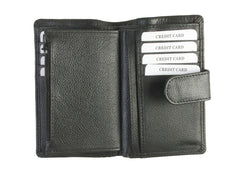
New line of shielded wallets to protect RFID and NFC credit cards from skimming


Faraday caged apparel to protect credit cards

By Nick Flaherty www.flaherty.co.uk

DIFRwear in the US has launched the first line of wallets, ID badge holders, and passport cases specially designed to protect sensitive information now found on many major credit cards and other forms of identification. These chips often contain private financial and other personal information that can be easily swiped without any person-to-person contact – also known as "card skimming." Resound will target the mainstream media to raise awareness about how the DIFRwear line of wallets can help consumers maintain privacy and ensure security, wherever they go.
RFID and NFC (near field connunications) add convenience by making it easy to remotely and wirelessly transmit information from credit cards, passports, and more. Yet it has also opened the door to more unauthorized data snooping, credit card skimming, and identity theft than ever before – especially for people who are constantly on-the-go. With summertime travel rapidly approaching, many consumers are paying high prices for credit protection, or choosing to leave certain cards at home. Now, they can just put their items in a DIFRwear wallet or passport case, and rest assured that the lining's built-in blocking shield will prevent hacking attempts – from the most rudimentary to the most sophisticated.
"As credit cards become 'smart cards' thanks to RFID technology, the wallets we carry them in need to be even smarter – making sure there's no chance of anyone stealing critical personal information," said Kevin McLaughlin, Principal and Co-Founder of Resound Marketing which is promoting the range. "We think consumers will be excited – and relieved – to know that there's a proven and trusted line of products out there that will keep that information safe, whether they're traveling across the country or around the corner."

Enhanced by Zemanta

Thursday, April 22, 2010

Internet of Things Takes a Step Forward


RFID collaboration driveseasy linking of devices over the Internet 

International RFID technology leaders NXP Semiconductors, MTI, austriamicrosystems, and RF-iT have come together to demonstrate PlugNPlay solution, a major step towards the Internet of Things
Connecting everyday items to the internet through embedding short-range mobile transceivers enables a new medium of communication between people and objects and between objects themselves. Novel RFID products are presented allowing large scale integration of ubiquitous computing in a way triggering innovative ideas of high value applications for the everyday life.

MTI’s RFID USB Dongle (the RU-888-100) is based on austriamicrosystems Simply Gen 2 AMS3992 high-performance, completely-integrated silicon solution that provides a global, affordable, mobile and enabling EPCglobal C1G2 integrated UHF reader complete with embedded antenna.  RF-iT Solution’s detego EXPRESS provides a powerful software module catalogue with a variety of predefined interfaces to backend ERP or database systems can be downloaded easily. The novel internet link module directly feeds product code information into internet search engines.   NXP’s newly announced UCODE G2iL+ tag silicon provides advanced features for EPCglobal C1G2 tags, including the industry’s first tag level I/O signaling interfaces, enabling low cost passive UHF RFID to be used in applications never before possible.
Smart Interfacing
Plug MTI’s RFID USB Dongle (RU-888-100) with austriamicrosystems inside to a USB port of a PC, download the detego EXPRESS software from RF-iT’s homepage and feed EPC data to any IT-Backend system. Through a series of interfaces defined data (ID, timestamp, location) is provided to seamlessly integrate into your IT backend systems like SAP, Navision, Sage and numerous others.  
Smart Advertising
Download the Internet link option from RF-iT’s home-page and optionally feed EPC data to search engines like Google. Find out valuable information about products and services by just presenting a tagged item to MTI’s RFID USB Dongle reader powered by austriamicrosystems with RF-iT’s software application seamlessly connecting EPC data to the world wide web.
Smart Theft Protection
The recently announced NXP Semiconductors UCODE G2iL+ presents many exciting new features never before available from EPCglobal C1G2 compliant UHF tag silicon. One application that the partners have leveraged from the UCODE G2iL+ and demonstrate is the activation and deactivation of electronic devices over the RFID link. By integrating NXP’s tiny G2iL+ silicon into a tag, and then embedding this within an object or item, or even a printed circuit board (PCB) of a device such as a mobile phone, MP3 player or printer, the product can be stored on the sales floor in a deactivated state minimizing its value to potential shoplifters. Activation and downloading of relevant software or firmware of the device can be done at home after proper registration on the vendor’s homepage, or alternatively at the POS, whichever is most convenient.

NXP's UCODE G2iL series offer leading edge read range enabling simple antenna design solutions that increase the cost effectiveness of RFID solutions.  An extensive set of features, including the Digital Switch, Data Transfer, Tag Tamper Alarm, battery assist mode and advanced privacy features make RFID more reliable, more flexible and easier to work with. 

MTI was founded in 1983 as the first RF and Microwave design and manufacturing company in Taiwan.
Reblog this post [with Zemanta]

Wednesday, April 21, 2010

Online retail site goes live for Topaz NFC tags

Cirencester-based IP provider Innovision Research & Technology is bringing NFC (Near Field Communication) RFID tags based on its Topaz technology direct to the market in one of the first online retail sites dedicated to the purchasing of such  tags and related NFC items. The site, www.buynfc.com  was officially launched to developers and consumers at WIMA, the global NFC business and technical developers’ summit.
Buynfc.com offers a one-stop-shop for NFC application developers’ and consumers’ needs and will help create a strong community of NFC developers online.  The site will provide a wealth of advice on how to use NFC tags, how to develop applications, and practical issues like which tags are best suited for a variety of applications.
Selling the Innovision Topaz tags in a wide range of form factors, including paper, labels, plastic discs, key fobs and reels, buynfc.com is aimed primarily at those looking to develop non-payment applications of NFC and to create mass-market opportunities for the emerging short-range wireless technology as well as meeting the tag needs of consumers.
Innovision believes the market for non-payment applications has huge potential, and includes smart posters, which allow users to access digital content via an NFC-enabled handset, and ‘tag in a box’, where tags are included as part of a mobile phone package.
“The opportunities are endless – payments and ticketing have been grabbing the headlines, but it’s the simple, clever and innovative applications that often capture application developers’ and consumers’ imaginations,” said Innovision’s VP Marketing, Stephen Graham.  “Tags have the potential to turn everything into a smart object, which will interact with commonly available mobile handsets, whether it’s a photograph, a business card or even a key fob!”
Innovision’s Topaz tag initially offers 96 Bytes of user programmable memory and is mandated by the NFC Forum as the Type 1 NFC Forum Tag Format.  Topaz is designed to be flexible and cost-effective for a very broad range of applications, whether in stand-alone NFC tags or as part of a more complex system.


Reblog this post [with Zemanta]

Tuesday, April 20, 2010

Open Android API to drive NFC RFID apps

NXP and Trusted Logic lead the integration of NFC technology into Android

Chip makers NXP and Trusted Logic have developed and launched an open source API for NFC RFID chips on the Android operating system. This will enable mobile phone users to access a new range of contactless applications such as mobile payments, transport and event ticketing as well as data sharing directly from their Android phones via the short range NFC standards.

NXP and Trusted Logic say they pioneered the integration of NFC technology into Android with the first versions implemented and showcased last year. The companies are now using the open source community to define an industry standard for the integration of NFC technology within Android. Opening this API to the community will enable application and service providers to develop their NFC applications with a standard framework as they did with the JSR 257 specification. This will drive the creation of compelling NFC applications by handset manufacturers and independent application developers alike.

The API has been released following consultation with various eco-system partners, including mobile network operators, handset manufacturers and NFC controller providers.

A second-generation NFC Android stack based on this Open NFC API is now available from NXP and Trusted Logic. It provides a complete integration into the Android framework, comparable to the Bluetooth and Wi-Fi services already integrated in Android.

“This is the most complete Android proposal on the market. Our key partners in Android confirm this is a solid proposal and that release of this open NFC API is essential for a successful deployment of NFC applications,” said Henri Ardevol, general manager secure transactions, NXP Semiconductors. “We are excited to contribute to this industry standard and are looking forward to propose a reference implementation above the Android Hardware Abstraction Layer to the Open Handset Alliance (OHA)”.

“With our second generation NFC Android API, our solution is mature enough to be broadly shared with all the players,” said Philippe Dubois, general manager professional and consumer devices, Trusted Logic. “This allows each of them to propose further enhancements and contribute through the Apache License model. Application developers can also have access to our Android™ environment on PC and make use of the latest API version.”

The API specification is accessible via a single mail request to NFCforAndroid@trusted-logic.com. An Apache License 2.0 model was selected in order to provide a legal framework to new contributions.
Reblog this post [with Zemanta]