By Nick Flaherty www.flaherty.co.uk
Electrostatic discharge (ESD) can be a major problem for embedded equipment. Static generated from everyday movement can damage silicon devices, especially as process technology means feaatures in the chips are ever smaller and more vulnerable to such electric shocks
Toshiba is hoping a new process technology it has developed to increase resistance to Electrostatic Discharge (ESD) in devices will help.
The 0.13μm process technology at New process boosts ESD protection | EETE Power Management optimizes the structure of transistor and significantly improves ESD characteristics by a factor of four, while the standard deviation is only 1/12 that of the conventional structure. Analysis of 3D simulations has also allowed Toshiba to identify a mechanism for optimizing transistor structure to boost ESD robustness.
ESD protection devices are required to protect internal circuit and this is particularly true for analogue power semiconductor devices required to apply 10V to 100V, which need a high rated voltage. In this case, ESD protection devices must ensure high current flow, which results in enlarged chip size. Shrinking the size of the ESD protection device is an issue in realizing more compact chips.
Using 3D simulation analysis of an ESD event, Toshiba found out that ESD induced destruction is caused by lattice temperature increase due to the current flowing at the highest electric field point. Modifying the transistor structure, which extending the drain low resistive region to the source direction and suppressing the lateral silicon resistance, shifts the current flow from the bottom of the drain to source direction and detaches it from the highest electrical field point. This optimized design was found to increase ESD robustness by up to four times and to decrease the standard deviation down to 1/12. In addition, the device size required to ensure a HBM (Human Body Model) of ±2000V was cut by 68%.
Toshiba offers advanced analog process platforms, with 0.13μm process technology, that can be embedded with the transistors such as CMOS, DMOS, bipolar transistor and the passive devices such as resistor and capacitor. User can select a process suited to each application from three process platforms: “BiCD-0.13” is mainly for automotive (DMOS line up is up to 100V); “CD-0.13BL” is mainly for motor control drivers
All the latest quantum computer articles
See the latest stories on quantum computing from eeNews Europe
Showing posts with label analogue. Show all posts
Thursday, June 16, 2016
Monday, June 13, 2016
Programmable Drag-and-drop analogue chip for multiple sensors in the IoT
By Nick Flaherty www.flaherty.co.uk
Cypress Semiconductor has launched a new programmable system-on-chip that simplifies the design of next-generation industrial, home appliance and consumer systems that require multiple sensors.
The design of custom sensor interfaces is handled by Cypress’s free PSoC Creator Integrated Design Environment (IDE), which simplifies system design by enabling concurrent hardware and firmware development using PSoC Components—free embedded ICs represented by an icon in the IDE. Engineers can easily configure the programmable analog blocks in the Analogue Coprocessor by dragging and dropping components on the PSoC Creator schematic and customizing them with graphical component configuration tools. The components offer fully engineered embedded initialization, calibration and temperature correction algorithms.
“The PSoC Analogue Coprocessor makes sensor interface design accessible to embedded systems engineers without requiring expertise in analog system design; this comes with the added benefit of enabling rapid prototyping and design iterations in software with no hardware changes by simply modifying components in PSoC Creator,” said John Weil, vice president of MCU marketing at Cypress. “Cypress has pioneered and perfected programmable analog technology for 15 years, and now our PSoC Analog Coprocessor provides the most programmable analog IP per square millimeter in a tiny chip-scale package.”
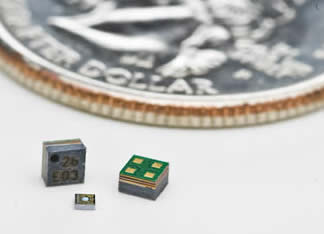
The PSoC Analog Coprocessor is available in a 3.7-mm by 2.0-mm chip-scale package option and is currently sampling with production expected in the fourth quarter of 2016. Parts will be available in 45-pin CSP, 28-pin SSOP, 48-pin QFN and 48-pin TQFP packages.
Cypress Semiconductor has launched a new programmable system-on-chip that simplifies the design of next-generation industrial, home appliance and consumer systems that require multiple sensors.
Many Internet of Things (IoT) applications require multiple sensors and can benefit from dedicated coprocessors that offload sensor processing from the host and reduce overall system power consumption. At the same time the analogue element of the design is often a challenge. The new PSoC Analogue Coprocessor integrates programmable analogue blocks, including a new Universal Analogue Block (UAB), which can be configured with GUI-based software components.
Based on a 32-bit ARM Cortex-M0+ signal processing engine, it delivers a fully programmable analog front end with op amps, programmable gain amplifiers, analog multiplexers, analog-to-digital converters, analogue filters and digital-to-analogue converters (DACs). This simplifies the design of custom analogue front ends for sensor interfaces by allowing engineers to update sensor features quickly with no hardware or host processor software changes, while also reducing overall costs.
For example, in home automation applications, engineers can easily configure the coprocessor to continuously monitor multiple sensors, such as temperature, humidity, ambient light, motion and sound, allowing the host to stay in a standby low-power mode. Future design changes to support new sensor types can also be easily implemented by reconfiguring the programmable analog blocks.
The design of custom sensor interfaces is handled by Cypress’s free PSoC Creator Integrated Design Environment (IDE), which simplifies system design by enabling concurrent hardware and firmware development using PSoC Components—free embedded ICs represented by an icon in the IDE. Engineers can easily configure the programmable analog blocks in the Analogue Coprocessor by dragging and dropping components on the PSoC Creator schematic and customizing them with graphical component configuration tools. The components offer fully engineered embedded initialization, calibration and temperature correction algorithms.
“The PSoC Analogue Coprocessor makes sensor interface design accessible to embedded systems engineers without requiring expertise in analog system design; this comes with the added benefit of enabling rapid prototyping and design iterations in software with no hardware changes by simply modifying components in PSoC Creator,” said John Weil, vice president of MCU marketing at Cypress. “Cypress has pioneered and perfected programmable analog technology for 15 years, and now our PSoC Analog Coprocessor provides the most programmable analog IP per square millimeter in a tiny chip-scale package.”
The PSoC Analog Coprocessor is available in a 3.7-mm by 2.0-mm chip-scale package option and is currently sampling with production expected in the fourth quarter of 2016. Parts will be available in 45-pin CSP, 28-pin SSOP, 48-pin QFN and 48-pin TQFP packages.
Tuesday, June 07, 2016
Cadence and Mentor square off in design of custom IoT chips
By Nick Flaherty www.flaherty.co.uk
The growth of the Internet of Things and the large volumes for chips is
creating new interest in developing custom chips for embedded applications, and
two of the largest tool providers are going head to head with a low cost design
flow.
While ARM is offering its M0 processor core free to evaluate (and a lower cost $40,000 commercial license), the challenge is developing a mixed signal analogue and digital
chip. While Cadence Design Systems has traditionally dominated the analogue portion
of the chip design flow, Mentor Graphics recently bought the analogue and MEMS
design tools of Tanner, providing a competing flow.
The custom chips can be produced at relatively low cost as
part of a 180nm multi-project wafer from a supplier such as Europractice which
can provide 45 samples of a 25mm2 chip for $16,000. With a relatively small production run of 100,000 chips, this NRE engineering cost becomes quite affordable.
The Cadence offering accelerates mixed-signal SoC design for
IoT, incorporating the ARM IoT Subsystem for Cortex-M processors and Cadence’s
interface IP and unified mixed-signal implementation solution, now optimized
specifically for Cortex-M cores. The design flow
integrates the Virtuoso custom design platform with the Innovus Implementation
System, and the Spectre custom verification platform with the Incisive
Enterprise Simulator provides the basis for ARM-based IoT design and verification.
These tools are not cheap, so further lower the barriers to the
chip development, Cadence has also joined the ARM DesignStart program to
provide low cost tools and IP for designs incorporating the Cortex-M0 processor.
This offers potential chip designers access to free Cortex-M0 processor IP for
design, simulation, and prototyping, with the option of then purchasing a
simplified fast-track license for commercialization.
The ARM IoT Subsystem and DesignStart packages provide the
most comprehensive solution a designer may need – including tools and IP – to
accelerate time-to-silicon for their IoT applications. The combined
mixed-signal IoT flow for both the IoT subsystem package and DesignStart are
available on the Cadence Hosted Design Solution (HDS), a software-as-a-service
(SaaS) model which offers quick access to EDA tools, support and methodologies.
With this secure solution, users can log in anywhere, anytime and gain access
to tools without needing installation or the supporting hardware for it.
Optimizing IoT system design requires a deep understanding of tool flows, methodology, IP, packaging and software. ARM has developed a test chip to showcase this complete IoT implementation using a complete Cadence tool flow, the ARM IoT Subsystem and Cadence IP. The test chip includes processor IP, Artisan physical IP, wireless connectivity solutions, interface IP, software, design tools (both front- and back-end), optimized design methodology and scripts.
“ARM is seeing a growing demand for custom SoCs as our partners continue to focus on improving costs, power and functionality,” said Vincent Korstanje, vice president of marketing, systems & software group at ARM. “The collaboration with Cadence makes designing IoT platforms and custom SoCs even easier, further accelerating time to market.”
“We are collaborating with ARM to provide a complete solution of optimized IP, tool flows and subsystems to enable customers to deliver emerging Internet of Things applications,” said Dr. Chi-Ping Hsu, senior vice president and chief strategy officer, Cadence. “Through our continued collaboration with ARM on both ARM DesignStart and the ARM IoT Subsystem for Cortex-M, we’ve optimized our EDA tools and methodology to complement ARM IP to bring designers from concept to silicon much faster.”
Optimizing IoT system design requires a deep understanding of tool flows, methodology, IP, packaging and software. ARM has developed a test chip to showcase this complete IoT implementation using a complete Cadence tool flow, the ARM IoT Subsystem and Cadence IP. The test chip includes processor IP, Artisan physical IP, wireless connectivity solutions, interface IP, software, design tools (both front- and back-end), optimized design methodology and scripts.
“ARM is seeing a growing demand for custom SoCs as our partners continue to focus on improving costs, power and functionality,” said Vincent Korstanje, vice president of marketing, systems & software group at ARM. “The collaboration with Cadence makes designing IoT platforms and custom SoCs even easier, further accelerating time to market.”
“We are collaborating with ARM to provide a complete solution of optimized IP, tool flows and subsystems to enable customers to deliver emerging Internet of Things applications,” said Dr. Chi-Ping Hsu, senior vice president and chief strategy officer, Cadence. “Through our continued collaboration with ARM on both ARM DesignStart and the ARM IoT Subsystem for Cortex-M, we’ve optimized our EDA tools and methodology to complement ARM IP to bring designers from concept to silicon much faster.”
But Mentor is also joining the party through a similar
collaboration using the Tanner AMS analogue/mixed-signal design flow for M0
processor-based implementations as part of the DesignStart program. The
collaboration lowers the barriers to embedded and IoT device design and verification
through a combination of an affordable, complete IC design tool suite and the
ability to evaluate the design flow on a reference design at no cost.
“The free evaluation environment and an affordable tool
suite from Tanner gives any vendor a fast and effective way to develop Cortex-M0
based smart analog mixed-signal designs,” said Nandan Nayampally, vice
president of marketing and strategy, CPU Group at ARM. “Our partnership with Mentor Graphics
will streamline the path to full production of IoT and embedded products,
reducing developers’ costs and increasing their speed to market.”
The Tanner
design flow supports digital, analogue, AMS, and MEMS design in a highly
integrated, end-to-end flow. Designers capture the schematic, perform analogue
and mixed-signal simulation, and lay out and verify the physical design. This
design flow offers a complete, processor-based IoT chip environment.
Designers will be able to evaluate an ARM Cortex-M0 IoT
reference design at no cost by using a web-based Mentor Virtual Lab
to interact with the complete set of Tanner design tools. After evaluation,
customers can easily purchase the specially-priced software from Tanner to
begin creating their own IoT designs and combine this with the free Cortex-M0
design access available on the ARM DesignStart portal.
“The Tanner design flow is already very popular with IoT
design companies,” said Greg Lebsack, general manager of the Tanner EDA
business unit at Mentor Graphics. “By collaborating with ARM on
DesignStart, we further strengthen our design flow by making it easy for AMS
designers to include an ARM Cortex-M0 processor in their IoT designs.”
ARM of course wants to have more and more chip suppliers in
the IoT. The new ARM Approved Design Partner program also provides
DesignStart users with a global list of audited design houses for expert
support during development.
The DesignStart portal offers SoC designers free access to
ARM Cortex-M0 processor IP for design, simulation and prototyping with the
option to buy a simplified and standardized $40,000 fast track license. The
addition of Cadence and Mentor Graphics tools for DesignStart users
accelerates the development of custom SoCs for embedded and Internet of Things
(IoT) applications. With test chips from as little as $16,000 to manufacture (not
inclusive of EDA tooling and IP licensing costs), the path to custom SoCs is
now much easier.
“ARM’s DesignStart
portal, with its convenient access to the Cortex-M0 package and its
low-cost path to commercialization, is already making it easier for start-ups
and OEMs to create embedded and mixed-signal SoCs,” said Nandan Nayampally,
vice president of marketing and strategy for the CPU group at ARM. “Simplifying
access to EDA tools from Cadence and Mentor Graphics will further
spur rapid innovation, creating a fast path to production silicon for companies
looking to deliver an embedded or connected IoT product.”
The Approved Design Partner program helps designers with the
chip implementation. “The semiconductor industry has high expectations for
future growth in the IoT space, with DesignStart ARM has taken a significant
step towards enabling this growth and lowering entry barriers,” said Graham
Curren, CEO at one design partner, Sondrel.
Friday, June 03, 2016
TI extends its lead in the top ten analogue semiconductor companies
By Nick Flaherty www.flaherty.co.uk
The 2015 analogue market grew 2% to $47.0 billion, a positive sign set against the recent fall sin the overall, memory-led market. Even though it has a dominant 18% market share, Texas Instruments grew faster than the market at 3% and is by far the dominant supplier.
Combined sales of general-purpose analogue products such as amplifiers/comparators, interface, power management and signal conversion devices increased 2% to $19.1 billion and sales of application-specific analogue devices also improved 2% to $27.9 billion. The market for signal conversion devices showed the largest increase in 2015, growing 14% to $2.9 billion.
IC Insights’ ranking of the top analogue IC suppliers for 2015 show the top ten accounted for 56% of global analogue sales last year, down slightly from 57% in 2014. Among the top suppliers, only tenth-ranked Renesas fell short of the $1.0 billion mark. With a 10% increase, NXP’s analogue sales outperformed the total analogue market by the widest margin, while ST saw the biggest drop at 13%..

TI’s analogue sales slightly surpassed the combined revenue of the next three-largest analog suppliers, and represented 69% of its total semiconductor revenue last year. TI has always been a major player in analogue, but beginning in 2009, it doubled down on its long-term efforts to dominate this market segment says IC Insights. That year, TI became the first company to manufacture analog devices on 300mm equipment. It purchased 300mm manufacturing tools from defunct Qimonda and transferred it to its existing fabs in Texas to build analogue chips. In 2010, TI acquired two wafer fabs operated by Spansion in Aizu-Wakamatsu, Japan, and a fully equipped 200mm fab in Chengdu, China from Cension Semiconductor Manufacturing. Both facilities were converted and immediately put to use making analog ICs. In April 2011, TI acquired National Semiconductor—its rival in many analogue markets—for $6.5 billion.
TI also strengthened its analogue position by transitioning to 300mm manufacturing capacity at its newer RFAB and its older DMOS 6 fabs. Aside from boosting its manufacturing capacity, moving to 300mm wafer helped reduce total production costs by 40%, according to the company.
Other changes seen in the 2015 ranking include Infineon moving up one place to become the second-largest analogue supplier and Skyworks Solutions moving up two spots. ST slipped from #2 in 2014 to #5 in the 2015 ranking following its 13% decline in analogue sales, which it attributed to soft equipment sales (computer, consumer, automotive, industrial) among its primary customers. Collectively, Infineon, NXP, and ST—Europe’s three-largest IC suppliers—accounted for 15% analogue marketshare last year.
Skyworks continues to enjoy solid analogue sales due to design wins with smartphones providers around the world. Skyworks Solutions makes analogue and mixed signal semiconductors for Apple, Samsung, and other suppliers of mobile devices. Many of Skyworks’ power amplifier components are found in Apple’s iPhone 6 models. It has been estimated that Skyworks supplies $4 worth of content for every iPhone 6 handset.
Although highly focused in mobile markets, Skyworks plans to expand into the automotive, home, and wearable markets to develop its presence in applications linked to the Internet of Things. Analogue chips such as audio amplifiers, op amps, and analog switches are building blocks for creating wearable applications. Skyworks’ wireless technology is used in General Electric healthcare equipment, and the company recently sealed a deal to supply high-performance filter solutions to Panasonic.
Analog Devices’ analogue sales grew 2% last year with one of its key devices enabling the 3D/Force Touch capability in the Apple Watch, the latest iPhones, and new generations of the iPad. This uses tiny electrodes to distinguish between a light tap and a deep press to trigger contextually specific controls.
Things are also looking up for the market, as IC Insights forecasts the total analogue market to grow 4% this year, reaching $49.1 billion and surpassing the $50.0 billion mark for the first time in 2017 as analogue sales climb to an expected $51.4 billion. From 2015 to 2020, the analogue market is forecast to grow at a compound annual growth rate of 6%, one point higher than the total IC market.
IC Insights’ ranking of the top analogue IC suppliers for 2015 show the top ten accounted for 56% of global analogue sales last year, down slightly from 57% in 2014. Among the top suppliers, only tenth-ranked Renesas fell short of the $1.0 billion mark. With a 10% increase, NXP’s analogue sales outperformed the total analogue market by the widest margin, while ST saw the biggest drop at 13%..

TI’s analogue sales slightly surpassed the combined revenue of the next three-largest analog suppliers, and represented 69% of its total semiconductor revenue last year. TI has always been a major player in analogue, but beginning in 2009, it doubled down on its long-term efforts to dominate this market segment says IC Insights. That year, TI became the first company to manufacture analog devices on 300mm equipment. It purchased 300mm manufacturing tools from defunct Qimonda and transferred it to its existing fabs in Texas to build analogue chips. In 2010, TI acquired two wafer fabs operated by Spansion in Aizu-Wakamatsu, Japan, and a fully equipped 200mm fab in Chengdu, China from Cension Semiconductor Manufacturing. Both facilities were converted and immediately put to use making analog ICs. In April 2011, TI acquired National Semiconductor—its rival in many analogue markets—for $6.5 billion.
TI also strengthened its analogue position by transitioning to 300mm manufacturing capacity at its newer RFAB and its older DMOS 6 fabs. Aside from boosting its manufacturing capacity, moving to 300mm wafer helped reduce total production costs by 40%, according to the company.
Other changes seen in the 2015 ranking include Infineon moving up one place to become the second-largest analogue supplier and Skyworks Solutions moving up two spots. ST slipped from #2 in 2014 to #5 in the 2015 ranking following its 13% decline in analogue sales, which it attributed to soft equipment sales (computer, consumer, automotive, industrial) among its primary customers. Collectively, Infineon, NXP, and ST—Europe’s three-largest IC suppliers—accounted for 15% analogue marketshare last year.
Skyworks continues to enjoy solid analogue sales due to design wins with smartphones providers around the world. Skyworks Solutions makes analogue and mixed signal semiconductors for Apple, Samsung, and other suppliers of mobile devices. Many of Skyworks’ power amplifier components are found in Apple’s iPhone 6 models. It has been estimated that Skyworks supplies $4 worth of content for every iPhone 6 handset.
Although highly focused in mobile markets, Skyworks plans to expand into the automotive, home, and wearable markets to develop its presence in applications linked to the Internet of Things. Analogue chips such as audio amplifiers, op amps, and analog switches are building blocks for creating wearable applications. Skyworks’ wireless technology is used in General Electric healthcare equipment, and the company recently sealed a deal to supply high-performance filter solutions to Panasonic.
Analog Devices’ analogue sales grew 2% last year with one of its key devices enabling the 3D/Force Touch capability in the Apple Watch, the latest iPhones, and new generations of the iPad. This uses tiny electrodes to distinguish between a light tap and a deep press to trigger contextually specific controls.
Things are also looking up for the market, as IC Insights forecasts the total analogue market to grow 4% this year, reaching $49.1 billion and surpassing the $50.0 billion mark for the first time in 2017 as analogue sales climb to an expected $51.4 billion. From 2015 to 2020, the analogue market is forecast to grow at a compound annual growth rate of 6%, one point higher than the total IC market.
Monday, January 10, 2011
Conexant sold off to SMSC
Creates group with 900 mixed signal engineers
By Nick Flaherty www.flaherty.co.uk
How are the mighty fallen. The once powerful embedded chip maker Conexant Systems - spin off of Rockwell and dominant supplier of modem chips - is to be sold off to up and coming chip maker SMSC of New York.
Conexant leaves the industry with a string of legacies through a number of spin offs, from foundry Jazz to telecom chip maker MindSpeed, but the core of chips for imaging, audio, embedded modem, and video surveillance applications will go to to SMSC in a deal valued at approximately $284 million including the assumption of Conexant’s net debt. The transaction has been approved by the boards of directors of both companies.
The company had been selling off parts of the business for several years, and last month sold property next to its Newport Beach, California, headquarters for $23m
Combined Company Highlights:
“We believe that combining the growth potential of Conexant and SMSC will allow us to leverage complementary technology and engineering resources to provide our customers with expanded solutions in connectivity and content,” said Christine King, President & Chief Executive Officer of SMSC. “We plan to focus our resources on the areas of highest return and believe that our respective sales and supply chain relationships will help create a platform to grow our businesses. In addition, we expect to capture significant operating efficiencies that will position us to increase earnings growth. SMSC’s larger scale should position us to increase our R&D productivity and drive profitability and shareholder value.”
“In our industry, size and scope provide a significant advantage with customers and suppliers," said Scott Mercer, Conexant's Chairman and Chief Executive Officer. "SMSC and Conexant share similar core competencies in analog and mixed-signal design, possess complementary product portfolios, and count many customers in common. By joining forces, we get the opportunity to take advantage of economies of scale and drive profitable growth."
Sailesh Chittipeddi, currently President & Chief Operating Officer at Conexant, will join SMSC upon close of the acquisition as Executive Vice President, reporting to Christine King. Mr. Chittipeddi’s responsibilities will include all product lines and global marketing and engineering functions for SMSC.

Conexant leaves the industry with a string of legacies through a number of spin offs, from foundry Jazz to telecom chip maker MindSpeed, but the core of chips for imaging, audio, embedded modem, and video surveillance applications will go to to SMSC in a deal valued at approximately $284 million including the assumption of Conexant’s net debt. The transaction has been approved by the boards of directors of both companies.
The company had been selling off parts of the business for several years, and last month sold property next to its Newport Beach, California, headquarters for $23m
Combined Company Highlights:
- Creates a stronger analogue/mixed-signal R&D team with over 900 engineers globally,
- Complementary connectivity product portfolios to target more expansive set of computing, consumer, industrial and automotive applications,
- Serves key customers with more complete product solutions,
- Combined company has the scale and resources to enhance SMSC’s finances with a combined revenue of $632m,
- Anticipated cost cutting of $8 to $10m by the end of SMSC’s fourth quarter
“We believe that combining the growth potential of Conexant and SMSC will allow us to leverage complementary technology and engineering resources to provide our customers with expanded solutions in connectivity and content,” said Christine King, President & Chief Executive Officer of SMSC. “We plan to focus our resources on the areas of highest return and believe that our respective sales and supply chain relationships will help create a platform to grow our businesses. In addition, we expect to capture significant operating efficiencies that will position us to increase earnings growth. SMSC’s larger scale should position us to increase our R&D productivity and drive profitability and shareholder value.”
“In our industry, size and scope provide a significant advantage with customers and suppliers," said Scott Mercer, Conexant's Chairman and Chief Executive Officer. "SMSC and Conexant share similar core competencies in analog and mixed-signal design, possess complementary product portfolios, and count many customers in common. By joining forces, we get the opportunity to take advantage of economies of scale and drive profitable growth."
Sailesh Chittipeddi, currently President & Chief Operating Officer at Conexant, will join SMSC upon close of the acquisition as Executive Vice President, reporting to Christine King. Mr. Chittipeddi’s responsibilities will include all product lines and global marketing and engineering functions for SMSC.

Tuesday, April 27, 2010
Audium Semiconductor assets bought by NXT (UK Technology Startups)
Amplifier chip startup Audium Semiconductor in Bristol has closed and its assets have been bought by flat panel speaker maker NXT. The company raised $8.5m in September 2007 for its untra low power amplifier but failed to raise a second round of venture capital.
Wednesday, April 21, 2010
Xintronix gears up for expansion (UK Technology Startups)
Bristol startup Xintronix has raised private finance and appointed a new chairman as it ramps up for samples of its high speed transceiver technology later this year for USB3 and LightPeak.
Thursday, December 10, 2009
Farewell Zilog

Zilog, the inventor of the ubiquitous Z80 microcontroller, has finally given up the ghost and is to be sold to IXYS, a power semiconductor and mixed signal vendor that is one of the fastest growing semiconductor companies. The $62m deal is expected to be completed by March next year as IXYS expects the microcontroller market to take off again next year.
The combination of the two companies with complementing technologies will allow IXYS and Zilog to leverage analogue power management with digital control. Zilog has a focused MCU business with technologies that will complement IXYS’ product portfolio. IXYS has a broad based and diversified range of products geared toward industrial, telecommunications, medical, automotive, alternative energy and consumer applications. By introducing MCUs that enable digital power management and embedded control, IXYS will be able to create more cost-effective system integration solutions for its diversified customer base.
“As the world migrates toward SoCs, Zilog’s core microcontroller technology along with IXYS’ core power solutions create entirely new products that will meet the needs for today and tomorrow,” said Dr. Federico Faggin, Chairman of the Board and the co-founder of Zilog, Inc.
“We are pleased with this strategic acquisition that will allow us to penetrate more applications in traditional and developing markets, leveraging both of our strengths. Digital power management is one of the fastest growing applications in the markets we serve. Zilog’s 35-year history in microcontrollers with its legendary Z80 and Z8 architectures parallels IXYS’ pioneering technologies in power MOSFETs, IGBTs and HVICs,” said Dr. Nathan Zommer, CEO and Founder of IXYS Corporation. “With the expected rebound in MCU sales in 2010, we anticipate a growth in opportunities for refined power control in many applications; the acquisition and integration of this MCU business will strengthen our position and allow us to take advantage of these opportunities. We believe this transaction will create further value for our shareholders, employees and customers through a further expansion and diversification of our product offerings. As it is one of the pioneers of MCUs in Silicon Valley, we plan to keep the Zilog entity with its recognized and valued trademark.”
“Zilog has actively explored a broad range of strategic alternatives to enhance shareholder value. The price that IXYS is proposing to pay is a premium to our current stock price, as well as a substantial premium to the average of the prices at which we’ve traded throughout 2009,” said Darin Billerbeck, Zilog’s president and chief executive officer. “This acquisition brings liquidity to our shareholders, while increasing our financial stability in these continuing uncertain economic times.”
IXYS expects to increase its penetration in the automotive electronic and electric market by producing cost-effective integrated product offerings, including the power semiconductors, driver ICs and Zilog MCUs that are essential for automotive controls and driving displays. In IXYS’ prime industrial market, IXYS plans to deploy MCUs that are suited for motor control, power control and automation. In the telecommunications and security industries, Zilog’s MCUs complement IXYS’ ICs, which can be deployed in modems, VOIP, FIOS and automated alarm systems. For the medical market, the Zilog MCU platform complements IXYS’ power and IC products in defibrillators, imaging and diagnostics. Additionally, the recently expanded IXYS products for LED lighting and display, which require digital power control, will benefit in the market from the availability of complementary MCUs. MCU product offerings will be expanded to include low-power and sensing technologies for energy management applications, including smart lighting and intrusion detection.
In addition to expanding market opportunities, the acquisition will allow IXYS and Zilog to pool R&D resources, leverage economies of scale, reduce manufacturing costs and streamline and integrate operational and support costs.
The deal with IXYS will be through Zanzibar Acquisition, a wholly-owned subsidiary of IXYS.
The move ends a selloff of Zilog technology. In February Zilog sold key lines to Maxim and UEI for $31m. Maxim bought Zilog's secure transaction product line that includes the Zatara 32bit, ARM-based microcontroller family for use in payment terminals.
Maxim and UEI jointly purchased the wireless control business, with Mxim taking the microcontroller silicon chip business and supporting intellectual property to combine with its own Infrared (IR) microcontroller family. UEI bought the software portion of Zilog's wireless control product line, which consists of its patents, universal remote database and software, and related assets.
Tuesday, October 20, 2009
Ultra low power microcontroller extends battery life


A Norwegian startup is pushing the limits of low power in microcontrollers, cutting power by a factor of four over even 8bit devices.
Energy Micro has developed the EFM32 low power 32bit microcontroller based on the ARM Cortex-M3 architecture with low power clocks and peripherals that consumes less than 180µA per MHz while executing real life code from Flash memory and the lowest active mode current consumption of any microcontroller. Its standby current consumption is also the lowest, at typically 900nA while running real time clock, power-on reset, brown-out detector and full RAM and CPU retention and less than 20nA in its deepest sleep mode. The start-up time of less than 2µs is also the industry’s fastest. The power is lower than traditional 16 or 8bit devices from Silicon Labs, Texas Instruments and Microchip (see chart).
“We are very proud that we have delivered on our mission to provide the world with the most energy friendly microcontrollers,” said Geir Forre, founder and CEO. “By introducing innovative new energy saving features, such as our peripheral reflex system and energy management unit, the potential saving in battery life that can be achieved is immense.”
The low power peripherals include:
a 4x40 segment LCD controller running at less than 900nA;
an 8-channel 12-bit 1M samples/sec ADC running at less than 200µA;
a brown-out detector running at less than 100nA;
a 32kHz real time counter running at 50nA;
and a UART capable of 9600bps at 100nA.
The devices, built in standard low leakage CMOS, are initially targetted at smart metering and home automation, with battery lifetimes of 10 to 15 years with low cycle times. “The EFM32G family of microcontrollers has been specified in close partnership with many world leading companies within, for example, the energy metering, home and building automation and alarm and security industries,” said Øyvind Janbu, co-founder and CTO of Energy Micro. “Working so closely with top engineers in such sectors has enabled us to produce a family of microcontrollers that truly is a perfect fit for a variety of different applications.”
One of Energy Micro’s partner customers is window maker Velux, one of the strongest brands in the global building materials and home improvement industry. It is planning to use the EFM32 in a range of contorllers later this year.
Meter company Kamstrup is also looking to use the device for products next year.
There are 22 different EFM32G microcontroller products which will become available over the next few months, in a variety of packages including QFN32, QFN64, QFP100 and BGA112. The EFM32G operates from a single supply rail of between 1.8 and 3.8V. The operating temperature range is –40degC to +85degC. The microcontrollers provide up to 128KB Flash memory and up to 16KB of RAM.
The first products are being offered by Energy Micro in QFN64 and BGA112 profiles and are currently sampling with lead customers. Pricing for the initial 32-pin devices starts at $1.55 in 100k quantities.
Friday, October 16, 2009
Virage aims for IP powerhouse with NXP deal
So, Virage Logic is taking another step towards becoming a major IP and system on chip player with a deal to acquire key IP from NXP.
The deal sets up an R&D centre for Virage in Eindhoven, home of NXP, for advanced CMOS I/O, analogue mixed signal and System-on-Chip (SoC) infrastructure IP. These new products are expected to be commercially available in early 2011, and sit alongside the UK-based ARC configurable processor technology acquired in August this year, creating an SoC powerhouse.
Under the terms of the multi-year agreement, NXP will transfer over 160 employees and the assets associated with selected advanced CMOS libraries, IP blocks and SoC architecture along with other classes of semiconductor IP, including approximately 25 associated patent families. In return, NXP will receive 2.5 million shares of Virage Logic common stock and a share of the future revenue generated by Virage Logic from licensing the transferred IP portfolio. In addition, Virage Logic will provide to NXP services surrounding the transferred IP for a 3.5-year period, and NXP will receive a 3.5 year license to Virage Logic’s extensive standard-products semiconductor IP portfolio for all future SoC designs.
For all of this, NXP pays $60m over the next four years!
Dan McCranie, executive chairman for Virage Logic, said, “Over two years ago, we embarked on a transformation that was based on several key strategic initiatives. Amongst those initiatives were, a) the broadening of our IP product portfolio through both organic and inorganic growth and, b), establishing Virage Logic as the semiconductor industry’s Trusted IP partner. Today’s announcement with NXP represents strong progress on both of those initiatives. All of us at Virage Logic are proud of the confidence that NXP has shown in our technical teams to be selected as the IP provider to NXP for their future development. In addition, we are excited about the future ability to expand our IP offerings to the semiconductor industry through the productizing of NXP’s important IP elements.”
“Virage Logic was founded on the vision that an independent IP company could provide the technically superior building blocks the global semiconductor industry needs to develop their highly differentiated end products more cost effectively and deliver them to market more quickly,” said Dr. Alex Shubat, president, CEO and co-founder of Virage Logic.
The deal sets up an R&D centre for Virage in Eindhoven, home of NXP, for advanced CMOS I/O, analogue mixed signal and System-on-Chip (SoC) infrastructure IP. These new products are expected to be commercially available in early 2011, and sit alongside the UK-based ARC configurable processor technology acquired in August this year, creating an SoC powerhouse.
Under the terms of the multi-year agreement, NXP will transfer over 160 employees and the assets associated with selected advanced CMOS libraries, IP blocks and SoC architecture along with other classes of semiconductor IP, including approximately 25 associated patent families. In return, NXP will receive 2.5 million shares of Virage Logic common stock and a share of the future revenue generated by Virage Logic from licensing the transferred IP portfolio. In addition, Virage Logic will provide to NXP services surrounding the transferred IP for a 3.5-year period, and NXP will receive a 3.5 year license to Virage Logic’s extensive standard-products semiconductor IP portfolio for all future SoC designs.
For all of this, NXP pays $60m over the next four years!
Dan McCranie, executive chairman for Virage Logic, said, “Over two years ago, we embarked on a transformation that was based on several key strategic initiatives. Amongst those initiatives were, a) the broadening of our IP product portfolio through both organic and inorganic growth and, b), establishing Virage Logic as the semiconductor industry’s Trusted IP partner. Today’s announcement with NXP represents strong progress on both of those initiatives. All of us at Virage Logic are proud of the confidence that NXP has shown in our technical teams to be selected as the IP provider to NXP for their future development. In addition, we are excited about the future ability to expand our IP offerings to the semiconductor industry through the productizing of NXP’s important IP elements.”
“Virage Logic was founded on the vision that an independent IP company could provide the technically superior building blocks the global semiconductor industry needs to develop their highly differentiated end products more cost effectively and deliver them to market more quickly,” said Dr. Alex Shubat, president, CEO and co-founder of Virage Logic.
Wednesday, August 19, 2009
Silicon microphone moves to Bosch
Akustica, developer of silicon MEMS (micro electro-mechanical systems) microphones for the consumer electronics market has been bought by Robert Bosch North America. Terms of the agreement will not be disclosed. Akustica, which was founded in 2001, is based in Pittsburgh, Pennsylvania and develops and sells digital and analogue micro electromechanical microphones using standard CMOS silicon technology. This approach allows the integration of transducer elements and associated integrated circuits on a single Silicon chip. Bosch is the world leader in MEMS sensors and, with this acquisition, further strengthens its position in this market.
“The strategic acquisition of Akustica with their outstanding application of sophisticated MEMS technology complements our growing semiconductor business and ideally complements our ongoing MEMS activities” said Dr. Stefan Kampmann, executive vice president, Bosch Automotive Electronics. “We look forward to working together with the Akustica team to continue to develop this important business area.”
To date Akustica, which developed and sold the world’s first digital MEMS microphone, has sold over 5 million microphones in the global market. All of the company’s 36 associates will be employed by Bosch.
According to Joseph A. Jacobson, president and chief executive officer, Akustica, Inc., “We are excited to join the market leader in MEMS sensors and be a part of Bosch's expansion in commercialization of consumer MEMS products. The strength of our combined technology, manufacturing capability, and talent will allow us to continue delivering innovative and differentiating sensor product solutions.”
Comment: However, this looks more like the inability of Akustica to raise more money in the current financial climate and not enough income to go it alone despite big early plans.
Monday, July 20, 2009
Quad DAC with EEPROM for portable apps
Microchip has developed the industry’s first 12bit Quad Digital-to-Analogue Converter (DAC) to include non-volatile EEPROM, enabling the DAC’s configuration to be loaded automatically during power-up. The low power of the device targets portable consumer applications such as personal media players, digital cameras and GPS devices as well as industrial and automotive.
The on-board EEPROM, coupled with an internal voltage reference, four-channel architecture and rail-to-rail precision output amplifier, enables the MCP4728 to significantly reduce the size and component cost in a variety of battery powered and power-constrained applications.
Through the integrated I2CM serial interface, designers can configure the MCP4728 input codes, configuration bits and I2C address bits. This configuration information is stored in the non-volatile EEPROM and therefore retained after power is removed, making it available immediately after power is reapplied and reconfiguring the DAC during power-up.
The architecture of the MCP4728 also allows each of the four channels to be individually shut down, reducing power consumption to as low as 40nA and helping designers to meet or exceed cost and size requirements while providing the resolution and low power consumption that today’s battery powered and power-constrained applications require. These include consumer (personal media players, digital cameras and GPS devices); medical; industrial; appliance, and automotive (LED lamps and alarm/security systems) devices.
The $15 MCP4728 Evaluation Board is available to help designers quickly evaluate the MCP4728 DAC in their applications, and the DAC is sampling now in a 10-pin MSOP package.
The on-board EEPROM, coupled with an internal voltage reference, four-channel architecture and rail-to-rail precision output amplifier, enables the MCP4728 to significantly reduce the size and component cost in a variety of battery powered and power-constrained applications.
Through the integrated I2CM serial interface, designers can configure the MCP4728 input codes, configuration bits and I2C address bits. This configuration information is stored in the non-volatile EEPROM and therefore retained after power is removed, making it available immediately after power is reapplied and reconfiguring the DAC during power-up.
The architecture of the MCP4728 also allows each of the four channels to be individually shut down, reducing power consumption to as low as 40nA and helping designers to meet or exceed cost and size requirements while providing the resolution and low power consumption that today’s battery powered and power-constrained applications require. These include consumer (personal media players, digital cameras and GPS devices); medical; industrial; appliance, and automotive (LED lamps and alarm/security systems) devices.
The $15 MCP4728 Evaluation Board is available to help designers quickly evaluate the MCP4728 DAC in their applications, and the DAC is sampling now in a 10-pin MSOP package.
Wednesday, December 19, 2007
Shake up in the set top box business
Philips has sold its set top box and connectivity business to Pace Micro Technology of the UK in a move that will help Pace achieve the scale that it needs to compete effectively in global markets. The company has been struggling in recent years, although it has a stream of contracts from the US.
The deal also includes the connectivity business, and Pace has been a leader in this area aiming to integrate the connectivity around the home into the set top box to help maintain margins and prevent the business moving to low cost Chinese suppliers.
Philips agreed in principle to divest the STB and CS businesses to Pace in exchange for 70 million Pace shares. The proposed transaction is subject to approvals from Pace shareholders, the relevant regulatory authorities and Philips' workers council. After completion, Philips will become a 23% shareholder in the combined business, representing a market value of around £60m.
The outcome of the transaction will result in a combination of strengths of two leading players in the industry, creating one of the largest set-top-box players in the world at a time when the shift from analogue to digital TV is rapidly increasing. Commenting on the sale, Philippe Alcaras, Business Unit leader Philips Home Networks said: "We feel that the rapidly changing dynamics of the markets in which the STB and CS businesses operate will inevitably culminate in further industry consolidation. By striking a deal with Pace now, we gain the first-mover advantage and it shows Philips' determination to secure a leading role for our businesses, and make them even more relevant to our customers and technology partners."
The two businesses had estimated sales of EUR 425 million in 2007 and employed 335 people, predominantly based in France, who would transfer to Pace as part of the transaction. The remainder of Home Networks, Home Communications, which includes Internet Telephony and Home Telephony (DECT), will become part of the Peripherals & Accessories unit within Philips' Consumer Lifestyle sector.
The deal also includes the connectivity business, and Pace has been a leader in this area aiming to integrate the connectivity around the home into the set top box to help maintain margins and prevent the business moving to low cost Chinese suppliers.
Philips agreed in principle to divest the STB and CS businesses to Pace in exchange for 70 million Pace shares. The proposed transaction is subject to approvals from Pace shareholders, the relevant regulatory authorities and Philips' workers council. After completion, Philips will become a 23% shareholder in the combined business, representing a market value of around £60m.
The outcome of the transaction will result in a combination of strengths of two leading players in the industry, creating one of the largest set-top-box players in the world at a time when the shift from analogue to digital TV is rapidly increasing. Commenting on the sale, Philippe Alcaras, Business Unit leader Philips Home Networks said: "We feel that the rapidly changing dynamics of the markets in which the STB and CS businesses operate will inevitably culminate in further industry consolidation. By striking a deal with Pace now, we gain the first-mover advantage and it shows Philips' determination to secure a leading role for our businesses, and make them even more relevant to our customers and technology partners."
The two businesses had estimated sales of EUR 425 million in 2007 and employed 335 people, predominantly based in France, who would transfer to Pace as part of the transaction. The remainder of Home Networks, Home Communications, which includes Internet Telephony and Home Telephony (DECT), will become part of the Peripherals & Accessories unit within Philips' Consumer Lifestyle sector.
Thursday, August 30, 2007
Powering chips by body warmth

Researchers at the Fraunhofer Institute for Integrated Circuits IIS in Erlangen, Germany, have developed a way of harnessing natural body heat to generate electricity to power low voltage logic devices.
While this won't power a cell phone, medical sensors may be able to function without power from a wall socket. Instead, they will draw all the power they need from the warmth of the human body. The respective data will be sent by a radio signal to the central monitoring station.
The researchers, with collleagues at the Fraunhofer Institute for Physical Measurement Techniques IPM and the Fraunhofer Institute for Manufacturing Engineering and Applied Materials Research IFAM, are using thermoelectric generators, TEG for short, made from semiconductor elements that extract electrical energy simply from the temperature difference between a hot and a cold environment. Normally, a difference of several tens of degrees would be required in order to generate enough power, but the differences between the body’s surface temperature and that of its environment are only a few degrees.
“Only low voltages can be produced from differences like these,” said Peter Spies, manager of this sub-project at the IIS. A conventional TEG delivers roughly 200 millivolts, but electronic devices require at least one or two volts. “We combined a number of components in a completely new way to create circuits that can operate on 200 millivolts,” says Spies. “This has enabled us to build entire electronic systems that do not require an internal battery, but draw their energy from body heat alone.”
Wednesday, July 04, 2007
What's an iPhone? - the breakdown
This of course means that this stripped down variant of the OS X operating system for the iPhone (embedded OS X, if you like) has been ported to the ARM architecture for the Samsung chip, a 700MHz ARM1176JZF core, and so could run on TI's OMAP chips, for example, or many other ARM microcontrollers. This is potentially great news for embedded system designers. The bad news is that Apple as said it won't be released to the outside world. Shame.
The ifixit breakdown:
* Samsung chip underneath the metal shield on the left side of the board on the left. Ours reads K9MCGD8U5M. The 4 GB model that Think Secret took apart had K9HBG08U1M on it, which is a 4 GB chip.
* Samsung memory stacked with an ARM-architecture processor, Part number 339S0030ARM, 8900B 0719, NOD4BZ02, K4X1G153PC-XGC3, ECC457Q3 716 shows it to be a Samsung processor rather than a Mavell Xscale. The processor is likely stacked on the SDRAM, which could be two 512 Megabit chips. The processor could have H.264 and MP3 hardware decoding built in.
* The chip above the ARM is a Wolfson audio chip. Part numbers WM8758BG and 73AFMN5.
* The chip underneath the ARM is a Linear Technology 4066 USB Power Li-Ion Battery Charger, which Apple uses in the iPods as well.
* The chip on the bottom center has this text: MARVELL, W8686B13, 702AUUP. This is Marvell's 802.11b/g 18.4mm2 chip.
* The chip in the upper right is a Skyworks GSM/Edge Power amplifier (SKY77340)
* The silver chip to the left of the Skyworks chip reads CSR 41814 3A06U K715FB. This is a CSR BlueCore4-ROM WLCSP single chip radio and baseband IC for Bluetooth 2+EDR.
* The chip with the blue dot on it is rumored to be an Intel Wireless Flash 32 MB chip. Part numbers 1030W0YTQ2, 5716A673, and Z717074A. EE Times adds the part #PF38F1030W0YTQ2.
* The chip in the lower right some claim this is an Apple-branded chip, but it's purpose is currently unknown.
* The chip in the lower left is an Infineon PMB8876 S-Gold 2 multimedia engine. Part numbers: 337S3235, 60708, and EL629058S03.
Wednesday, June 27, 2007
Where will the next semiconductor crash come from?
This has been something that has been concerning me for a while - life is good for the semi guys, but history shows the downturn will come, and it comes from unexpected places.
Traditional theory would predict that the new generation of 12in fabs with 45nm and 32nm coming through in 2009 would create over-supply of chips, driving down the average selling price and causing recession in the industry. But a close eye is kept on this to avoid the problem.
Instead, the problem will come from an unexpected direction - those 8in fabs. The semiconductor industry will face a glut of capacity in the next two years that will fundamentally change the way systems are designed, says the president of the consumer LSI division of Samsung Semiconductor, the second largest chip maker in the world.
"By 2010 the 8in fabs will become severely underutilised, by around 30%, and product pricing will be continuously slashed," said Oh-Hyun Kwon. "That creates a vicious cycle of no investment to how to utilise the fabs is a key point."
This is where the oversupply will come and where the prices will crash.
That oversupply of 130nm and 90nm capacity should be used for devices that don't shrink well such as analogue, RF, sensors and micro machined devices, he said. These are then combined with digital devices made in 45nm and 32nm in system in the same package, rather than integrating all these elements into a single chip.
But this will migrate to chips that are built with the different technologies on the same die in 3D layers, and will change the way chips are designed and packaged, with system-in-a-package becoming much more important.
"We are moving to 45nm circuits at 45nm and then to 3D transistors at 22nm, and we need on chip 3D analysis tools for 3D LSIs," he said.
Traditional theory would predict that the new generation of 12in fabs with 45nm and 32nm coming through in 2009 would create over-supply of chips, driving down the average selling price and causing recession in the industry. But a close eye is kept on this to avoid the problem.
Instead, the problem will come from an unexpected direction - those 8in fabs. The semiconductor industry will face a glut of capacity in the next two years that will fundamentally change the way systems are designed, says the president of the consumer LSI division of Samsung Semiconductor, the second largest chip maker in the world.
"By 2010 the 8in fabs will become severely underutilised, by around 30%, and product pricing will be continuously slashed," said Oh-Hyun Kwon. "That creates a vicious cycle of no investment to how to utilise the fabs is a key point."
This is where the oversupply will come and where the prices will crash.
That oversupply of 130nm and 90nm capacity should be used for devices that don't shrink well such as analogue, RF, sensors and micro machined devices, he said. These are then combined with digital devices made in 45nm and 32nm in system in the same package, rather than integrating all these elements into a single chip.
But this will migrate to chips that are built with the different technologies on the same die in 3D layers, and will change the way chips are designed and packaged, with system-in-a-package becoming much more important.
"We are moving to 45nm circuits at 45nm and then to 3D transistors at 22nm, and we need on chip 3D analysis tools for 3D LSIs," he said.
Tuesday, June 12, 2007
WiBree finally merges with Bluetooth group
Finally! Nokia's WiBree low power version of Blutooth has merged with the Bluetooth Special Interest group (which is perhaps where it should have been all the time to avoid confusion but being outside got it much more attention than it would have had otherwise!).
This is important for standardisation and WiBree will be first point of contact for Bluetooth connections and to avoid confusion.
Wibree consumes only a fraction of the power of classic Bluetooth radios. In many cases it makes it possible to operate these devices for more than a year without recharging.
Using Bluetooth technology's high consumer awareness (86% globally), the Bluetooth SIG's large membership of 8000 companies) and its development and qualification programs, the ultra low power solution will be integrated faster and at a lower cost to the industry and consumers.
Wibree's development started at the Nokia Research Centre in 2001 and was launched in October 2006. So far Broadcom, Casio, CSR, Epson, ItoM, Logitech, Nordic Semiconductor, ST Microelectronics, Suunto, Taiyo Yuden and Texas Instruments have contributed to the interoperability specification, profiles and use case definition of Wibree in their respective areas of expertise and will continue this work in the
Bluetooth SIG working groups. Several new companies, including device, watch and access systems manufacturers will join the finalisation of the specification. Once the specification is finalised, the technology will be made broadly available to the
industry via the Bluetooth SIG.
This is important for standardisation and WiBree will be first point of contact for Bluetooth connections and to avoid confusion.
Wibree consumes only a fraction of the power of classic Bluetooth radios. In many cases it makes it possible to operate these devices for more than a year without recharging.
Using Bluetooth technology's high consumer awareness (86% globally), the Bluetooth SIG's large membership of 8000 companies) and its development and qualification programs, the ultra low power solution will be integrated faster and at a lower cost to the industry and consumers.
"By including or referencing other wireless technologies like ultra wideband for high speed applications, near field communication (NFC)for association and now Wibree for ultra low power applications under the well-established Bluetooth profiles, we are opening up a host of new applications and functionality while keeping the user experience consistent," said Michael Foley, executive director of Bluetooth SIG. "Our members have been asking for an ultra low power Bluetooth solution. With Nokia's development and contribution to the Bluetooth specification with Wibree, we will be able to deliver this in approximately one year."
Wibree's development started at the Nokia Research Centre in 2001 and was launched in October 2006. So far Broadcom, Casio, CSR, Epson, ItoM, Logitech, Nordic Semiconductor, ST Microelectronics, Suunto, Taiyo Yuden and Texas Instruments have contributed to the interoperability specification, profiles and use case definition of Wibree in their respective areas of expertise and will continue this work in the
Bluetooth SIG working groups. Several new companies, including device, watch and access systems manufacturers will join the finalisation of the specification. Once the specification is finalised, the technology will be made broadly available to the
industry via the Bluetooth SIG.
Monday, April 23, 2007
Elpida shows the way forward for chip packaging

Akita Elpida Memory has put together a Multi Chip Package (MCP) with 20 stacked dies, that measures just 1.4mm thick, making it the world's thinnest.
Akita Elpida is a new company established in July, 2006 by one of the leading global DRAM suppliers, Elpida, to focus on semiconductor back-end processes as part of the Hitachi group.
High density packages today can have 5 to 7 die in them, but these 20 die are ground down to 30µm thick, with 40 µm low loop wire bonding and technology for injecting resin into narrow gap. This all needs new specialist equipment for handling the ultra-thin die.
This is just for memory at the moment, but with 4Gbit memories you are now talking 10Gbytes in a single package, great for applications where weight and space are at a premium.
The real value is using this approach for other chips, which is where the connection with the Hitachi group (including chip supplier Renesas Technology) is important, putting processors and phone baseband and RF and memory in that package makes a compelling proposition.
Wednesday, March 28, 2007
Bigger is cheaper for Zigbee
Fabless chip designer Jennic in Sheffield has developed a reference design for Zigbee low power embedded wireless nodes that costs well under $5.
This includes the cost of the Jennic JN5139 wireless microcontroller, a high performance PCB antenna design, and all other ancillary components, and now allows the use of wireless connections for devices such as thermostats and light switches to on installation costs when compared to wired solutions.
The sub $5 price point is achieved by making things larger. Jennic has eliminated the antenna and RF balun (the other key component in the RF path) components by using a larger, balanced antenna printed on the circuit board, requiring no additional components to match the chip's 200 ohm resistive differential RF interface. This gives a 1.5dB improvement in receive sensitivity and transmit power along with higher gain (around 4dBi) than a ceramic antenna (approximately 1.5dBi) and gives the node a range of up to 1km (or helps keep the power down for shorter distances).
Similarly for the crystal, Jennic has used a HC49U surface mounted package measuring approximately 12.5x3.7x4.2mm high, which costs about half the price of equivalent miniature devices. The increased physical size of the resonating element gives higher performance - the equivalent series resistance is smaller, resulting in lower system phase noise and faster oscillator start-up times, saving on overall system power consumption.
But even with these, the two-layer board still measures only 49x25mm to keep the cost of the board to a minimum. The ZigBee/IEEE802.15.4 design is freely available from Jennic's support website - www.jennic.com/support.
This includes the cost of the Jennic JN5139 wireless microcontroller, a high performance PCB antenna design, and all other ancillary components, and now allows the use of wireless connections for devices such as thermostats and light switches to on installation costs when compared to wired solutions.
The sub $5 price point is achieved by making things larger. Jennic has eliminated the antenna and RF balun (the other key component in the RF path) components by using a larger, balanced antenna printed on the circuit board, requiring no additional components to match the chip's 200 ohm resistive differential RF interface. This gives a 1.5dB improvement in receive sensitivity and transmit power along with higher gain (around 4dBi) than a ceramic antenna (approximately 1.5dBi) and gives the node a range of up to 1km (or helps keep the power down for shorter distances).
Similarly for the crystal, Jennic has used a HC49U surface mounted package measuring approximately 12.5x3.7x4.2mm high, which costs about half the price of equivalent miniature devices. The increased physical size of the resonating element gives higher performance - the equivalent series resistance is smaller, resulting in lower system phase noise and faster oscillator start-up times, saving on overall system power consumption.
But even with these, the two-layer board still measures only 49x25mm to keep the cost of the board to a minimum. The ZigBee/IEEE802.15.4 design is freely available from Jennic's support website - www.jennic.com/support.
Wednesday, February 28, 2007
Toumaz to start medical trials of digital plaster
Abingdon-based chip designer Toumaz Technology is to start medical trials of its ultra low power, disposable wireless chip in a matter of days. The Sensium chip (yes, they call it a platform) is a 4 x 4mm chip with an 8051 controller and RF made on Infineon's 130nm RF CMOS process. The key is Toumaz's patented Advanced Mixed Signal (AMx) design technology that provides an ultra low power wireless link - the link operates at 1.0 V and takes just 2.5nW (yes, nanoWatts) with one reading per day. This allows smaller, thinner batteries to be used to create the 'digital plaster' - a standard 2400mAh AA battery would last 114 years at this rate!
This is used to connect the mobile individual via any existing network to a healthcare provider - from the hardware (including body-worn and base station Sensiums) and wireless link protocols to the operating system. By delivering not just the sensors but the rest of the system, Toumaz is enabling a new generation of low-cost, disposable, personalised healthcare and lifestyle solutions.
These digital plasters can continuously monitor multiple key physiological parameters, linking in real-time to standard PDAs, cellphones and USB-enabled computers. The Sensium collects, processes and extracts the key features of the data and intelligently reports to a base station Sensium via an ultra low-power, short-range radio telemetry link, using Toumaz's power optimized Nano-power Sensor Protocol operating system. From there, the data can be further filtered and processed by application software and integrated into existing medical information systems, such as those employing the worldwide HL7 standard, to provide a complete end-to-end system and the foundation for a total patient care package.This is the first in a family of ultra-low power sensor interface systems currently being developed by Toumaz for healthcare markets.
"Toumaz has succeeded in pulling together the key core competences of ultra-low power wireless and ultra-low power signal processing first developed at Imperial College and integrating these onto its completely unique system for the acquisition of data from a mobile individual," said Co-Founder and Chairman, Professor Chris Toumazou (pictured is co-founder and COO Keith Errey). "The landmark we are celebrating today represents the realisation of a whole solution to ultra-low power wireless body monitoring, an achievement of which everyone involved is extremely proud."
Subscribe to:
Posts (Atom)


![Reblog this post [with Zemanta]](http://img.zemanta.com/reblog_e.png?x-id=976bd022-744b-4162-a5b4-20380ab0c95f)
![Reblog this post [with Zemanta]](http://img.zemanta.com/reblog_e.png?x-id=ae6d0171-2710-4151-90c5-f010892b3e65)