All the latest quantum computer articles

See the latest stories on quantum computing from eeNews Europe
Showing posts with label power. Show all posts

Monday, November 16, 2020

Millenium Falcon is 100 microns long ... Moortec sold to Synopsys ... Future trends in verification

Weekly newsletter from Nick Flaherty www.flaherty.co.uk


Some great stories over the last week, with a major UK tech acquisition for monitoring the latest system on chip designs, to a tiny, tiny Millenium Falcon 3D printed on a process that also makes leading edge MEMS devices. And if you still use Fortran as a programming language, it has been ported to the new generation of Apple Macs.

The 'state of the nation' interview on verification following the DVcon Europe conference showed interesting trends in languages such as Python emerging, as well as the role of digital twins and the challenges of verification and validation.
Covid-19 and the US-China trade war continue to be major business issues for the industry, but companies are adapting well

And then there are some key technology announcements for electric vehicles and autonomous operation


Monday, July 04, 2016

IoT drives software defined power into the data centre

By Nick Flaherty www.flaherty.co.uk

The increased demands from the Internet of Things (IoT) is driving a major shift in the industry at the infrastructure level, says Jeff Schnabel, vice president of global marketing at Portland, Oregon-based power supply maker CUI, in an interview with EETimes Power.
“One of our big plays is in infrastructure with data centres with zetabytes of data and that has huge implications. On the infrastructure side is the idea of software defined power (SDP) – it’s the next evolution of power. With digital power you have these islands of power – SDP ties that together at a higher level. We have partnered with Virtual Power Systems working on the software for SDP solution for data centres to drive the virtualization of power.”
One of the big issues is capacity utilisation, he says. Data centre operators over-provision the power to support peak use, so the infrastructure is only really used at 60% in order to cope with the spikes of power. Using virtualization to provide the power where and when it is needed can greatly reduce capex and opex spending and the amount of equipment to power the infrastructure – racks of power supplies can be replaced with racks of servers to boost the compute capacity. 
Within the hardware is a 4U power system with a battery backup built in. This provides the ability to use ‘peak fade’ so instead of building a 10kW because you need it at peak, you can build in 6kW and use the battery back up at peak times and recharge when the peak comes back down. This means operators are able to shave the peaks and remove 4kW of infrastructure. This has a huge benefit in capex when you are building the data centre but also gains in opex and reduce the thermal envelope as cooling is a huge issue.
“The great thing is these are plug and play so they can be installed into the existing infrastructure in weeks rather than months or years, he said. “It supports greenfield design but is also plug and play so an operator can quickly realise the gains.”
This move to software is also being driven by a reduction in the number of skilled power engineers. You can read more of this interview at EETimes Power

Wednesday, June 22, 2016

The latest embedded power news and industry interview

By Nick Flaherty www.flaherty.co.uk

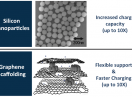
The latest power newsletter is out from EETimes Europe, with $4m for a new silicon graphene battery development, 3D packaging developed for data centre power, TI cutting the size and resistance of MOSFETs by up to 80% and the exclusive Power Trends Interview with Siobhan Dolan Clancy, the general manager of the discrete products division of Microsemi.
logo
Power news from EETimes Europe
bullet
June 20, 2016
[Alt-Text]

LATEST NEWS

SiNode wins $4m to jumpstart silicon graphene automotive batteries
.SiNode wins $4m to jumpstart silicon graphene automotive batteries
Pi Innovo in three-way deal to create two speed electric drivetrain
.Pi Innovo in three-way deal to create two speed electric drivetrain
ABB in top five suppliers of charging stations in China
.ABB in top five suppliers of charging stations in China

TECHNOLOGIES TO WATCH

Silicon cones on perovskite boost hydrogen production for fuel cells
.Silicon cones on perovskite boost hydrogen production for fuel cells
Solar cells with high bifaciality developed
.Solar cells with high bifaciality developed
Collaboration targets 3D packaging for voltage regulators in data centers
.Collaboration targets 3D packaging for voltage regulators in data centers

NEW PRODUCTS

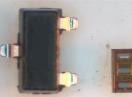
TI cuts 60 V MOSFET size by 80% with FemtoFET
.TI cuts 60 V MOSFET size by 80% with FemtoFET
Convection cooled 600 W supply boosts reliability by 25%
.Convection cooled 600 W supply boosts reliability by 25%
650V MOSFETs provide more headroom for industrial, telecom and renewable energy
.650V MOSFETs provide more headroom for industrial, telecom and renewable energy

POWER TRENDS INTERVIEW

Power Trends: Microsemi sees integration from device to module drive innovation

[Alt-Text]
.

NEW PRODUCTS

Li-ion battery pack monitor safeguards traction battery systems

Railway-certified 20W DC-DC converter has 4:1 input

Regulator module reduces board area in noisy applications

Ultra Compact AC-DC modules provide up to 5W for low power standby applicaitions

TECHNICAL PAPERS

Texas Instruments: Power conversion topology for space- constrained applications

Digital Power System Management - Take Control of Your Power Supplies

Intersil: Understanding USB-C Buck-Boost Battery Charging

EVENTS

Startups at Automatica 2016 Industrial Automation show – Munich, June 21 - 24

Visit our leading websites

Thursday, June 16, 2016

New process boosts ESD protection

By Nick Flaherty www.flaherty.co.uk

Electrostatic discharge (ESD) can be a major problem for embedded equipment. Static generated from everyday movement can damage silicon devices, especially as process technology means feaatures in the chips are ever smaller and more vulnerable to such electric shocks

Toshiba is hoping a new process technology it has developed to increase resistance to Electrostatic Discharge (ESD) in devices will help.

The 0.13μm process technology at New process boosts ESD protection | EETE Power Management optimizes the structure of transistor and significantly improves ESD characteristics by a factor of four, while the standard deviation is only 1/12 that of the conventional structure. Analysis of 3D simulations has also allowed Toshiba to identify a mechanism for optimizing transistor structure to boost ESD robustness.

ESD protection devices are required to protect internal circuit and this is particularly true for analogue power semiconductor devices required to apply 10V to 100V, which need a high rated voltage. In this case, ESD protection devices must ensure high current flow, which results in enlarged chip size. Shrinking the size of the ESD protection device is an issue in realizing more compact chips.

Using 3D simulation analysis of an ESD event, Toshiba found out that ESD induced destruction is caused by lattice temperature increase due to the current flowing at the highest electric field point. Modifying the transistor structure, which extending the drain low resistive region to the source direction and suppressing the lateral silicon resistance, shifts the current flow from the bottom of the drain to source direction and detaches it from the highest electrical field point. This optimized design was found to increase ESD robustness by up to four times and to decrease the standard deviation down to 1/12. In addition, the device size required to ensure a HBM (Human Body Model) of ±2000V was cut by 68%.

Toshiba offers advanced analog process platforms, with 0.13μm process technology, that can be embedded with the transistors such as CMOS, DMOS, bipolar transistor and the passive devices such as resistor and capacitor. User can select a process suited to each application from three process platforms: “BiCD-0.13” is mainly for automotive (DMOS line up is up to 100V); “CD-0.13BL” is mainly for motor control drivers

Monday, June 13, 2016

Low cost disposable fuel cell to power biosensors

By Nick Flaherty www.flaherty.co.uk

Researchers in the US have developed a low cost disposable microbial fuel cell (MFC) that that generates power from a few drops of water, says EETimes Europe. The cell could cost just $0.70 to produce to drive more powerful biosensors.

Having a battery that can be powered by the microbes in waste water opens up new opportunities for installing sensors in harsh environments as part of the Internet of Things (IoT).

The cell was developed by Seokheun “Sean” Choi, assistant professor of electrical and computer engineering at Binghamton University, New York. Along with two students, he developed a module measuring 6cm across, following an earlier prototype.

“Last time, it was a proof of concept. The power density was in the nanowatt range,” said Choi. “This time, we increased it to the microwatt range. We can light an LED for about 20 minutes or power other types of biosensors.”

The battery could allow the use of more sophisticated fluorescent or electrochemical biosensors in developing countries, he said. “Commercially available batteries are too wasteful and expensive for the field,” he says. “Ultimately, I’d like to develop instant, disposable, accessible bio-batteries for use in resource-limited regions.”

The new design folds into a star with one inlet at its centre and the electrical contacts at the points of each side. After a few drops of dirty water are placed into the inlet, the device can be opened into a Frisbee-like ring to allow each of the eight fuel cells to work. Each module is a sandwich of five functional layers with its own anode, proton exchange membrane and air-cathode.

Choi’s original matchbook-sized battery could be produced for about 5 cents. The new ninja star device is more expensive — roughly 70 cents — as it uses carbon cloth for the anode as well as copper tape. The team’s next goal is to produce a fully paper-based device that has the power density of the new design and a lower price tag.