All the latest quantum computer articles

See the latest stories on quantum computing from eeNews Europe

Wednesday, May 04, 2011

Intel to use vertical FINFET transistors in chips by year end - video and update

By Nick Flaherty www.flaherty.co.uk

Intel is aiming to use its vertical FINFET transistors technology in processors by the end of the year. It has demonstrated its Ivy Bridge processor using 22nm process technology running and says these will ship by the end of the year.
The FINFET technology, first revealed in 2002, is a vertical rather than traditional planar transistor structure which Intel says will provide 37% more speed and 30% lower power by having shorter distances while avoiding the problems of leakage and breakthrough that come with the planar gate oxide that is just a few nm thick now.
This will provide more performance at lower clock speeds and lower power for embedded applications, as In-Stat points out here

Freescale announces 'creative' robotics design contest

By Nick Flaherty www.flaherty.co.uk

Freescale Semiconductor has launched a design contest to develop and submit a unique sensor robotic or system design based on Freescale’s latest sensor development kit in the form of a walking robot or the Freescale Tower System.
To coincide with the contest, Freescale has introduced a sensor development kit and new Tower Mechatronics Board that contestants will use for their designs. The Tower Mechatronics Board enables designers to write software for a variety of sensor applications. When used in the Freescale sensor robot, the Tower board is capable of making the robot walk and respond to touch, motion, vibration and other external stimuli. The Freescale robot is a nine-inch tall, four degrees of freedom bipedal walking robot, with a 32-bit ‘brain’ and a three-axis accelerometer for balance.
Unfortunately to be eligible to participate in the Freescale Make It Challenge, contestants must attend the Freescale Technology Forum (FTF) from June 20-23 in San Antonio, Texas. The contest will challenge attendees FTF and complete an online course and quiz or one of two training courses offered at the forum.

The Make It Challenge will have two tracks:
1. Mechatronics Robot Track
2. Tower System Track

The challenge is limited to the first 200 registrants (100 per track), and participants can choose to enter one or both tracks. Each contestant in the Mechatronics Robot Track will receive the Freescale robot (FSLBOT) that contains the Tower Mechatronics board (TWR-MECH), as well as FSLBOT code. Participants in the Tower System Track will receive a Tower System kit containing one controller module selected by the participant. Contestants in both tracks will have access to the on-site FTF Make It Lab, where they can work on their designs and interact with Freescale technology experts.

Contestants must enter their designs on June 22, 2011 at 4 p.m. CDT and are limited to one submission per track. Entries will be judged on application innovation and creativity, as well as integration of different elements of the tool kit provided.

"Design challenges allow engineers to learn about new technologies and think of clever and unique ways to implement them into future designs," said judge Joe Grand, electrical engineer, former host of Discovery Channel's Prototype This! and president of Grand Idea Studio and a long-time Freescale customer. "As one of the judges for Freescale's Make It Challenge, I'm really looking forward to seeing what the FTF attendees can come up with using the Tower System."
First place winners of each track will receive $3,000 USD, second place $2,000 USD and third place $1,000 USD. The grand prize winner, selected from the first place track winners, will receive a Freescale Motorsports VIP weekend package for two, which includes travel and lodging for an upcoming motorsport event. For official rules; visit www.freescale.com/MakeItChallenge.
The Tower Mechatronics Board, robot and software allow users to experiment with acceleration, magnetic, pressure and touch sensors, as well as electromechanical controls for industrial and consumer applications. The goal of the Tower Mechatronics Board and sensor robot is to help designers create innovative projects as quickly and easily as possible.
The Tower Mechatronics Board combines 32-bit computing, sensors and an actuator control onto a single standalone board with an on-board battery supply. The board, controlled by a 32-bit ColdFire microcontroller with 64K of RAM and 512K of flash, supports the range of Freescale Xtrinsic sensors via plug-in daughter boards.
The Tower mechatronics board is also supported by a range of development software. RobotSee is a scripting language as easy as BASIC, with the power of C that can be used without prior programming experience to create innovative projects. The Tower Mechatronics Board operates standalone, but can be plugged into the Tower System to expand its capabilities. Freescale’s robot is a sensor development kit controlled by the Tower Mechatronics Board, which includes simple development tools that help designers learn to write software for sensors.

Useful Links
FTF Americas 2011
Freescale Robotics
Freescale Tower System
Element14
Tower Geeks
RobotSee


Enhanced by Zemanta

RF Monolithics cuts size of Zigbee Pro module in half

Footprint 20-50% Smaller Than Competing Modules with 1MB of flash
By Nick Flaherty www.flaherty.co.uk

RF Monolithics in Dallas has launched an RF module for the ZigBee Smart Energy and Home Automation Profile that adds a megabyte of flash storage for data logging and still reduces the footprint by half. 
The ZPM3570 ZigBee Pro module uses a Coretex M3 ARM processor and Ember RF chip and is aimed at smart homes that can control appliances, lighting, environment, energy management and security. According to the ZigBee Alliance, “Smarter homes allow consumers to save money, be more environmentally aware, feel more secure and enjoy a variety of conveniences that make homes easier and less expensive to maintain.”
“As a long time member of the ZigBee Alliance who has seen the standard grow and mature, RFM is excited to bring to market the latest in our line of ZigBee modules. The combination of its tiny size, on-board 1MB flash for data logging, and easy-to-integrate API, make the ZPM3570 the ideal choice for designers looking to add Smart Energy ZigBee functionality to their products,” said Tim Cutler, Director of M2M Business at RFM.
“For many devices that need ZigBee PRO functionality, size is critical and real estate is at a premium. The ZPM3570 really delivers on this account. In addition to the small footprint, the surface mount design of the ZPM3570 eliminates the need for costly connectors,” he said. The ZPM3570 is less than 0.63 square inches in area, and provides a complete ZigBee PRO solution including on-module chip antenna and 1MB flash memory for data logging.
Quickly implementing products that provide vendor-interoperable Smart Energy and Home Automation is achieved through an intuitive API that simplifies connectivity of the ZPM3570 to an application processor. OEMs wishing to implement their own application in addition to the ZigBee stack can take advantage of the on-board 32-bit M3 Coretex ARM processor. This can eliminate the additional cost and complexity of a separate application co-processor.
The ZPM3570 incorporates Ember’s EM357 ZigBee RFIC and is coupled with a power amplifier, plus low noise amplifier that increases the RF transmit power and receive sensitivity. The ZPM3570 provides a 250 kb/s RF data rate with +20dBm (100mW) RF power coupled with a receive sensitivity of -103dBm. The on-module antenna keeps device costs low by eliminating the cost of a separate antenna.
RFM also offers the ZPM3570DK development kit that will be available from RFM distributors in mid-June, 2011. ZPM3570 samples are available to qualified customers. 
Enhanced by Zemanta

Tuesday, May 03, 2011

Atego acquires US avionics specialist HighRely

Software tools supplier Atego has bought US avionics software specialist HighRely.
Based in Phoenix, Arizona, HighRely supplies tools for developing aerospace and avionics systems, medical equipment, nuclear and transportation systems, covering the whole project lifecycle from application planning, specification and design through to build, testing, verification, certification and implementation. It has North America’s largest Avionics Certification Centre and provides more certified avionics engineers than any other services company. HighRely’s engineers have worked on over 60% of all major commercial and military aircraft developed in the past decade.
The staff will join Atego, the leading independent supplier of industrial-grade, collaborative development tools that are used for developing complex, mission-critical and safety-critical systems, from the architectures to the software and hardware.
“The acquisition of HighRely is all about scale, growth and continuing to deliver on our Work-as-One strategy to enable engineers to easily meet the difficult challenges involved in designing complex, critical systems,” said James Gambrell, Chairman of Atego. “HighRely’s expertise in the aerospace and avionics markets adds considerable breadth and depth to our solutions and services for critical system design and development, reinforcing our position in the market and boosting our potential for growth. The unparalleled industry knowledge, expertise and ongoing commitment of HighRely’s employees will also add significantly to our global expansion plans. This acquisition is key for Atego and we plan to invest in the growth of the HighRely business, while continuing to service HighRely’s loyal customers”

Atego acquires US avionics specialist » SW Innovation News

TI launches industry's first FRAM microcontroller

MSP430FR57xx FRAM microcontroller writes up to 100x times faster
By Nick Flaherty www.flaherty.co.uk

Texas Instruments has announced the industry’s first ultra-low-power ferroelectric random access memory (FRAM) 16-bit microcontrollers that it believes will drive a new era of reliable data logging and RF communication capabilities.
TI claims the new MSP430FR57xx FRAM series ensures data can be written more than 100 times faster and uses as little as 250 times less power than flash- and EEPROM-based microcontrollers. Additionally, the on-chip FRAM allows data retention in all power modes, supports more than 100 trillion write cycles, and delivers a new dimension of flexibility by allowing developers to partition data and programming memory with changes in software and so eliminates existing power consumption and write endurance barriers.

Technology comparison (Source: TI)

Key features 
  • Operating at 100µA/MHz in active mode and 3 µA in real-time clock mode
  • More than 100 trillion write cycle endurance supports continuous data logging, eliminating need for external EEPROM and battery-backed SRAM
  • Unified memory allows developers to easily change memory partitioning between program, data and cache in software, providing inventory management and system cost savings
  • Guaranteed write and data retention in all power modes ensure code safety to simplify the development process, reduce memory test costs and increase end-product reliability
  • Enables reliable remote software upgrades – especially over the air – to provide cheaper, easier software upgrade paths for device manufacturers
  • Integrated FRAM densities up to 16kB as well as analogue and connectivity peripheral options, including 10-bit ADC, 32-bit hardware multiplier, up to five 16-bit timers and multiple enhanced SPI/I2C/UART buses
  • Code compatibility across MSP platform as well as low-cost, easy-to-use tools, comprehensive documentation, user guide and code examples allow developers to get started immediately
  • Simplify system development with broad compatible RF tools from TI
  • Enables intelligent batteryless RF connectivity solutions
  • Built on TI's advanced low power, 130nm embedded FRAM process

The new MSP430FR57xx microcontrollers start at $1.20 at 10K units, and samples and tools are immediately available. The MSP-EXP430FR5739 Experimenter’s Kit is $29 and can be ordered at www.ti.com/fr57xx-pr-ek-es and the MSP-TS430RHA40A Development Kit is $99 and can be ordered atwww.ti.com/fr57xx-pr-dk-es.
Enhanced by Zemanta

INCHRON in strange deal with IBM to reduce complexity of embedded systems

By Nick Flaherty www.flaherty.co.uk

IBM isn't a name you come up with when thinking about embedded systems, but German real time critical software design and test house Inchron has made a significant deal for Big Blue to use its complete range of tools and services.
Inchron's products enable designers to model, simulate and analyze the dynamic real-time behaviour of embedded systems at an early stage of the design process. This cuts development times and costs by up to two thirds. At the same time the quality of the finished products is ensured while expensive warranty claims or even product recalls are avoided.
IBM's Rational division includes real time database technology, Telelogic design software and the old i-Logix graphics simulation tools, and is now looking to integrate Inchron's tools for the development of embedded systems. The greatest improvements are with regards to model-based development where timing and performance
considerations can now be taken into account at a much earlier stage of the development process.
"We are delighted that IBM has chosen to take this step with us after thoroughly testing our skills and technologies. This enables us to raise our global sales and marketing activities to much higher levels," said Uwe Brodtmann, Managing Director of Inchron. "Inchron's tools enable us to extend our leadership in the provision of solutions for the development of embedded systems," said Meg Selfe, VP Complex & Embedded Systems of the Rational Brand at the IBM Software Group.
The Inchron Tool-Suite offers a unique combination of simulation (chronSIM) and validation (chronVAL) for the comprehensive analysis of networked real-time systems and the company is a premium member of the AUTOSAR consortium and supports international research projects with its technological expertise and years of experience in real-time performance issues.
Enhanced by Zemanta

Intel Intends To Standardize All-in-One PC With Mini-ITX Form Factor « My Digital Life

Intel Intends To Standardize All-in-One PC With Mini-ITX Form Factor « My Digital Life

Hmmm, interesting.

Kontron launches its smallest pico-ITX board with graphics

2.5in SBC supports DDR3, DirectX11 and 1080p in embedded apps

By Nick Flaherty www.flaherty.co.uk

Kontron has launched its smallest embedded single board computer (SBC) based on the AMD Embedded G-Series with Fusion technology. The new Kontron 2.5-inch Pico-ITX KTA55/pITX has a wide range of dedicated interfaces, extremely small footprint (100 x 72 mm) and low power requirements and is Kontron's fastest and most cost-effective entry into the development of graphics-intensive small form factor applications.
This means OEMs can use DirectX 11, full HD video display (1080 i/p), dual-screen control and reduce development time for small box applications such as those found in the latest digital signs and user-friendly sales kiosks.
With just 9 W TDP for the accelerated processing unit - which integrates one or two 64-bit processor cores, a programmable graphics unit plus a PCI Express Gen 2.0 controller and a DDR3 RAM controller - the board is aimed at low power applications. Developers can rely on existing cooling concepts from Kontron's portfolio and accelerate the system development. 

Target applications include all SFF applications with high graphics and video performance requirements including POS/POI multimedia kiosks and dual-screen installations in infotainment systems, control rooms and machine controls. The OpenCL support means computation-intensive applications in the low-power segment, such as image processing and digital signal processing, benefit from the off the shelf platform through minimized development times and a simplified design-in process.

Feature set

  • 1.2 GHz Single-Core processor AMD T44R or the 1.0 GHz Dual-Core processor AMD T44N. 
  • Integrates up to 4 GB RAM on a DDR3 SODIMM module allowing OEMS to easily scale the system configuration according to individual needs. 
  • DVI-I output for DVI and VGA, 24-bit dual channel LVDS interface and the backlight output (switchable from 5 V to 12 V) means OEMs can implement dual-monitor applications with resolutions up to 2 x full HD (1080p). 
  • Integrated unified video decoder minimizes the CPU load in the decoding of H.264, VC-1, MPEG, WMV and DivX HD videos. 
  • Integrated high definition audio (HDA) provides a crystal-clear audio output
  • Six USB 2.0 ports so OEMs can make use of a broad range of cost efficient peripherals for application-specific expansions. 
  • Integrated 10/100/1000 Ethernet port offers the highest compatibility and bandwidth for networking applications. 
  • Storage media can be integrated over three 6.0 Gb/s SATA connections which can take full advantage of the high transfer rates of the more recent solid-state drives. 
  • A trusted platform module provides data security for safety critical applications and an LPC bus for legacy peripherals and 8 configurable GPIOs round out the feature set. 

The KTA55/pITX supports Windows XP, Windows XP Embedded, Windows Embedded Standard 7 and Linux. Pre-production models will be available in July 2011, serial production will begin in late Q3 of 2011.


Enhanced by Zemanta

TI's new TINA-TI SPICE simulator 9.1 increases speed 5X

Adds Chinese, Japanese and Russian versions
By Nick Flaherty www.flaherty.co.uk

The latest version of Texas Instruments'  TINA-TI 9.1 SPICE-based analogue design and simulation tool averages a 5X speed increases over version 7.0. This allows engineers to design, test and troubleshoot a broad variety of basic and advanced analogue circuits, including complex architectures, without any node or number of device limitations. 
This version also supports any industry SPICE models, making it easier than ever for engineers to simulate their designs and is available in simplified and traditional Chinese, Japanese and Russian, as well as English.

Key features and benefits of TINA-TI 9.1
  • Support for multi-core processors and an optimized SPICE engine enable TINA-TI 9.1 to run simulations 5X faster on average.
  • Designers can import any SPICE model to easily simulate their designs in TINA-TI 9.1.
  • TINA-TI 9.1 will feature more than 500 part models and reference designs including more than 130 new power models. The broad model coverage and fast simulation in TINA-TI 9.1 make it easier for designers to speed their products to market.
  • TINA-TI 9.1 provides all the conventional DC, transient and frequency domain analysis of SPICE and extensive post-processing capability that allows the user to customize results. Virtual instruments allow users to select input waveforms and probe circuit node voltages and waveforms.
TINA-TI 9.1 is available today from TI for free downloading in the TI Analog eLab Design Center at www.ti.com/analogelab-pr. The center offers support and training for new and experienced engineers who are using analogue products in their applications.

Enhanced by Zemanta

Wind River turns 30

By Nick Flaherty www.flaherty.co.uk

Real time operating system company Wind River turns 30 this year. In a blog post, Tomas Evensen points to the early moves to add a TCP/IP stack and GDB for debugging to VxWorks, then providing the Tornado and Workbench development environments and now providing a choice of operating systems, real-time or open source/Linux.
But he points particularly to virtualisation, way back in 2004. 
"In early 2005, Paul Borman who worked for me in the CTO Office created a very impressive prototype, called eCPU, that ran VxWorks and Linux on a single CPU and we learned a lot from that effort," said Evensen. "When Johan Fornaeus came on board in 2006 through an acquisition (he was co-founder of Interpeak and before that, one of the co-designers of the Enea/OSE operating system), I had him leading a small nimble task force team to develop a hypervisor really suited for the embedded space. I felt we made a real breakthrough. This was not a repackaged operating system pretending to be something it was not designed for, but instead a truly unique approach to virtualization and separation. Over the next couple years, this small team created a scalable product with an extremely tight footprint, incredible performance, while at the same time being full featured for the common architectures such as Intel, Power, ARM and MIPS."
Back in those days, it was not clear when and how important multi-OS systems would be in the future, he says, but today it is hard to imagine how to deal with these new complex systems without a hypervisor for embedded virtualisation. 
Enhanced by Zemanta

Express Logic adds real time code profiling with IAR Systems

IAR Embedded Workbench now displays ThreadX-captured profiling information
By Nick Flaherty www.flaherty.co.uk

RTOS developer Express Logic has added access to Performance Execution Profiling information with IAR Embedded Workbench. Developers need as much information as possible to correctly design and implement applications for commercial systems. That information must be presented in a clear, simple, and easy-to-understand form for it to be useful.
Express Logic’s ThreadX RTOS optionally collects and processes a variety of run-time statistics, including the following:
  • CPU execution percentage of each application thread
  • CPU execution percentage of total interrupt processing
  • CPU idle time percentage
  • Total number of thread preemptions, suspensions, and priority inversions
  • Total number of mutex, semaphore, and event flag puts, gets, and sets
  • Total number of messages sent/received
  • Total number of memory allocations, deallocations, fragments, merges, etc.
  • Total timer activations and expirations
“Express Logic has earned a reputation for providing reliable and high-performance embedded software,” said Mats Ullström, Product Director at IAR Systems. “The integration of ThreadX Execution Profiling in IAR Embedded Workbench opens new opportunities to develop performance-optimized embedded applications in shorter time and with greater ease.”
This collection of information is now presented in a clear, tabular form within IAR Embedded Workbench. IAR Embedded Workbench presents full “kernel awareness” information for ThreadX, including the current status of all application threads and RTOS objects, such as semaphores, mutexes, timers, and message queues. Now, with the addition of Execution Profiling information, IAR Embedded Workbench provides extensive and useful information on RTOS-based application performance. It would be virtually impossible for the developer to instrument the application and derive this information and the new ability of the tools from IAR Systems to display it makes this information instantly available and more useful to the application.
With this new feature, developers are able to more fully analyze their application to determine how much processing is still available, as well as where most of the processing is taking place. From this information, a developer can determine if there is enough available processor cycles to handle maximum system loading requirements (safety margin) or to add additional application functionality. Alternatively, if there is an excessive amount of available cycles, the developer may choose to lower the frequency of the processor to reduce power consumption. Finally, the information provides an excellent roadmap for optimization because it shows exactly where the processing is taking place.
“The ThreadX Execution Profiling information now presented by IAR Embedded Workbench gives developers a quick, informative view of what their application is doing up to that point,” said William Lamie, President of Express Logic. “This information greatly helps developers understand their system, especially where optimizations are most beneficial. No other IDE offers this valuable information, making the ThreadX-IAR Embedded Workbench combination indeed a best-of-class solution for commercial product development.”
ThreadX is available in full source code form, royalty-free, with project license prices starting at $12,500.

Enhanced by Zemanta

Wireless Power Devices to Reach Critical Mass During the Next Decade Says Market Research

Crossover in 2012 with $1bn revenue

By Nick Flaherty www.flaherty.co.uk

Cleantech market intelligence firm Pike Research forecasts that the wireless power industry will reach a key inflection point in 2012 when it crosses the $1 billion revenue mark, and shipments of wireless power devices will achieve significant growth during the years following that milestone.
“The electrical cord is the one tether that has yet to be cut for most mobile users,” says Pike Research president Clint Wheelock.“Today’s early wireless charging systems mostly use inductive charging technologies that require direct contact between the charger and the device, but research is well underway on systems that will eventually transmit power wirelessly over long distances.”
Wireless power will have important applications in several key market sectors during the next decade: consumer electronics, mobile computing and communications devices, electric vehicles and their charging stations, industrial applications, military applications, and ultimately long-distance transmission. Key technologies currently being pursued within the industry include induction, magnetic resonance coupling, conduction, radio frequency and microwaves, and lasers.
Pike Research’s analysis indicates that wireless power could also have a meaningful impact on clean technology markets in several ways:
  • Reducing the need for copper-wire transmission grids
  • Transporting power from remote generation sources, such as wind farms and solar arrays
  • Collecting and using micro-power from ambient sources, such as cellular networks, that otherwise dissipates – a technique known as “power harvesting”
  • Replacing costly and carbon-intensive electricity sources, such as diesel generators, in temporary applications and locales
Pike Research’s report, “Wireless Power”, analyzes the global market opportunity for wireless power charging and transmission systems. The study examines the applications for which wireless power shows the most promise; reviews the remaining technological hurdles to effective, efficient wireless power charging and transmission; outlines the market challenges to be overcome; spotlights the main players in the industry; and provides market forecasts for revenue, by application and by region, during the period from 2010 to 2020. An Executive Summary of the report is available for free download on the firm’s website.
Enhanced by Zemanta

New carbon nanotube pixel technology for OLED displays could pave way for next generation of consumer electronics

A new technique for developing OLED pixels using carbon nanotubes allows lower voltages to be used, leading to larger and more efficient screens for consumer devices say researchers at the University of Florida here.

By Nick Flaherty www.flaherty.co.uk

The ARM desktop PC that's just for developers - for the moment

Trim-Slice NVIDIA Tegra 2 desktop ships - well, sort of
By Nick Flaherty www.flaherty.co.uk

Israeli computer developer CompuLab is announcing immediate availability of an ARM-based desktop PC based around the NVIDIA Tegra 2 chip, with prices starting at a frankly amazing $199. 

However, while the announcement has been well received - see the links below - the tiny system (left) is not shipping to consumers, only developers, and the base, barebone configuration is not available, leaving the most practical version at a more understandable $319 plus shipping. OEMs and system-integrators can order Trim-Slice in volume with customization of feature set, branding and case finish.

The Trim-Slice is offered in 3 configurations -
  • Trim-Slice Barebone - with 1 GHz Tegra 2, 1 GB RAM, HDMI port, Gigabit Ethernet, 4 USB ports, 2 SD slots and RS232 serial port ar $199. 
  • Trim-Slice Value - adds a 4 GB micro-SD card with Linux pre-installed and a USB 802.11n WiFi adapter at $219
  • Trim-Slice Pro - with 1 GHz Tegra 2, 1 GB RAM, 32 GB SSD with Linux pre-installed, HDMI and DVI ports, Gigabit Ethernet, built-in 802.11n WiFi, 4 USB ports, 2 SD slots, RS232 serial port and a USB Bluetooth adapter at $319. 

Trim-Slice currently runs Linux and is supported in the mainline kernel revision 2.6.39. Support for other operating-systems is work-in-progress. “We designed Trim-Slice with SW developers in mind,” said Irad Stavi, Director of Business Development at CompuLab. “Developers that are looking for an open cost-effective high-performance ARM platform are likely to find Trim-Slice an attractive and unique solution that is very convenient for SW development.”
Enhanced by Zemanta

LTE chip suppliers in 2011

By Nick Flaherty www.flaherty.co.uk

From the Portable Multimedia blog and market researchers Forward Concepts, here's a very interesting list of LTE chip suppliers for 2011:

  • Altair: FourGee-3100 undergoing field trials. 
  • Broadcom (via Beceem acquisition): Announced, likely sampling Q1/2012
  • Cavium Networks (via WaveSat acquisition): Odyssey Single-mode LTE chip is sampling.
  • Intel/Infineon (via Blue Wonder acquisition): Expect to sample LTE in Q3/2011
  • MediaTek (LTE licensed from DoCoMo): Product sampling likely Q1/2012 for TD-LTE, Also licensed Coresonic's LTE baseband IP.
  • NTT DoCoMo LTE Licensees: Fujitsu, Panasonic & Renesas (based on Tensilica DSP cores); Now in Japan field trials.
  • Qualcomm: MDM9600 shipping in HTC Thunderbolt (see below), but MDM9625 and MDM9225 Sampling Q4/2011 
  • Renesas Mobile Corp.: The (SP2531) is based on a Nokia-originated (non-TI DSP) design. It supports TD-LTE and FDD-LTE cat 3 with HSPA+ and now sampling.
  • Samsung Semiconductor: Shipping in both dongles (TeliaSonera in Sweden) and handsets (See below)
  • Sequans: WiMAX chip house, working with Alcatel-Lucent. TD-LTE dongle modems (SQN3000 series) shipped in small quantities in May 2010.
  • ST-Ericsson: Thor M7400 LTE/HSPA+ modem will be sampling in Q2/2011.
Enhanced by Zemanta

Thursday, April 28, 2011

Researchers create invisibility cloak for the terahertz band

'Shielding' for security and communications

By Nick Flaherty www.flaherty.co.uk

Researchers at Northwestern University in the US have created a new kind of cloaking material that can render objects invisible in the terahertz range. Although the design can't translate into an invisibility cloak for the visible spectrum, it could have implications in diagnostics, security, and communication networks.
The cloak, designed by Cheng Sun, assistant professor of mechanical engineering at Northwestern's McCormick School of Engineering and Applied Science, uses microfabricated gradient-index materials to manipulate the reflection and refraction of light. Sun's results will be presented next week at CLEO: 2011, the annual Conference on Lasers and Electro-Optics.
Humans generally recognize objects through two features: their shape and colour. To render an object invisible, one must be able to manipulate light so that it will neither scatter at an object's surface nor be absorbed or reflected by it (the process which gives objects colour).
In order to manipulate light in the terahertz frequency, which lies between infrared and microwaves, Sun and his group developed metamaterials: materials that are designed at the atomic level. Sun's tiny, prism-shaped cloaking structure, less than 10 millimeters long, was created using a technique called electronic transfer microstereolithography, where researchers use a data projector to project an image on a liquid polymer, then use light to transform the liquid layer into a thin solid layer. Each of the prism's 220 layers has tiny holes that are much smaller than terahertz wavelengths, which means they can vary the refraction index of the light and render invisible anything located beneath a bump on the prism's bottom surface; the light then appears to be reflected by a flat surface.
Sun says the purpose of the cloak is not to hide items but to get a better understanding of how to design materials that can manipulate light propagation. "This demonstrates that we have the freedom to design materials that can change the refraction index," he said. "By doing this we can manipulate light propagation much more effectively."
The terahertz range has been historically ignored because the frequency is too high for electronics. But many organic compounds have a resonant frequency at the terahertz level, which means they could potentially be identified using a terahertz scanner. Sun's research into terahertz optics could have implications in biomedical research (safer detection of certain kinds of cancers) and security (using terahertz scanners at airports).
Next Sun hopes to use what he's learned through the cloak to create its opposite: a terahertz lens. He has no immediate plans to extend his invisibility cloak to visible frequencies. "That is still far away," he said. "We're focusing on one frequency range, and such a cloak would have to work across the entire spectrum."
Enhanced by Zemanta

Wednesday, April 27, 2011

Accent Introduces First Transceiver For 802.15.4 Smart Grid Standard

Provides 800Kbit/s for 902-928 MHz and 863-870 MHz bands (US and Europe)

By Nick Flaherty www.flaherty.co.uk

Italian design house Accent has developed the first transceiver to support both mandatory and optional specifications for the IEEE 802.15 TG4g standard for Smart Utility Networks
The group’s charter is to create a global standard for a PHY amendment to 802.15.4 targeting applications such as smart-grid networks to replace the proprietary RF mesh networks that are currently the dominant technology of choice for Smart Grid deployments in North America, primarily based on FSK technology. The new 802.15.4g standard will enable interoperability among Smart Grid devices, such as smart meters, and more advanced performance capabilities. In addition to defining a common mandatory FSK mode, 802.15.4g currently specifies optional OFDM and MR-OQPSK modulation formats. The task group reflects overwhelming industry support with members from leading utility, equipment, and silicon companies.
The RF transceiver, based on a Zero-IF architecture, is designed specifically to exceed requirements of 802.15.4g across mandatory and optional modulation schemes, including high performance data rates up to 800 kbps and input sensitivities up to -118 dBm. The software reconfigurable receiver has high dynamic range and guarantees better than 30dB SNR on wide range of input levels. Finally, the transceiver features unparalleled integration reducing BOM and external component part count.
“The importance and positive societal benefits of Smart Grid deployments is recognized worldwide, with many countries implementing stimulus and deployment targets to accelerate adoption,” said Federico Arcelli, CEO of Accent. “With the introduction of the 802.15.4g transceiver, Accent continues its track record of enabling Smart Grid equipment vendors with leading technologies in a flexible platform to meet their evolving product needs.”
The transceiver is now sampling with lead customers and is available as a technology option for Accent’s ASMgrid Platform.
Enhanced by Zemanta

Driving the smart grid boom with M2M

Machine-to-machine (M2M) will make or break the sector

By Nick Flaherty www.flaherty.co.uk

With 1.3 billion smart meters worldwide by 2020, it is the applications layer of the M2M supply-chain which can make or break smart-grid implementations for utility-sector companies, says Analysys Mason.

It forecasts 1.3 billion residential and commercial smart meter connections by 2020 with a CAGR of 56% over a 10-year period, according to a recent forecast. This high level of growth happens primarily in the developed world economies from 2010–15, but by 2016 it expects very high levels of growth in the emerging world, especially in the Asia–Pacific region.


Utility/energy-sector M2M device connections worldwide, 2010–20 [Source: Analysys Mason, 2011]

Utilities must do three things to be successful in the smart-grid space, says the research. First, they must prioritise deployment of the top cost-reduction and revenue-enhancing applications associated with the smart grid. The complementary aspects of cost reduction and revenue enhancement promise utilities a multitude of new opportunities. But choosing too many applications or deploying them in a haphazard fashion will reduce the effectiveness of these new programmes.
Second, they must work with a system integrator (SI) or communication service provider (CSP) that can provide a pre-integrated or pre-tested solution. SIs or CSPs need to offer solutions that include equipment, communications, a hardware/software platform and applications. Trying to piece together a solution from 5–7 vendors will prove financially painful and time-consuming.
Third, they must pick application vendors with a proven track record in actual deployments in their countries of interest. While M2M solutions are relatively new in the energy/utility sector, the company identifies some notable successes from Trilliant, eMeter, EnerNOC and others. And the experiences of application vendors matter a lot in this new field.
The roll-out of smart metering is the first step in smart-grid development and introduces the potential for utilities to start offering additional value-added services to residential and commercial customers. In the UK, for example, suppliers will be under licence obligations to complete the roll-out of smart metering to 25 million households, most likely by the end of the decade. A degree of flexibility is expected in the pattern of installations, with some utilities seeking to engage with local delivery partners to increase deployment efficiency, and others focusing on early adopters. The regulator Ofgem has suggested that suppliers’ discretionary installation rate could peak at an annual 17% meter replacement rate during the middle of the decade 2010–20.
Is the applications layer of the M2M supply chain which can make or break smart-grid solutions and a utility’s ability to meet its cost-reduction or revenue-generating goals. The top applications include pre-paid metering, home energy management, residential or commercial security, smart metering, storage management and demand response programmes. However, identifying the field of vendors for each of these six applications is no trivial task. Providers include Eschelon, OPower, Tendril, Eragy, Alertme, eMeter, Trilliant, Current Energy, EnerNoc and many others. Top application providers for smart-grid solutions will have exponential growth for their services. Making sure they have the proper supply-chain partnerships is key in quickly bringing to market cost-effective, value-enhancing solutions.
Research and consulting from Analysys Mason and Cornwall Energy delve deeply into the utility-sector supply chain, regulatory and policy issues, business planning, and technology feasibility of smart-grid implementations. Future research highlights the top application vendors in the M2M smart-grid space.
For more information, please contact Steve Hilton, Principal Analyst, atsteve.hilton@analysysmason.com
Enhanced by Zemanta

Tuesday, April 26, 2011

TI launches free software for microcontrollers

Free Grace software platform that generates C code and eliminates manual peripheral configuration for 16bit chips

By Nick Flaherty www.flaherty.co.uk

Texas Instruments has launched a free visual plug-in that enables developers to easily enable and configure ultra-low-power MSP430 microcontroller peripherals through a graphical user interface (GUI). With the Grace software, developers can interact with buttons, pull-down menus and helpful pop-ups to generate easy-to-understand C code that automatically configures the low-level register settings of analogue-to-digital converters (ADCs), operational amplifiers (op amps), timers, serial communication modules, clocks and other peripherals. 
By simplifying the peripheral configuration process, Grace software enables developers to focus on their differentiated application layer and user experience, removing barriers to microcontroller development and quickening time to market.
As a free Code Composer Studio IDE plug-in, Grace software seamlessly integrates into the MSP430 microcontroller tool chain and development process, compatible with all MSP430G2xx (Value Line) and MSP430F2xx devices, most eZ430 modules and the LaunchPad development kit. Open source tutorials and project examples are also included. Additionally, Grace software technology is scalable, with the potential to support other TI embedded processing solutions.

Key features:
  • Free plug-in for Code Composer Studio IDE, which provides an intuitive graphical environment for enabling and configuring MSP430 peripherals.
  • Helpful tool tips and pop-ups based on MSP430 datasheets and user guides provide a rapid understanding of the various peripherals and configuration options
  • Generates easy-to-understand C code and minimizes configuration conflicts or collisions between multiple peripherals to further quicken time to market
  • Compatible with LaunchPad, eZ430-F2013 and eZ430-RF2500 development tools to offer a completely user-friendly development environment for first-time microcontroller users
  • Grace provides a Basic, Power User, and Register-level view offering different levels of abstraction for setting up peripherals
The Grace software platform is available today for free download at www.ti.com/grace-pr-tf
Enhanced by Zemanta

Toshiba launches 19nm process NAND flash memory for 128Gbytes in a single package

By Nick Flaherty www.flaherty.co.uk 

Despite production problems in the wake of the Japan earthquake and power shortages, Toshiba Electronics Europe has made NAND flash memories with 19nm process technology, the finest level yet achieved. This latest technology advance has already been applied to 2-bit-per-cell 64-gigabit (Gb) and Toshiba says it will also add 3-bit-per-cell products fabricated with the 19nm process technology to its product line-up. This will make solid state disk drives significantly more cost effective.
Samples of 2-bit-per-cell 64-gigabit will be available from the end of this month with mass production scheduled for the third quarter of the year (July to September 2011).
The 19nm process technology will further shrink chip size, allowing Toshiba to assemble sixteen 64Gbit NAND flash memory chips in one package and to deliver 128GB devices for application in smartphones and tablet PCs. The 19nm process products are also equipped with Toggle DDR2.0, which enhances data transfer speed.
As the market for mobile equipment, such as smartphones, tablet PCs, and SSDs (solid state drives) expands, demand for smaller, higher density memory products grows. By accelerating process migration in NAND flash memory, Toshiba aims to reinforce and extend its leadership in the NAND flash memory market.


Enhanced by Zemanta

New line of shielded wallets to protect RFID and NFC credit cards from skimming


Faraday caged apparel to protect credit cards

By Nick Flaherty www.flaherty.co.uk

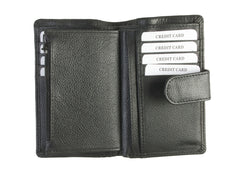
DIFRwear in the US has launched the first line of wallets, ID badge holders, and passport cases specially designed to protect sensitive information now found on many major credit cards and other forms of identification. These chips often contain private financial and other personal information that can be easily swiped without any person-to-person contact – also known as "card skimming." Resound will target the mainstream media to raise awareness about how the DIFRwear line of wallets can help consumers maintain privacy and ensure security, wherever they go.
RFID and NFC (near field connunications) add convenience by making it easy to remotely and wirelessly transmit information from credit cards, passports, and more. Yet it has also opened the door to more unauthorized data snooping, credit card skimming, and identity theft than ever before – especially for people who are constantly on-the-go. With summertime travel rapidly approaching, many consumers are paying high prices for credit protection, or choosing to leave certain cards at home. Now, they can just put their items in a DIFRwear wallet or passport case, and rest assured that the lining's built-in blocking shield will prevent hacking attempts – from the most rudimentary to the most sophisticated.
"As credit cards become 'smart cards' thanks to RFID technology, the wallets we carry them in need to be even smarter – making sure there's no chance of anyone stealing critical personal information," said Kevin McLaughlin, Principal and Co-Founder of Resound Marketing which is promoting the range. "We think consumers will be excited – and relieved – to know that there's a proven and trusted line of products out there that will keep that information safe, whether they're traveling across the country or around the corner."

Enhanced by Zemanta

Thursday, April 21, 2011

Develop your own NFC 'smart' poster

By Nick Flaherty www.flaherty.co.uk

The NFC Forum has published a White Paper about developing and deploying NFC Smart Posters, aimed at helping both business and surprisingly consumers, develop their own. 
NFC Smart Posters are objects in or on which readable NFC tags have been placed. Smart Posters use reader/writer mode, one of the three modes of NFC; the other two modes are Peer-to-Peer and Card Emulation. An NFC Smart Poster can come in many forms – it can be a poster, billboard, magazine page, even a three-dimensional object. Information on each NFC tag is read when an NFC device is held close to it. Smart Poster examples include a poster with a web address for buying concert tickets, a museum exhibit sign with in-depth information, a restaurant menu for quick ordering of daily specials, and an in-store display offering special savings to shoppers; many more are described in the paper.
The process for creating Smart Posters is simple enough that consumers can make their own for household use and the White Paper offers helpful information to guide them in this activity says the NFC Forum.
The paper - How to use NFC tags and readers to create interactive experiences that benefit both consumers and businesses - aims to encourage businesses and consumers to implement and use NFC Smart Posters with an easy guide to understanding what an NFC Smart Poster is, what is required to develop NFC Smart Posters, and how to avoid common obstacles when creating them. Through use cases, the paper highlights ways in which NFC Smart Posters are already in use around the world, benefiting industry and consumers alike.
NFC Smart Posters can be of value to retailers, transport agencies, financial services companies, museums, health care providers – any entity with information to share. NFC Smart Posters can deliver a wide range of business benefits, such as cost advantages over other means of communication, relative ease of implementation, and automated interactive communications with target audiences. NFC Smart Posters can also provide an immediately useful call to action on advertisements. 
The NFC Smart Poster White Paper is one of a series produced by NFC Forum members to educate the public and the industry about various aspects of using NFC technology and is available for download at no charge from http://www.nfc-forum.org/resources/white_papers/. Appendices include Frequently Asked Questions, a Glossary, and a selection of other available resources.
Enhanced by Zemanta

Almost 28% of Total Consumer Smartphones Will Be NFC-Enabled In 2015

By Nick Flaherty www.flaherty.co.uk


A new report available from Research and Markets in Dublin sees NFC making headway in consumer smartphones, with penetration of 28% in the next four years.

After its initial launch in 2010, NFC-enabled smartphones will contribute to 28 percent of total smartphone sales to end users (250 million units) by 2015, "Mobile handsets that are NFC-capable will see skyrocketing sales in 2011 and 2012," says Stela Bokun, Mobile Devices Practice Leader at Pyramid. "These sales will be driven by the overwhelming supply of NFC-enabled smartphones that will hit the market in the next two years, as well as service providers' 'push' marketing strategies across the globe," she indicates.
As the NFC ecosystem rapidly evolves, there will be an abundant supply of other NFC devices, in addition to NFC-enabled handsets. "To trigger sales, equipment vendors will have to convince their users (mostly retailers) that the benefit from NFC-based services will outweigh the cost of investment," says Bokun.
"Over the next five years, as high-impact partnerships and profitable business models emerge, NFC-based services will become ubiquitous, consistent and secure," Bokun says. "That will ultimately create sustainable demand for NFC-enabled devices, including handsets. The current abundance of business models will eventually yield a healthy NFC ecosystem, despite the initial hiccups," she notes.
The majority of demand for NFC-enabled devices will come from Asia/Pacific, Western Europe and North America. "89 percent of the total NFC-enabled handset unit sell-through will come from these three regions in 2015," indicates Bokun. The high quality and convenience of the new NFC-based services, and the emergence of a healthy NFC ecosystem, will stimulate sustainable long-term demand for NFC-enabled handsets.
To get ahead of the game, mobile operators should create partnerships with credit cards and banks immediately. "Their solutions will be the most wanted at the outset," says Bokun. Followed by aggressive campaigns convincing end users that they stand to benefit from NFC-enabled services, without end-user buy-in, all efforts will be in vain.

Enhanced by Zemanta