All the latest quantum computer articles

See the latest stories on quantum computing from eeNews Europe
Showing posts with label RF. Show all posts

Friday, September 09, 2016

Sequans to deliver LTE IoT chip for roll outs

By Nick Flaherty www.flaherty.co.uk

IoT chipmaker Sequans Communications is demonstrating its LTE-M and LTE-NB chips this week ready for roll out of systems later this year.

The Monarch chip is being shown linked to an LTE eNodeB base station emulator, the Amari OTS 100 from Amarisoft. This is an LTE Cat M1/NB1, LTE Release 13 design specifically for narrowband IoT applications, including sensors, wearables, and other low data, low power M2M and IoT devices. Monarch complies with the ultra-low-power and reduced complexity feature requirements of the 3GPP release 13 LTE Advanced Pro standard, defining narrowband, low data rate LTE technology for machine (M2M) communications.


The baseband, RF transceiver, power management, and RAM memory are integrated into a single 6.5 x 8.5 mm package (which is not necessarily a single chip), and also has programmable RF filtering for global band support. Sequans' proprietary dynamic power management technology will give it an operating life of over 10 years, says the company, overcoming one of the main objections in using LTE for IoT (the other being the operator costs)

Category M1, also known as LTE-M and Cat M, delivers about 1 Mbps maximum in a 1.4 MHz channel, and Category NB1, also known as narrowband IoT, or NB-IoT, delivers about 40 kbps in a 200 kHz channel.

“We are very proud to highlight the key capabilities of Monarch in this first-in-the-industry live demo of a Cat M1/NB1 chip,” said Georges Karam, CEO of Sequans. "In designing Monarch, we worked from day one to make sure it would be fully optimized in both cost and power consumption to fully unleash the LTE for IoT market potential. I am very excited to say that Monarch is operating as designed and we expect to have it ready for network deployments in Q4. Monarch is an entirely new, fully-optimized silicon design, and not an earlier generation chip modified with software to simulate Cat M1 and NB1 capabilities, as others appear to be doing.

He says the company is closely engaged with major operators, major eNodeB vendors, and key technology partners to fully address deployment plans for Cat M1 and NB1 networks, beginning first in the US (it has a deal with Verizon). Several OEMs and ODMs are developing modules and devices, with applications including health and fitness wearables, smart energy meters and asset trackers, industrial monitors and sensors, and Sequans has teamed up with Gemalto for the security and authentication element.

According to ABI Research, a leader in technology market intelligence, cumulative cellular M2M module shipments from 2016 through 2021 will reach 1.1 billion units; LTE modules will experience the highest growth, exceeding 50 percent of all cellular M2M shipments in 2021.

“With the recent ratification of the Cat M1 and Cat NB1 standards, it is pretty clear that LTE will rapidly replace 2G and 3G connections in the major M2M markets,” said Dan Shey, Managing Director and Vice President at ABI Research. “Sequans’ introduction of its Cat M1/NB1 chip, already working and being developed rapidly by Sequans in close collaboration with leading operators and OEMs, shows the strong momentum developing behind LTE Cat M1 and Cat NB1.”

“Narrowband LTE technology is of crucial importance to the M2M and IoT markets as many use cases will require nation-wide and carrier-grade connectivity. Our Monarch chip is an ideal solution to address this demand,” said Karam.

Tuesday, February 23, 2016

Semtech delivers LoRaWAN IoT networking via ARM's mbed dev tool

By Nick Flaherty www.flaherty.co.uk

Semtech has teamed up with ARM to provide the LoRaWAN shields and platforms through ARM's mbed development tools for low power, long range IoT nodes. 
The LoRaWAN end-device source code, standardized by the LoRa Alliance, is also available through mbed simplifying device prototyping and accelerating the development of Internet of Things (IoT) applications. 

By offering a tool that comes pre-installed with editable source code, the LoRa-equipped mbed platform allows developers to easily develop IoT applications and connect to LoRaWAN gateways. This gives developers and other interested parties the tools necessary to test the capabilities of LoRa RF technology and create IoT solutions.
“The easy-to-use, free online development platform from ARM combined with our LoRa transceiver improves the access for developers who want to explore the benefits and capabilities of LoRa,” said Hardy Schmidbauer, Director of Wireless for Semtech’s Wireless, Sensing and Timing Product Group. “By creating a more accessible tool, we anticipate even more realized IoT applications in the near future.”
The mbed supported NAMote72 platform is integrated with Semtech’s SX1272 LoRa transceiver and a STMicroelectronics STM32L1 series ultra-low-power MCU. This tool is designed for the 915MHz frequency band and includes a front-end module that can test the technology limits at the highest allowable regulatory output power. In addition to the NAMote72, Semtech and ARM released two LoRa and mbed enabled shields, the SX1276MB1MAS and SX1276LB1LAS, based on Semtech’s SX1276 transceiver. These tools, designed for the ISM frequency bands of Europe and China (SX1276MB1MAS) and North America (SX1276LB1LAS), give developers source code to enable RF tests, simple point-to-point communication and other device compatibility. The mbed shields plug into any mbed microcontroller development platforms from STMicroelectronics, NXP and others.
“The ARM mbed platform enables developers to quickly and easily create commercial, standards-based IoT solutions,” said Zach Shelby, vice president of marketing, IoT business at ARM. “By integrating ARM mbed technology with Semtech’s LoRa transceivers we are providing developers with the tools to use the standards-based LoRaWAN technology. We look forward to seeing Semtech utilize mbed technology to streamline and rollout IoT applications at scale.”
LoRaWAN LPWANs will be deployed for Mobile World Congress in Barcelona and Embedded World in Nuremberg, Germany. The ARM mbed IoT Device Platform will be displayed at the LoRa Alliance and Semtech booths to showcase its functionality with the live LoRaWAN network.
·        Product information:


Wednesday, January 13, 2016

RF360 to be a major new player in the Internet of things

By Nick Flaherty www.flaherty.co.uk

Qualcomm and TDK form Joint Venture for RF Front-End modules

Qualcomm and TDK have formed a joint venture for RF front-end (RFFE) modules and RF filters into fully integrated systems for mobile devices and fast-growing business segments, such as Internet of Things (IoT), drones, robotics, automotive applications and more.

TDK's highly integrated Rf module with diplexers
Majority owned by Qualcomm, RF360 will be nominally based in Singapore with its headquarters in Munich, Germany, and combine TDK’s capabilities in micro-acoustic RF filtering, packaging and module integration technologies and Qualcomm’s expertise in advanced wireless technologies to serve customers with leading-edge RF solutions into fully integrated systems.

In addition to creating RF360 Holdings, Qualcomm and TDK will expand their collaboration around key technology fields, including sensors and wireless charging.

“TDK is a leading electronic components manufacturer with cutting-edge expertise in RF filters and modules, and we are looking forward to deepening our collaboration and together accelerating innovation and better serving the ecosystem for next-generation mobile communications,” said Steve Mollenkopf, CEO of Qualcomm. “The joint venture’s RF filters will bolster Qualcomm RF360 front-end solutions to enable Qualcomm Technologies to deliver a truly complete solution to the ecosystem. This will enable us to expand our growth opportunity by allowing us to accelerate our strategy to provide OEMs across our business segments with fully integrated systems that will enable them to deliver at scale and on an accelerated timeframe.”

“The joint venture with Qualcomm is a win for both companies,” said Mr. Takehiro Kamigama, President and CEO of TDK. “This will further strengthen TDK’s position in key growth business segments and open new and exciting business opportunities. In this context, it was a major objective to ensure that our customers can continue to expect a seamless supply of discrete filters and duplexers, as well as modules.”

Module solutions will be essential to supporting this increasing complexity in the RF front end, with support for dozens of frequency bands for 2G, 3G and 4G LTE, while offering connectivity for wireless LAN, satellite navigation, Bluetooth, and more. In addition, the convergence of 4G mobile communications and the IoT means that manufacturers of wireless solutions for mobile IoT devices must achieve new levels of miniaturization, integration and performance as well as add in 5G frequencies.

RF360 and QTI will design products from the modem/transceiver to the antenna in a fully integrated system using RF360's filters and filter technologies, including surface acoustic wave (SAW), temperature-compensated surface acoustic wave (TC-SAW) and bulk acoustic wave (BAW) to support the wide range of frequency bands being deployed in networks across the globe. 

RF360's modules will also include front-end components designed and developed by QTI using CMOS, SOI and GaAS Power Amplifiers, switches enhanced via the recent acquisition of Antenna Tuning and Envelope Tracking for power optimisation.

RF front end modules are a $18bn market by 2020, and even though TDK is a major player shipping over 25 million filter functions per day, it still is only $1bn of this. It holds design wins at all major handset OEMs, including leading premium tier smartphones, and TDK and RF360 say they are are committed to investing in capacity increases to meet the growing industry demand. 

In addition to the joint venture, Qualcomm and TDK have agreed to deepen their technological cooperation to cover a wide range of cutting-edge technologies for next-generation mobile communications, IoT and automotive applications, including passive components, batteries, wireless charging, sensors, MEMS and more.

Tuesday, August 09, 2011

TI introduces industry’s lowest power NFC transceiver

The TRF7970A evaluation module 
By Nick Flaherty www.flaherty.co.uk

TRF7970A NFC platform speeds designs with easy-to-configure software

Texas Instruments has launched what it claims is industry’s lowest-power contactless short-range communication transceiver. Aimed at infrastructure devices, the TRF7970A extends battery life through eight selectable power modes ranging from under 1µA in power-down mode to 120mA in full-power mode. This gives it twice the battery life of competing products, says TI.
The transceiver comes with easy-to-configure software to help developers get started quickly. Royalty-free stacks are compatible across a broad range of ultra-low-power MSP microcontrollers. Additionally, developers are able to directly access all control registers, allowing for easy fine-tuning of various parameters for the highest performance in every application.
The new transceiver builds on TI’s platform of RFID products by supporting peer-to-peer communication and card emulation in addition to reader/writer capability while maintaining pin-for-pin compatibility with the previous TRF7960. Peer-to-peer communication continues to increase in popularity in applications including medical equipment, secure pairing and payments. This allows users to more easily take advantage of continuously evolving features and apps. For example, NFC devices can configure Wi-Fi and Bluetooth technology sessions between devices without consumer interaction, share and interact with feature- and content- rich data such as coupons at point of sale, and allow consumer devices to easily exchange files and contacts.

Features and benefits:
  • Eight selectable power modes (Power modes range from <1 µA to 120 mA)
  • Supports peer-to-peer communication, reader/writer capability and card emulation
  • Supports two crystal oscillator frequencies: 13.56MHz or 27.12MHz frequencies give engineers more flexibility in speed and cost options for their designs
  • Large 128 byte FIFO buffer for NFC communications allows developers using microcontrollers with low MHz to create products capable of handling large data transfers
  • Compliance with ISO/IEC 18092 and ISO/IEC 21481 standards gives developers the ability to create globally interoperable products
  • NFC software stack libraries and an innovative RF field detector allow for easy development efforts and robust, cost effective designs
  • NFC Peer-to-Peer Initiator as well as Active and Passive Target Operation are available for MSP430™ microcontrollers
  • Supports multiple reader/writer protocols and includes demo software stacks for reader/writer mode ISO/IEC 15693, ISO/IEC 18000-3, ISO/IEC 14443A/B and FeliCa
With more than 1 billion RFID tags and more than 100 million RFID reader devices manufactured, TI’s RFID technology is used in a broad range of applications worldwide. Designers can accelerate time to market by tapping into TI's complete software and hardware tools, extensive third-party offerings and technical support.
The TRF7970A NFC development kit is immediately available for order at www.ti.com/nfc-pr-es and priced at USD $99.
Related articles
Enhanced by Zemanta

Panasonic, Samsung and Sony join forces for new standard for full HD wireless 3D glasses

 Development of Joint Licensing on Bluetooth enabled and IR 3D glasses

By Nick Flaherty www.flaherty.co.uk

Panasonic, Samsung Electronics, Sony and X6D (XPAND 3D) are to collaborate on the development of a new technology standard for consumer 3D active glasses called the "Full HD 3D Glasses Initiative."
The companies say they will work together on the development and licensing of radio frequency (RF) system 3D active glasses technology, including RF system protocols between consumer 3D active glasses and 3D displays such as televisions, personal computers, projectors and 3D theatres with XPAND active shutter glasses.
These glasses end a full HD image to each eye to give higher quality 3D but there are different standards, limiting the uptake by consumers.
The standardization will also include multiple types of infrared (IR) system protocols between 3D active glasses and 3D displays, ranging from the protocols jointly developed by Panasonic and XPAND 3D to the proprietary protocols of Samsung and Sony.
The licensing is targeted to be released in September 2011 and then the development of the new standard 3D glasses will begin. Universal glasses with the new IR/RF protocols will be made available in 2012, and are targeted to be backward compatible with existing systems.
"Panasonic has been working to standardize 3D glasses technologies, and in March, we announced a joint licensing of IR system protocols with XPAND, backed by several participant companies. We are very pleased that today's latest collaboration will incorporate our previous concept into these new standardization efforts," said Masayuki Kozuka, general manager of Media & Content Alliance Office, Corporate R&D Division, Panasonic Corporation. "We hope the expanded collaboration on this 3D standardization initiative will make a significant contribution toward accelerating the growth of 3D-related products."
"Today's announced collaboration underscores Samsung's promise to meet consumer needs among the ever-changing advancements of home entertainment and consumer electronics technology," said Jurack Chae, vice president, R&D Team, Visual Display Business, Samsung Electronics. "To-date, active 3D technology has proven to be the most popular choice for consumers in the 3D TV market. According to the NPD Group, Active 3D technology took an average of 96 percent share of the U.S. 3D TV market in the first half of this year; and this Full HD 3D Glasses Initiative will help further drive consumer adoption and understanding of active 3D—the technology that provides the clearest and most immersive 3D experience available."
"Through this alliance, we all look forward to addressing critical industry issues to enable a better consumer experience across products. We believe active 3D technology is the most suitable method to deliver full 1080p picture quality to each eye, giving consumers the 3D experience they most desire," said Jun Yonemitsu, deputy senior general manager, Home Entertainment Development Div., Sony Corporation.
"We are delighted to contribute our efforts and technologies to the Full HD 3D Glasses Initiative for both RF and IR technology that we announced today with Panasonic, Samsung and Sony. This initiative reinforces the consumer electronics industry's commitment to highest 3D quality and provides technology consumers and theater-goers with a simple but powerful solution to the challenge of interoperability," said Maria Costeira, XPAND 3D's CEO.
The Bluetooth SIG supports the industry's move to standardize on Bluetooth technology in 3D glasses.
"These market leaders are coming together to make the 3D experience better for the consumer. It makes perfect sense thatBluetooth technology would be a vital component of that solution, both for its mass market ubiquity and the freedom and convenience it provides," said Dr Michael Foley, executive director, Bluetooth SIG. "And while today's news is exciting, this is just the beginning—Bluetooth technology in the living room makes sense in 3D glasses, stereo surround systems, remote controls, and ultimately the hub of the living room—the TV."

The protocols jointly developed by Panasonic and XPAND were announced in March 2011 and supported by eight participant companies: Changhong Electric, FUNAI Electric, Hisense Electric, Hitachi Consumer Electronics, Mitsubishi Electric, Seiko Epson, SIM2 Multimedia and ViewSonic.


Enhanced by Zemanta

Tuesday, May 03, 2011

LTE chip suppliers in 2011

By Nick Flaherty www.flaherty.co.uk

From the Portable Multimedia blog and market researchers Forward Concepts, here's a very interesting list of LTE chip suppliers for 2011:

  • Altair: FourGee-3100 undergoing field trials. 
  • Broadcom (via Beceem acquisition): Announced, likely sampling Q1/2012
  • Cavium Networks (via WaveSat acquisition): Odyssey Single-mode LTE chip is sampling.
  • Intel/Infineon (via Blue Wonder acquisition): Expect to sample LTE in Q3/2011
  • MediaTek (LTE licensed from DoCoMo): Product sampling likely Q1/2012 for TD-LTE, Also licensed Coresonic's LTE baseband IP.
  • NTT DoCoMo LTE Licensees: Fujitsu, Panasonic & Renesas (based on Tensilica DSP cores); Now in Japan field trials.
  • Qualcomm: MDM9600 shipping in HTC Thunderbolt (see below), but MDM9625 and MDM9225 Sampling Q4/2011 
  • Renesas Mobile Corp.: The (SP2531) is based on a Nokia-originated (non-TI DSP) design. It supports TD-LTE and FDD-LTE cat 3 with HSPA+ and now sampling.
  • Samsung Semiconductor: Shipping in both dongles (TeliaSonera in Sweden) and handsets (See below)
  • Sequans: WiMAX chip house, working with Alcatel-Lucent. TD-LTE dongle modems (SQN3000 series) shipped in small quantities in May 2010.
  • ST-Ericsson: Thor M7400 LTE/HSPA+ modem will be sampling in Q2/2011.
Enhanced by Zemanta

Tuesday, April 26, 2011

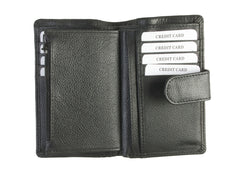
New line of shielded wallets to protect RFID and NFC credit cards from skimming


Faraday caged apparel to protect credit cards

By Nick Flaherty www.flaherty.co.uk

DIFRwear in the US has launched the first line of wallets, ID badge holders, and passport cases specially designed to protect sensitive information now found on many major credit cards and other forms of identification. These chips often contain private financial and other personal information that can be easily swiped without any person-to-person contact – also known as "card skimming." Resound will target the mainstream media to raise awareness about how the DIFRwear line of wallets can help consumers maintain privacy and ensure security, wherever they go.
RFID and NFC (near field connunications) add convenience by making it easy to remotely and wirelessly transmit information from credit cards, passports, and more. Yet it has also opened the door to more unauthorized data snooping, credit card skimming, and identity theft than ever before – especially for people who are constantly on-the-go. With summertime travel rapidly approaching, many consumers are paying high prices for credit protection, or choosing to leave certain cards at home. Now, they can just put their items in a DIFRwear wallet or passport case, and rest assured that the lining's built-in blocking shield will prevent hacking attempts – from the most rudimentary to the most sophisticated.
"As credit cards become 'smart cards' thanks to RFID technology, the wallets we carry them in need to be even smarter – making sure there's no chance of anyone stealing critical personal information," said Kevin McLaughlin, Principal and Co-Founder of Resound Marketing which is promoting the range. "We think consumers will be excited – and relieved – to know that there's a proven and trusted line of products out there that will keep that information safe, whether they're traveling across the country or around the corner."

Enhanced by Zemanta

Friday, May 28, 2010

Consumer WiFi drives global growth

Wi-Fi chip shipments to surpass 770m units in 2010 up 33%
By Nick Flaherty www.flaherty.co.uk

Wi-Fi chip shipments are forecast to surpass 770 million units in 2010, up almost 33% compared to 2009, says a new report from market researchers ABI Research. Shipment of 802.11n ICs will surge ahead of 802.11g and dominate the market this year, accounting for approximately 60% of total Wi-Fi IC shipments.

“The 802.11n standard which was ratified last year is a powerful growth engine to drive the Wi-Fi IC market increases,” says ABI Research wireless and semiconductor industry analyst Celia Bo.


Wi-Fi IC Shipment Forecast by Product Type
The cellular handsets segment is seen to be maintaining the highest unit shipment of Wi-Fi-enabled products in next five years, achieving an estimated CAGR of 25% between 2009 and 2015; the penetration rate will reach approximately 40% of total handsets shipped in 2015.
Laptops, netbooks, and MIDs are other segments which will see higher shipments across all Wi-Fi-enabled products, and the trend will carry on throughout the following years.
“The penetration rate of Wi-Fi ICs in consumer electronic products will continue to grow robustly,” Bo said. “Total shipments of consumer electronic products with Wi-Fi functionality are expected to exceed 530 million in 2015, with a 26% CAGR between 2009 and 2015. Shipments of Wi-Fi-enabled digital still cameras, TVs and DVD players will increase more than tenfold in 2015 as compared to 2009. The demand for Wi-Fi-enabled home entertainment products such as networked game consoles and handheld game consoles is increasing as well: between 2009 and 2015, the CAGR will reach 8% and 6% respectively.


Reblog this post [with Zemanta]

Wednesday, April 28, 2010

TI fights back in wireless networking

New CC430 MCUs and developer support accelerate time to market for building automation, smart meters and asset tracking
With the recent launches of the Dust SoCs and Silicon Labs wireless mesh network module, Texas Instruments is fighting back with its single-chip RF CC430F513x microcontrollers and developer ecosystem offering complete, scalable hardware and software.
The CC430F513x MCUs combine the world’s leading ultra-low power MSP430 MCU with the high performance, sub-1GHz CC1101 RF transceiver. This provides up to 20 MIPS performance in a small package (7mm x 7mm) and support security options such as an integrated AES hardware module.
TI is also expanding its LCD product offering with the CC430F61xx series of devices, providing developers with more options to meet varying design needs.
With the capability to support multiple protocols and a broad frequency range, the CC430 MCUs, along with the extensive third party ecosystem, spur innovation in applications like home and building automation, smart metering, energy harvesting, asset tracking and portable medical applications. Developers can also immediately jumpstart CC430 MCU-based designs with the EM430F6137RF900 and eZ430-Chronos wireless development tools that include all the hardware design information required to develop a complete wireless project.

Key features and benefits of CC430 MCUs and third party ecosystem:

Eight devices offer non-LCD (CC430F513x) and LCD (CC430F61xx) options, as well as a range of pin count, memory and high-performance analog integration to meet varying design needs
For LCD-based applications, the CC430F61xx MCU with integrated LCD capabilities reduces system cost and size
Ultra-low power MSP430 MCU core and sub-1GHz CC1101 RF transceiver are combined on one chip to reduce system complexity and shrink package and printed circuit board (PCB) size by up to 50 percent compared to two-chip solutions
Devices draw low enough current to enable battery-operated wireless networking applications that operate without servicing for several years, reducing maintenance costs and overall BOM
eZ430-Chronos and EM430F6137RF900 are complete wireless development kits that provide all the hardware and software support necessary to instantly develop and deploy projects

A broad third party ecosystem of hardware and software developers include AMBER Wireless, BM innovations, the DASH7 Alliance, Digikey, IAR Systems, LS Research, Sensinode, Steinbeis Transfer Center Embedded Design and Networking, and Virtual Extension
Software stacks and protocols are an important factor in making it easy and reduce time to market for developers. TI is working closely with industry leading third party developers to bring various industry accepted software stacks to customers. Examples include 6LoWPAN (building control, lighting control and smart grid), Wireless MBUS (smart metering), Opentag, an open source firmware library for DASH7(building automation, smart grid, asset tracking), VEmesh (wireless mesh smart meter and sensor networking) and BlueRobin (personal health and fitness) solutions.

Availability
Production quantities of the CC430F513x MCUs are immediately available to order starting at $4.15 (1K units). Sampling in May, the CC430F61xx family with integrated LCD is also immediately available to order and pricing starts at $4.35 (1 K units).
Reblog this post [with Zemanta]

Tuesday, April 27, 2010

Risks to radio systems from wind turbines

The wind turbine at Hartley in ShinfieldImage via Wikipedia
I'm a great supporter of renewable energy and green electricity, and the SmartGrid will have to combine energy production from a variety of approaches, but Analysys Mason are pointing out that wind turbines may well cause problems for radio systems, particularly RF embedded control.
Although wind turbine blades are largely made of non-conductive plastics and similar composite materials, they are large constructions and the latest designs contain metal reinforcements and conductors for lightning protection. A single turbine therefore presents a significant but very geometrically variable ‘radar cross section’ that has the potential to reflect or diffract radio propagation waves, and cause a delayed multipath component that may interfere with the original radio link signal, says the group. The more windmill stock a farm has, the more unpredictable the reflections and diffractions of radio waves become, with potentially a far greater impact than may otherwise be expected.
The potential for interference is of particular concern for the utilities industry, which makes quite extensive use of scanning telemetry systems and SCADA (System Control and Data Acquisition) systems to monitor and control its infrastructure. These systems are often ‘fail-safe’ so that operations are automatically suspended if, for example, the SCADA system fails. Thus interference from wind turbines could potentially result in the shut-down of power and water supplies if serious interference is detected.
A number of Analysys Mason consultants who are involved with the utilities industry are becomingly increasingly concerned about the vulnerability of one particular link type, mainly because of a lack of understanding and a lack of relevant research within the telecoms industry. The link type in question is that operating at around 460MHz, which is often used for telemetry or other SCADA applications. Within these applications the 460MHz band is often selected for particular links because the link path profile is non-line of sight, and this band permits the deployment of a diffracted path route between each link end as a design parameter. In these cases the link path loss is significantly greater than the nominal free-path loss that would otherwise exist for the line-of-sight case, and different interference design rules must be applied (as discussed below).
Across the UK, there are a number of radio links at 460MHz where the path profile relies on a terrain-diffracted path, rather than direct line of sight. From a system design perspective this is often why the comparatively low frequency of 460MHz has been selected, as it enables the use of a diffracted path, and
the impact of wind turbines and farms needs more field measurements and study to quantify the interference mechanisms, particularly in situations where the basic path is diffracted. 
There is a sell of course - at Analysys Mason they have been studying all the publicly available material on wind turbine interference to radio propagation and have developed user-friendly computer models to evaluate and predict appropriate clearance zones around single and multiple wind turbines.
For more information, please contact Adrian Dain, Lead Consultant (adrian.dain@analysysmason.com) or John Wittams, Lead Consultant (john.wittams@analysysmason.com)


Reblog this post [with Zemanta]

Synapse and Silicon Labs Launch Wireless Module for Mesh Networks

Sub-GHz connectivity for smart meters, building automation and personal medical devices
Synapse Wireless and Silicon Laboratories have teamed up to develop a wireless mesh network solution that combines the SNAP network operating system with Silicon Labs' Si1000 wireless microcontroller (MCU). The combined software/hardware solution - the Synapse RF Engine module - makes it easy to deploy a scalable, ultra-low-power, small-footprint wireless mesh network for a wide range of applications including smart meters, wireless sensors, Zigbee networks, building automation, commercial lighting control, personal medical devices and RFID asset tracking systems.

The SNAP network operating system provides a high-performance wireless mesh network protocol that supports Internet-enabled, wireless machine-to-machine communications, and offers an embedded Python interpreter for easy application development. Providing the intelligence behind the Synapse RF Engine, SNAP runs on Silicon Labs' Si1000 wireless MCU, which combines an ultra-low-power processor core with a high-performance sub-GHz RF transceiver delivering high-bandwidth and extended-range wireless connectivity.

SNAP allows wireless applications to be developed quickly and easily using Python's English-like scripting language instead of complex embedded programming. The developer simply adds the application to SNAP, residing on the RF module, over-the-air. No embedded wireless programming experience is required to develop applications and deploy them to physical SNAP nodes. Instead of being burdened with the underlying complexities of a wireless mesh network, the developer can focus on getting the application to market quickly.

The intelligent SNAP network operating system enables nodes to join the mesh network instantly and the software's over-the-air programming and Python interpreter ensure easy, fast and flexible application development.

The Synapse RF Engine provides a turnkey hardware/software solution that developers can deploy immediately in their end products. It also offers an easy-to-use development platform for system engineers who want to migrate their wireless designs to high-volume applications using the Si1000 MCU running SNAP as embedded firmware.

"The collaboration between Silicon Labs and Synapse has resulted in a best-in-class, sub-GHz wireless networking solution that combines the industry's lowest power wireless MCU with the sophisticated networking and Internet connectivity capabilities of SNAP," said Wade Patterson, Synapse Founder, President and CEO. "The jointly developed wireless platform will streamline the development of cost-effective and energy-efficient mesh networks."

Developers using the Si1000-based Synapse RF Engine will have access to the full product and service offerings from Synapse. This includes custom design services for solving tough, engineering challenges in OEM product design; the Synapse Portal wireless application development environment for ease in network management and rapid application development; and SNAP Connect, for seamless integration to the Internet.

"The combination of the Si1000 wireless MCU and SNAP provides a comprehensive mesh networking solution for ISM band applications in the sub-GHz range," said Mark Thompson, vice president of embedded mixed-signal products at Silicon Labs. "Using this combined hardware/software solution, developers can get their wireless applications up and running quickly and easily while benefiting from the power-efficient, battery-saving capabilities of the Si1000 MCU and its exceptional wireless range and performance."

Synapse SNAP Network Operating System

Synapse's SNAP network operating system is an Internet-enabled, IEEE 802.15.4-based, instant-on, multi-hop, mesh network, software solution designed to cost-effectively run efficiently over a range of popular microprocessors and microcontrollers. SNAP has a very small memory footprint of only 45 kB, thereby leaving more space for user applications. SNAP can support up to 16 million nodes in a single network. Since these are peer-to-peer mesh networks, there is no single point of failure: any node can talk directly to any other node that is in range, and any node can talk indirectly to any other node via intermediate nodes - SNAP networks are self-healing. Users can interactively develop applications using a high-level English-like language called Python. No embedded programming experience is required. Synapse currently has more than 900 registered SNAP users.

Silicon Labs Si1000 Wireless MCU
The Si1000 wireless MCU, a member of the Si10xx family, combines a 25 MHz 8051 core, EZRadioPRO® sub-GHz RF transceiver, 64 kB of flash and a 10-bit ADC - all in a compact 5 mm x 7 mm package. As the industry's only sub-GHz 8-bit wireless MCUs, the Si10xx family offers market-leading RF performance with the highest output power and sensitivity and lowest power wake-up transition. The Si10xx family's integrated power and low-noise amplifiers enable an RF link budget of greater than 140 dB without active external elements, resulting in extended range, higher bandwidth and lower power consumption. The industry's most power-efficient wireless MCU solution, the Si10xx family provides the lowest current in common modes of operation. The wireless MCUs offer the lowest active-mode current consumption (160 microamps per MHz). In sleep mode, they consume only 315 nanoamps using the internal low frequency RTC. In deep-sleep mode, they can operate on as little as 25 nA with full RAM retention.

Pricing and Availability
The Si1000 MCU-based Synapse RF Engine module is available today from Synapse and MSRP priced at USD$29 for 1-unit quantities with volume discounts available. The Synapse SNAP evaluation download for the Si1000 MCU is also available from Synapse.
Reblog this post [with Zemanta]

Dust Networks launches ARM Cortex-M3 system chip for 802.15.4

World's lowest power RF so far

Dust Networks is an intersting company as a leading supplier of wireless sensor networks (WSN). It is using the low power ARM Cortex-M3 processor for a new family of system-on-chips (SoCs) that include an on-chip power amplifier (PA) that will be the basis for a variety of upcoming standards-based WSN products, including IEC 62591 (WirelessHART), 6LOWPAN (IP), and Zigbee PRO products. This is key for the development of the SmartGrid.
The SoCs will feature:
  • A 32-bit ARM Cortex-M3 processor and rich interfaces enable a powerful computing platform while conserving power.
  • The world's lowest power IEEE 802.15.4 radio: a new benchmark is set, with a mere 3 mA transmit at 0 dBm and 3 mA receive current, delivering 5-10 times the battery life of competing technologies, and further expanding the applicability of energy harvesting power sources.
  • Extended range capabilities, with up to 8 dBm output power on-chip PA and an optional external power amplifier.
  • The industry's first IEEE 802.15.4E-ready product, incorporating the emerging standard for time synchronization and channel hopping, while providing legacy support for 802.15.4-2006.

"Our new SoCs are geared to deliver the highest performance while running at a fraction of the power of competing silicon," said Dr. Kris Pister, Chief Technologist at Dust Networks. "In selecting the ARM Cortex-M3 processor for our SoC, we did not have to trade-off performance for power. Dust Networks new IEEE 802.15.4 SoCs will require less than one-tenth of the energy per operation of comparable SoCs."

The level of systems integration in the SoCs is very high, including on-chip power amplifier, DC-to-DC converter, 10 bit ADC and a built in temperature sensor. With configurations up to 512kB of flash and 72kB of RAM, these SoCs will have both the highest computational horsepower of any 802.15.4 chip on the market, and the lowest power consumption. In doze mode, with full processor state and RAM retention, current consumption is under 1uA.

"Low power radios such as IEEE 802.15.4 and wireless mesh networking, epitomized by Dust Networks' TSMP protocol and its "Smart Dust" roots, have transformed the industrial wireless sensor network landscape", said Mareca Hatler, ON World research director. "With the introduction of ultra low power versions of SmartMesh IP (6LoWPAN) systems and ZigBee products, Dust Networks will expand the growing number of 'Smart World' applications that span Smart Buildings, Cities, Government and Homes."

Reblog this post [with Zemanta]