All the latest quantum computer articles

See the latest stories on quantum computing from eeNews Europe

Monday, July 04, 2016

South Korea gives away IoT modules as it cuts its monthly data plans by 90%

By Nick Flaherty www.flaherty.co.uk

SK Telecom has rolled out a Low Power Wide Area Network (LPWAN) across 99% of South Korea to drive applications in the Internet of Things by cutting prices to 10% of the LTE version and giving away 100,000 modules.

The company finished building LoRaWAN across the country by end of June, six months earlier than its initial schedule, covering 99 percent of the population alongside an LTE-M network. 

To promote the growth of the IoT market, SK Telecom plans to offer attractive price plans and develop innovative IoT services, while offering strong support for SMEs. To this end, the company will invest £660m (KRW100bn) by the end of 2017. It expects these efforts to lead to rapid expansion of the IoT industry by connecting over 4 million things to its IoT-dedicated networks by the end of 2017. 

SK Telecom unveiled new price plans for LoRaWAN-based IoT services from just 35cents for Band IoT 35 (KRW 350) to Band IoT 200 priced at KRW 2,000 (approx. US$1.75) - depending on data use.

The Band Lora plans are one tenth of SK Telecom’s LTE-based IoT services and are expected to support active development and provision of diverse IoT services by easing the cost burden of startups and SMEs. The company is also offering diverse discount benefits for enterprise customers depending on their contract period and the number of lines they use.

Table 1: Band LoRa Plans
Price Plan
Data Allowance*
(Frequency of communication)
Monthly Flat Rate
(ex VAT)
Examples of Services
Note
Band IoT 35
100KB
KRW 350
Metering and monitoring services (e.g. Advanced Metering Infrastructure (AMI), environmental monitoring, water leakage monitoring, etc.) 
- Discount benefits for long-term contracts: Ranging from a 5% discount for two-year contracts to a 20% discount for 5 year-contracts
- Multi-line discount: Ranging from a 2% discount for those using 500 lines to a 10% discount to those who use 10,000 lines
Band IoT 50
500KB
KRW 500
Band IoT 70
3MB
KRW 700
Tracking services (e.g. locating tracking
For people/things, asset management, etc.)
Band IoT 100
10MB
KRW 1,000
Band IoT 150
50MB
KRW 1,500
Control service
(e.g. safety management, lighting control, shared parking, etc.)
Band IoT 200
100MB
KRW 2,000
*Data usage exceeding the data allotment provided will be charged at KRW 0.005 per 0.5KB.

For instance, a gas meter, which transmits relatively a small amount of data can be used by signing up for Band IoT 35, while a service that requires real-time communication like lighting control service can be used by signing up for Band IoT 200.

LoRa  Roadmap

SK Telecom plans to develop LoRa services in metering, tracking and monitoring.

The company is currently focusing on Advanced Metering Infrastructure (AMI), which enables the utilities companies to not only accurately measure/monitor usage but also control the metering devices. SK Telecom has been conducting a pilot project on AMI with SK E&S since November 2015, and plans to expand the service coverage to more regions of the country in July 2016. Going forward, the company will launch AMI services for other utilities including water and electricity.

SK Telecom is also developing in tracking services to identify and track the location of vehicles, people/things, and assets. In cooperation with the local governments, the company plans to launch “Safe Watch,” a wearable designed to enhance the safety of children and the elderly in July 2016.

The company will also offer monitoring services capable of controlling and managing manufacturing/public/commercial facilities. For instance, monitoring service for a company that has a large-scale production facility will ensure that the equipment within the facility are operated in an optimal manner and the production environment is kept safe at all times. Environmental monitoring of CO2 concentration, temperature/humidity, as well as hazardous substances – e.g., measuring concentration levels of radon in the atmosphere and soil – can also be provided. 

Furthermore, the company plans to launch a total of 20 LoRa-based IoT services by the end of 2016, including a manhole monitoring service (in September) and a real-time shared parking service (in October).

Partner Hub Program

As part of the stimulation of the eco-system, the company is setting up a ‘Partner Hub Programme’ to create an ‘IoT Open Testbed’ for SMEs and startups at its Bundang building. This will offer a one-stop development environment with the network, device and platform for IoT services so that SMEs and startups will be able to verify their IoT devices, carry out tests to check interworking between their device and the IoT network/platform, and receive technical/service consultation.

SK Telecom also began providing LoRa modules free of charge on July 1, 2016. Aimed at facilitating the development and launch of LoRa services, the company will provide a total of 100,000 units of LoRa modules for free. Also, the low cost of the LoRa module – which is just one-fifth of that of an existing LTE module – will contribute to the development of the wide variety of IoT devices.

“SK Telecom is proud to announce the nationwide deployment of LoRaWAN as it marks the first important step towards realizing connectivity between infinite number of things, going beyond the traditional role of telecommunications centered on connectivity between people,” said Lee Hyung-hee, President of Mobile Network Business at SK Telecom. “Going forward, SK Telecom will develop and offer a wide variety of IoT services designed to offer new value for customers, while working closely with partners including SMEs and startups to vitalize the IoT ecosystem.”

IoT drives software defined power into the data centre

By Nick Flaherty www.flaherty.co.uk

The increased demands from the Internet of Things (IoT) is driving a major shift in the industry at the infrastructure level, says Jeff Schnabel, vice president of global marketing at Portland, Oregon-based power supply maker CUI, in an interview with EETimes Power.
“One of our big plays is in infrastructure with data centres with zetabytes of data and that has huge implications. On the infrastructure side is the idea of software defined power (SDP) – it’s the next evolution of power. With digital power you have these islands of power – SDP ties that together at a higher level. We have partnered with Virtual Power Systems working on the software for SDP solution for data centres to drive the virtualization of power.”
One of the big issues is capacity utilisation, he says. Data centre operators over-provision the power to support peak use, so the infrastructure is only really used at 60% in order to cope with the spikes of power. Using virtualization to provide the power where and when it is needed can greatly reduce capex and opex spending and the amount of equipment to power the infrastructure – racks of power supplies can be replaced with racks of servers to boost the compute capacity. 
Within the hardware is a 4U power system with a battery backup built in. This provides the ability to use ‘peak fade’ so instead of building a 10kW because you need it at peak, you can build in 6kW and use the battery back up at peak times and recharge when the peak comes back down. This means operators are able to shave the peaks and remove 4kW of infrastructure. This has a huge benefit in capex when you are building the data centre but also gains in opex and reduce the thermal envelope as cooling is a huge issue.
“The great thing is these are plug and play so they can be installed into the existing infrastructure in weeks rather than months or years, he said. “It supports greenfield design but is also plug and play so an operator can quickly realise the gains.”
This move to software is also being driven by a reduction in the number of skilled power engineers. You can read more of this interview at EETimes Power

Friday, July 01, 2016

Top stories in June on the Embedded Blog

By Nick Flaherty www.flaherty.co.uk

I love the range of technology stories that are covered by the embedded market. The change in regulations on shipping lithium ion batteries by air has been a major topic this month, but alongside that comes startup Quadium looking to provide analytics and management of any device on the Internet of Things. The IoT is also having an impact on data centre design, and the latest standards are vital for power equipment makers, which shows up this month, alongside an open source port of a hypervisor for embedded processors from MIPS and ARM.


Monday, June 27, 2016

Microchip adds independent peripherals to PIC32

By Nick Flaherty www.flaherty.co.uk

Microchip has launched its first family of PIC32 microcontrollers with periperhals that can run independently of the core. This is a big step, as it helps to reduce power and simplify the development and operation of nodes in the Internet of Things (IoT) .

The MIPS MicroAptiv-based PIC32MM family bridges the gap between the company’s popular PIC24F XLP and PIC32MX families. But what makes this more significant is that the new family is the first PIC32 to feature core independent peripherals, designed to offload the CPU for lower power and lower system design cost. The PIC32MM devices are supported by the Microchip MPLA Code Configurator (MCC) to help simplify and accelerate designs.


Today’s embedded applications targeting the Internet of Things (IoT), consumer, industrial control, and motor control require flexible MCUs that consume less power, are more cost effective and have smaller form factors. For applications demanding low power and longer battery life, the PIC32MM has sleep modes down to 500 nA. Applications with space constraints will benefit from the small 4x4 mm package options. The PIC32MM devices include core independent peripherals such as Configurable Logic Cells (CLC) and Multiple-output Capture Compare PWMs (MCCPs) which help enable sensorless BLDC motor-control applications.

To help accelerate evaluation and development, a new $25 PIC32MM processor plug-in module is available (MA320020), which plugs into the $130 Explorer 16 Development Board (DM240001). The entire family of PIC32MM devices is supported by the Microchip MPLAB ecosystem including MPLAB X IDE and XC32 compiler. The MPLAB Code Configurator, a plug-in to the MPLAB X, helps with easy peripheral set-up, device configuration and pin mapping.

The PIC32MM family is available in mass production today in 20-pin QFN and SSOP; 28-pin µQFN, QFN, SOIC, SSOP, SPDIP; 36-pin QFN; and 40-pin uQFN packaging. Devices are available in 16 KB, 32 KB, and 64 KB Flash variants.

For more information, visit Microchip’s Web site at www.microchip.com/PIC32MM

u-blox targets long life IoT wireless with world's first narrowband cellular module

By Nick Flaherty www.flaherty.co.uk

Swiss wireless  chip and module maker u-blox has launched the world’s first cellular radio module compliant to the 3GPP Release 13, Narrowband IoT (LTE Cat. NB1) standard, opening up the use of cellular networks for the Interent of Things for the first time. 

The module is designed for use in applications such as smart buildings and cities, utilities metering, white goods, asset tracking, and agricultural and environmental monitoring and operate for between 10 and 20 years from a single-cell primary battery which has just not been possible up until now. This will also drive up volumes and drive down costs to make cellular IoT cost effective. 

“u-blox has been an early pioneer of NB-IoT and we’ve worked closely with companies including Vodafone, Deutsche Telekom and Huawei to complete the first successful commercial trials of pre-standard NB-IoT in smart metering and parking applications," said Stefano Moioli, Director Product Management Cellular at u-blox. "These trials proved conclusively that NB-IoT networks operate far more efficiently than GPRS and we’re confident of the technology’s future because of the many advantages it offers over alternative approaches. We’re therefore pleased to be able to announce the world’s first fully 3GPP compliant module that will enable customers to take full advantage of this exciting technology.”
The SARA-N2 narrowband IoT module has a battery life of 10 to 20 years 
The SARA-N2 Narrowband IoT (NB-IoT) module (above) measures 16 mm x 26 mm in a land grid array (LGA) package using u-blox nested architecture, and allows simple upgrades from u-blox GSM, HSPA or CDMA modules and ensures future-proof, seamless mechanical scalability across technologies.

The SARA-N2 module provides secure, private communications over licensed spectrum with guaranteed quality of service. It supports peak downlink rates of up to 227 kbps and uplink rates of up to 21 kbps, which keeps the power down aand allows the ten to twenty year battery life. Simultaneous support for three RF bands means that the same module may be used in most geographic regions.
The NB-IoT provides lower device complexity, ultra-low power operation and support for up to 150,000 devices per single cellular cell. Most significantly, the technology offers a 20 dB link budget improvement over GPRS to give excellent performance under poor coverage conditions such as underground or inside buildings.

Compared with unlicensed spectrum Low Power Wide Area (LPWA) solutions, NB-IoT offers greater security and freedom from interference because it uses a licensed spectrum based network. Other advantages include lower latency than mesh networks, thanks to its point-to-point topology, the ability to run it adjacent to existing 2G and LTE networks - it needs just 200 kHz of bandwidth - and a higher transmit power limit, which improves reliability and range. It also allows for robust 2 way communication which means that features such as firmware upgrade over the air are achievable. NB-IoT also allows global roaming, which is not the case with localized unlicensed spectrum based technologies.

Samples of the SARA-N2 NB-IoT module are currently scheduled for Q4 2016, with full production planned for early 2017.

Friday, June 24, 2016

Chinese chip maker looks to the global powerline market for IoT

By Nick Flaherty www.flaherty.co.uk

An interesting story at EETimes Europe is demonstrating the global forces at work to provide the technologies for the Internet of Things. 

US power line communications (PLC) chip designer Semitech Semiconductor has teamed up with a Brite Semiconductor in Shanghai on a new generation of PLC chips that can handle both PLC and wireless communications around the world.
Brite has developed a communication core architecture SoC based around the Tensilica core from Cadence Design Systems and integrates DSP, memory, PLC AFE, RF transceiver and high-speed interface IPs with DDR and USB. This provides a dual-mode PLC/wireless communication system for machine to machine links over the power grid

The chip will be manufactured using an advanced process with SMIC, which helped set up Brite, and will contain Semitech's integrated PLC/wireless IP. This provides the dual-mode communication core (DMCC) including architecture, digital modules and algorithms that can simultaneously support reliable wireless and PLC connectivity for the M2M and Internet of Things (IoT) market. This IP is already used in machine-to-machine communication and IoT applications such as smart meters, street lighting, solar panels and remotely monitored and controlled industrial equipment, providing a core technology to implement a worldwide communications network over the existing power grid.

"This collaboration represents an important milestone for Brite, as designing an industrial SoC product for the emerging M2M market has been a goal of ours," said Jerry Ardizzone, senior vice president of worldwide sales and marketing for Brite Semiconductor. "The primary application for the Brite and Semitech collaboration will be smart meters, and we will develop additional solutions for broader industrial applications including smart home, smart grid and automotive."

"The next evolutionary step for smart grid applications is to move toward heterogeneous PLC/wireless networks, while accommodating aggressive cost and power budgets," noted Zeev Collin, CEO of Semitech Semiconductor. "Our existing PLC architecture and the extensive experience of our team in narrowband communication across different media make it possible to take this step. Partnering with Brite puts us at the leading edge of the M2M market and will ensure that we yield a superior product."

Brite Semiconductor was co-founded by Semiconductor Manufacturing International Corporation (SMIC) and Open-Silicon, as well as venture capitalist firms from China and Silicon Valley. As a strategic partners, SMIC provides Brite Semiconductor with 28nm process technology with high-end SoC design services,

www.semitechsemi.com,

Wednesday, June 22, 2016

The latest embedded power news and industry interview

By Nick Flaherty www.flaherty.co.uk

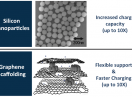
The latest power newsletter is out from EETimes Europe, with $4m for a new silicon graphene battery development, 3D packaging developed for data centre power, TI cutting the size and resistance of MOSFETs by up to 80% and the exclusive Power Trends Interview with Siobhan Dolan Clancy, the general manager of the discrete products division of Microsemi.
logo
Power news from EETimes Europe
bullet
June 20, 2016
[Alt-Text]

LATEST NEWS

SiNode wins $4m to jumpstart silicon graphene automotive batteries
.SiNode wins $4m to jumpstart silicon graphene automotive batteries
Pi Innovo in three-way deal to create two speed electric drivetrain
.Pi Innovo in three-way deal to create two speed electric drivetrain
ABB in top five suppliers of charging stations in China
.ABB in top five suppliers of charging stations in China

TECHNOLOGIES TO WATCH

Silicon cones on perovskite boost hydrogen production for fuel cells
.Silicon cones on perovskite boost hydrogen production for fuel cells
Solar cells with high bifaciality developed
.Solar cells with high bifaciality developed
Collaboration targets 3D packaging for voltage regulators in data centers
.Collaboration targets 3D packaging for voltage regulators in data centers

NEW PRODUCTS

TI cuts 60 V MOSFET size by 80% with FemtoFET
.TI cuts 60 V MOSFET size by 80% with FemtoFET
Convection cooled 600 W supply boosts reliability by 25%
.Convection cooled 600 W supply boosts reliability by 25%
650V MOSFETs provide more headroom for industrial, telecom and renewable energy
.650V MOSFETs provide more headroom for industrial, telecom and renewable energy

POWER TRENDS INTERVIEW

Power Trends: Microsemi sees integration from device to module drive innovation

[Alt-Text]
.

NEW PRODUCTS

Li-ion battery pack monitor safeguards traction battery systems

Railway-certified 20W DC-DC converter has 4:1 input

Regulator module reduces board area in noisy applications

Ultra Compact AC-DC modules provide up to 5W for low power standby applicaitions

TECHNICAL PAPERS

Texas Instruments: Power conversion topology for space- constrained applications

Digital Power System Management - Take Control of Your Power Supplies

Intersil: Understanding USB-C Buck-Boost Battery Charging

EVENTS

Startups at Automatica 2016 Industrial Automation show – Munich, June 21 - 24

Visit our leading websites