All the latest quantum computer articles

See the latest stories on quantum computing from eeNews Europe
Showing posts with label USB. Show all posts

Monday, July 25, 2016

GCT launches USB Type-C connector

The march of USB Type-C continues as Hong Kong-based Global Connector Technology (GCT) launches a new range of high performance connectors for the standard, including power delivery.

By Nick Flaherty www.flaherty.co.uk


Designed for mobile and smart devices, the USB Type-C connector is ready for next generation applications delivering speeds up to 10 Gbps for data transfer, audio and video connectivity, supporting HDMi, DisplayPort and VGA. The connector also supports USB Power Delivery standards of charging capability, with rapid charging up to 100 W.

GCT’s range of five products includes both horizontal & vertical USB type C receptacles. Horizontal receptacles are available in a hybrid of thru hole and SMT, allowing higher co-planarity and ease of inspection after processing. Top mount, mid mount versions are available in short and long body types.

GCT’s drawn metal shell design for horizontal parts provides superior electromagnetic interference (EMI) shielding compared to stamped sheet metal housings. The enhanced mechanical strength of the shell structure also makes GCT’s USB Type-C connectors suitable for the automotive, industrial, medical and instrumentation markets. 

“GCT’s new line of USB Type-C connectors offers significant performance advancement over previous USB standards, providing faster data rates, higher power, and A/V connectivity in one interface, as well as offering more design flexibility for engineers designing the next generation of electronics products,” said GCT Marketing Manager Laurence Hill.

Saturday, June 11, 2016

World's first single port smartphones highlight power and data convergence

Chinese phone makers LeEco and Lenovo have used a USB Type-C port on their flagship smartphone as the only physical connector on the phone.

The LeEco uses the Cypress EZ-PD CCG2 controller is used to replace the ubiquitous audio jack and use the USB Type-C port for audio as well as for charging and data (using the USB 3.1 fast data standard).

The Le Max2 is also the market’s first phone to enable fast charging using the USB Power Delivery (PD) standard, which allows transfer of more than 15W of power over the Type-C connector. The Le Max2 charger uses Cypress’s USB-C controller solution to implement USB PD as well. This uses a 48MHz ARM Coretex-M0 microcontroller core for the firmware that detects the orientation of the cable to ensure that the power pins are correctly aligned.

Lenovo has also launched its Motorola Z family (above) that similarly uses a single USB Type-C port, following on from its Type-C China-only ZUK1 handset announced last year.

World's first single port smartphone highlights power and data convergence | EETE Power Management:


 By Nick Flaherty www.flaherty.co.uk

Embedded controllers move into USB Type-C

By Nick Flaherty www.flaherty.co.uk
ST Microelectronics has launched embedded software to add Power Delivery to the latest USB Type-C designs based around its STM32 ARM Cortex-M based microcontrollers writes EETimes Europe.
The new capabilities come from a free STM32 USB-C and PD Middleware Stack that is compliant with USB Type-C 1.2 and USB Power Delivery 2.0 specifications, enabling customers to rapidly deploy the technology in end-products. Cypress Semiconductor has been following the same strategy with its CCG2 and CCG3 embedded controllers and hubs.
ST's new firmware stack, X-CUBE-USB-PD, initially based on the STM32F0 entry level Cortex-M0 processor, allows designers to upgrade their USB legacy devices to provide significant benefits to their end users. USB-C together with Power Delivery technology provides a reversible connector, the ability to carry all necessary data (including video or proprietary protocols), and up to 100W of power to supply or charge equipment connected to the USB port.
Using the STM32 with the stack requires only a very simple Analogue Front End comprising a few passive components as it uses the embedded STM32 features such as comparators, ADCs, timers, and Direct Memory Access.
The solution supports up to two USB-C ports in provider, consumer, or dual roles, cable-insertion detection, plug orientation and identification of the role of the port partner attached and its current capability. The Vbus Power negotiation is handled via the Power Delivery communication protocol while Vendor-Defined Messages are handled to identify device or cable ID or to manage Alternate Mode commands. The processing bandwidth and available resources allow the MCU to perform other application-specific tasks, such as power-management control, USB2.0 communication, and/or voltage and current monitoring, on top of its USB-C functionality, and the software library provided in the X-CUBE-USB-PD software expansion is fully in line with STM32Cube APIs (HAL - Hardware Abstraction Layer), ensuring easy switch across different STM32 series.


Tuesday, May 31, 2016

USB-C powers world’s first single port smartphones


By Nick Flaherty www.flaherty.co.uk

The USB-C technology from Cypress Semiconductor has been used to develop the world's first signle port smartphone. 

LeEco has used a USB-C port on its flagship Le Max2 superphone—providing the only physical connector on the phone. The Cypress EZ-PD CCG2 controller helps enable the one-port design of the Le Max2, which is the first phone to remove the ubiquitous audio jack and use the USB-C port for audio, in addition to charging and data. 

LeEco’s Continual Digital Lossless Audio (CDLA) technology delivers true fidelity audio and lossless music experience via the USB-C port. The Le Max2 is also the market’s first phone to enable fast charging utilizing the USB Power Delivery (PD) standard, which allows transfer of more than 15W of power over the Type-C connector. The Le Max2 charger uses Cypress’s USB-C controller solution to implement USB PD as well.

Optimized for the 2.4-mm thin USB-C connector, the programmable EZ-PD CCG2 controller is capable of fully supporting USB PD and other proprietary charging standard implementations in smartphones, tablets, and mobile chargers. CCG2 provides a complete, robust solution by integrating the USB-C transceiver, PD protocol and policy layer functions. Available in a 3.3 mm2 20-ball Wafer Level Chip Scale Package (WLCSP), a 14-pin DFN and a 24-pin QFN, CCG2 also includes system-level ESD protection and termination resistors needed for all USB-C applications. 

“LeEco selected the Cypress USB Type-C and Power Delivery solution because of its interoperability performance and robust implementation of the PD protocol for flexible, on-demand PD charging,” said Gao Chao, Hardware Director of LeEco. “With Cypress’s strong support, we were able to get to market first with faster PD charging in our Le Max2 phone.”

“The Le Max2 marks a new generation of smartphones that will use a single USB-C port to connect and charge,” said Ajay Srikrishna, vice president of the USB product line at Cypress. “Cypress’s programmable EZ-PD controllers enable our customers to bring their innovative designs to market quickly, with the confidence that comes with our USB-IF-certified solutions. The Le Max2 charger is one of only three chargers on the market to be certified as compliant to the USB Power Delivery standard, and the other two are also based on Cypress solutions.”

The USB Type-C standard is gaining rapid support with top-tier PC and electronics manufacturers by enabling slim industrial designs, easy-to-use connectors and cables, and the ability to transmit multiple protocols and deliver up to 100W of power. The USB Type-C standard’s 2.4-mm-high connector plug is significantly smaller than the current 4.5-mm USB Standard-A connector. In addition to the transport of USB signals, DisplayPort and Thunderbolt signals can be delivered over the same connector via the USB Type-C standard’s Alternate Mode capability.

Tuesday, February 23, 2016

Dedicated USB Type-C flash drive marks maturing of connector

By Nick Flaherty www.flaherty.co.uk

SanDisk has launched its first dedicated USB Type-C flash drive, pushing up read speeds to 150Mbit/s.
The company had already launched a dual drive that combined a USB Type-C and the existing Type-A connector, but the dedicated Ultra USB Type-C (USB-C) flash drive is designed specifically for next-generation devices and marks the maturing of the Type-C connector.
The need for a dual device came from the difference between the incompatible Type-A and Type-C connectors, while the underlying embedded controller for USB3.1 is the same for all the drives.
The first dedicated USB Type-C flash drive from SanDisk 
“We expect to see many new USB Type-C supported devices released in 2016,” Dinesh Bahal, vice president of product marketing at SanDisk. “As more consumers purchase ultra-mobile PCs, smartphones and tablets that feature this new, more advanced USB standard, it is critical to offer a complete ecosystem of compatible products. New offerings, like the USB Type-C Flash Drive, will give consumers the capabilities they’ve come to expect from traditional Type A ports, but with the added benefit of better performance.” 

 The new SanDisk Ultra USB Type-C Flash Drive is available in up to 128GB and delivers USB 3.1 performance of up to 150MB/s read speed, making it SanDisk’s fastest and highest capacity USB Type-C offering. The USB drive features a slim, retractable design to protect the reversible connector and is compatible with the SanDisk Memory Zone app for Android. The app, which is available for free through the Google Play Store, auto-launches upon insertion of the drive into a compatible device, allowing immediate access to the user’s content and easy file management3.
“USB Type-C connectors could be a game-changer, as they offer significant benefits to consumers, such as a slim design and reversible plug orientation," said IDC research VP Shane Rau. "We’ve already seen a considerable increase over the past year when the connector began showing up on new products from major devices manufacturers. As demand increases, we expect more and more solutions to hit the market, such as the SanDisk Ultra USB Type-C Flash Drive.”
The drives have a five-year warranty and come in capacities of 16GB, 32GB, 64GB and 128GB with U.S. MSRPs of $19.99, $29.99, $49.99 and $79.99, respectively.
Sony has launched a dual Type-A and Type-C drive that ships this month
Several flash drive makers, including SanDisk, already have dual drives that combine the Typee-A and Type-C connectors. Sony last month launched its USB CA1-series with 130MB/s read transfer speeds and densities up to 64Gbytes. The sleek connector is tailored to fit multiple devices such as your smartphone, yet robust enough to also fit a tablet and laptop for quick sharing and easy back up. The drive is available this month.
Lexar also launched a dual JumpDrive, the M20c, last year. This has read speeds up to 150Mbit/s and write of 60Mbit/s for its highest density 64GByte drive.

SanDisk already had a dual Type-C and Type-A drive
Kingston Digital, the Flash memory affiliate of Kingston Technology, last year also launched its DataTraveler microDuo 3C USB Flash drive that combined both USB Type-A and Type-C connectors. This provides up to 64GB of extra storage with read speeds up to 100MB/s and write speeds up to 15MB/s. 
Kingston Digital's dual Type-A and Type-C drive

Monday, January 11, 2016

ST launches 100W USB-C controller

By Nick Flaherty www.flaherty.co.uk

Low power microcontrollers and an efficient high power process technology are coming together for STMicroelectronics, allowing a controller for the reversible USB Type-C connector that can support up to 100W of power and data rates up to 10Gbit/s.

Manufactured using ST’s 20V process technology, the STUSB16 interface IC integrates short-circuit, over-voltage, over-current protection, eliminating the need for external circuitry. Additionally, it offers plug power support (VCONN) with up to 600mA programmable current capability and, per the USB Power Delivery specification, it integrates Bi-Phase Mark Coded (BMC) Physical Layer (PHY) coding and decoding logic.

ST sees a huge potential market for a connector with this power range, clearing the “Rat’s Nest” of cables in the office and living room currently used to charge and connect computers, smartphones, tablets, TVs, set-top boxes, gaming platforms, and a broad range of consumer, industrial, and IoT smart devices.

Interoperability is a key issue, as has already been shown by some of the early Type-C connectors. "Knowing well the frustration of being surrounded by numerous different cables with very limited interoperability, ST is working aggressively to build a strong and flexible portfolio of USB Type-C and power delivery solutions that include our STM32 microcontroller, ESD protection devices, and power-management products," said Andrea Onetti, Group Vice President and General Manager Volume MEMS Division, STMicroelectronics. “The new STUSB16 family embeds higher levels of circuit protection and a customer-configurable non-volatile memory, which enables IC configuration at power-up without software support. Overall, the ST portfolio delivers a low BOM cost and flexible hardware/software solution capable of meeting every power-profile requirement and customization need.”

ST has enabled the migration to the USB Type-C port through the simple addition of an STUSB16 companion chip to existing MCU-based designs, while minimizing MCU-resource requirements compared to alternate solutions. Together these features simplify software development and reduce time-to-market while allowing customers to focus on their own added-value differentiators.

The first member of the STUSB16 family, the STUSB1600QTR, is sampling to lead customers now at $0.95 in 1000 quantities so will be even more cost effective for higher volumes.


Tuesday, September 28, 2010

Freescale to drive industrial connectivity with i.MX28 family of processors

Industrial-Focused Processors With On-Chip Connectivity and Analogue Features at Less Than 0.5 Watts

By Nick Flaherty www.flaherty.co.uk

Freescale Semiconductor has launched two new families of processors for low-power, cost-sensitive industrial applications. Consuming less than half a watt and priced starting at less than $6, these devices are aimed at a wide range of applications, including appliances, portable and diagnostic medical devices, energy distribution equipment, meters, human machine interfaces, motor control and industrial controllers. These applications can benefit from the processors’ on-chip connectivity and analogue features, which reduce system-level discrete components, power consumption, board size, development effort and system cost.
The MCF5441x ColdFire family provides customer benefits tailored for motor control, and the i.MX28x offers benefits for display applications. These two processor families introduce an embedded three-port Layer 2 switch that can replace up to $4 (USD) of external component cost. Applications such as elevator and assembly line controllers may use this feature to eliminate network equipment and reduce cable costs by daisy-chaining between Ethernet-connected nodes. In addition, both processor families integrate popular cores with dual 10/100 Ethernet ports containing IEEE 1588 hardware timestamp support for accurate clock synchronization of networked devices. These features are combined with many other industry-standard connectivity options, such as multiple UARTs, controller area network (CAN) controllers and USB interfaces to provide system design flexibility. “Industrial customers typically design systems without cooling fans,” said Bruno Baylac, Freescale’s director of global industrial segment marketing. “With all features running at maximum performance, the i.MX28x and MCF5441x families consume less than half a watt of power across the industrial temperature range of -40C to +85C. These highly integrated devices give design engineers a low-cost, ultra-low-power solution for a broad range of industrial designs.”

i.MX28x: Less than 0.5 watts powers 500 MIPS processors
The i.MX28x applications processor family is based on a 454 MHz (500 MIPS) ARM9 core and integrates a rich feature set including: an on-chip display controller with touchscreen for a rich user interface; a power management unit to power sequence the device and external components in the system; two USB modules with PHYs; analogue to digital converters (ADC); low-power modes for low standby current and secure boot.
The i.MX28x is suppported by Freescale’s i.MX28 evaluation kit, multimedia codecs and complete board support packages for Linux and Windows Embedded CE. In addition, integrated development environments and tool chains, industrial network protocols, additional operating systems, development boards and System on Modules are supported by a vast i.MX ecosystem. The i.MX28x is featured in Freescale’s recently announced Home Energy Gateway reference platform to support the growing smart energy market.

MCF5441x: Offering MCU peripherals with MPU performance
The MCF5441x ColdFire microprocessor family integrates a ColdFire V4 core that offers a high level of connectivity with up to 10 serial ports. Serial connectivity provides designers increased flexibility to meet current and future development needs.
These devices allow designers to reduce system costs with multiple analog peripherals built in to simplify system architecture. Analog features include high-speed precision pulse width modulators and dual high-speed ADCs.
The MCF5441x is supported with a powerful suite of enablement software developed by Freescale, including a board support package for Linux®, Freescale’s complimentary full-featured MQX™ 3.6 real-time operating system, and Eclipse™ based CodeWarrior 10.0 IDE. The MCF5441x Freescale Tower System for rapid prototyping completes the offering by providing nearly unlimited quick prototyping capabilities to help eliminate months of development time.
Availability and pricing
The MCF5441x ColdFire family suggested resale pricing starts at $4.99 in 10,000-unit quantities. Evaluation and demonstration systems for the MCF5441x family are available now. The TWR-MCF5441X 32-bit MPU module is available at a suggested resale price of $139. The TWR-MCF5441X-KIT is available at a suggested resale price of $259 www.freescale.com/MCF5441x.

The i.MX28x family suggested resale pricing starts at $5.27 in 10,000-unit quantities. Evaluation and demonstration systems for the i.MX28x family are available now. The MCIMX28EVK evaluation kit is available at a suggested resale price of $399, with the optional LCD module add-on for $199 www.freescale.com/imx28.

The MCF5441x and i.MX28x devices are part of the Freescale Product Longevity program, with 15 years of assured supply. For terms and conditions, please see: www.Freescale.com/productlongevity.

Adeneo Embedded

“Adeneo Embedded is very excited to extend its collaboration with Freescale Semiconductor to the new i.MX28 processor, through our support to device makers in the integration of Windows Embedded CE and Embedded Linux on i.MX based architectures,” said Yannick Chammings, CEO of Adeneo Embedded. “Our collaboration with Freescale for the distribution, maintenance and support of the i.MX28-based Home Energy Gateway reference design leverages further our expertise with i.MX architecture as well as our leading position helping OEMs from the industrial market releasing high performing product at most optimized cost and time-to-market.”
AllGo Systems
“The i.MX28 family of processors is a great follow-on series to the popular i.MX23 and i.MX25 family from Freescale. The integration of power management, dual USB ports, Ethernet and LCD controller make this a very interesting platform for consumer and industrial markets,” said K. Srinivasan, CEO, AllGo Systems. “AllGo plans to port Android to i.MX28 as well as offer our Smart Home Energy Gateway software on top of i.MX283 running Linux.” www.allgosystems.com
CodeSourcery
"CodeSourcery is pleased to provide professional C/C++ development tools for i.MX28 developers targeting bare-metal, RTOS and Linux platforms," said Mark Mitchell, chief sourcerer of CodeSourcery. "The debugger in Sourcery G++ fully supports popular low-cost JTAG emulators, and Sourcery G++ offers excellent source code development tools and build management for a simple yet powerful solution to development on Freescale's exciting new i.MX28 processor."
Innovate Solutions
“Innovate Software Solutions Pvt Ltd is excited to collaborate with Freescale on the i.MX28 processor family and is announcing its Swiftboard, a user-friendly, low-power and low cost development board,” said Manjunath P, managing director of Innovate Solutions. “Swiftboard’s flexible, open embedded, small, 10x12-cm form factor can be directly used for industrial or consumer product deployment. Enabled with multiple expansion and interface options Swiftboard allows users to create end-use applications such test and measurement systems with advanced Human Machine Interface and Portable Medical applications. Additionally, the Swiftboard supports Linux and comes with an interface for a 3G Module, SDIO based WI-FI and BT, RS-485, keypad, and 4.3" TFT/LCD touchscreen.”
IXXAT
“Freescale already offers the most comprehensive line of processors that are enabled with IEEE 1588 Precision Time Protocol hardware-assisted time stamping, and IXXAT is now adding its PTP support to the i.MX28 and MCF5441x families of applications processors,” said Bill Seitz, managing director of IXXAT, Inc. “The i.MX28 and MCF5441x address a full range of IEEE 1588 PTP applications in Telecom, Ethernet AVB, Smart Grid, Automotive, Industrial Automation and Test and Measurement.”
Karo Electronics
“The i.MX28 is the ideal enhancement to the i.MX25, the basis of Ka-Ro’s TX25 module,” said Ekkheard Meurers, CFO of Karo Electronics. “Due to its memory integration with improved speed plus the integration of RTC, the Ethernet switch with 2 ports, power management and 2 CAN interfaces, the i.MX28 is especially interesting as it is very closely positioned to the area of remote control units and remote control home automation applications. The longevity program helps ensure long-term availability which in turn serves as the basis of Ka-Ro’s 7 year long-term availability for all TX modules.”
Enhanced by Zemanta

Monday, August 23, 2010

World's smallest USB drive

By Nick Flaherty www.flaherty.co.uk

The SuperTalent Pico C is claiming the crown for the world's smallest USB drive, weighing less than 6 grams but that doesn’t prevent it from holding up to 32 GB of data. The 4 GB version comes in at £9.45 while the larger 32 GB edition costs £35.45.
This flash drive is speedy too, “the I/O performance results are amazing when it comes to the Super Talent Pico C.” explained Tom’s Hardware reviewer Patrick Schmid. However the Pico suffers from slower write speeds. Patrick went on to say “the flash-based thumb drive is great for file storage, but not for intensive access.”
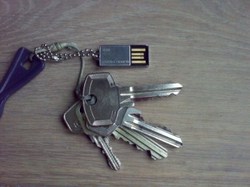
Measuring just 1.5”x0.5”, it’s possible to attach the Pico USB drive to a key ring. This means there is no need to worry about losing it.
There is still a need for physical storage though as USB drives deliver much greater data transfer rates when compared with standard Internet connections. This looks to remain true for the next few years with the first USB 3.0 compatible hardware going on sale earlier this year, featuring up to 6 times the transfer speed of USB 2.0 connections.
The Pico USB drive is also shock and water resistant, meaning a few bumps aren’t going to cause it to lose any data. The Pico C USB Flash Drive is available now.

Enhanced by Zemanta

Wednesday, April 21, 2010

Xintronix gears up for expansion (UK Technology Startups)

Xintronix gears up for expansion (UK Technology Startups)

Bristol startup Xintronix has raised private finance and appointed a new chairman as it ramps up for samples of its high speed transceiver technology later this year for USB3 and LightPeak.

Wednesday, November 25, 2009

Atom moves into automotive

Kontron's Microspace MPCX28: in-vehicle PC with Intel Atom Z530 processor


Kontron has launched its first in-vehicle PC with extended support, based on the Intel Atom Z530 processor and Intel System Controller Hub US15W, with a flexible PC/104 socket for ultra flat and space-saving PC/104 expansion cards. Further options for customization include 2 PCIe Mini Card Slots for custom specific options such as GPS, GSM/UMTS, and WLAN.
Its fanless design, easy expandability and high flexibility make the precision Swiss-engineered Kontron Microspace MPCX28 Box PC a perfect fit for various applications in busses, cars, trucks, and (automated) heavy-duty vehicles used in intralogistics. In cabs and busses it can be used for passenger infotainment, video surveillance, or ticketing systems. Typical truck applications include CAN-based trailer and goods management, GPS navigation combined with communication via GSM, and UMTS/GPRS for fleet management. For vehicles used in intralogistics, the applications range from the control of automated vehicles, to logistics for forklift trucks with WLAN and barcode/RFID interfaces.
Designed to work in the extended temperature range -25 to 70°C, the passively cooled in-vehicle Kontron Box PC is based on the Intel Atom Z530 1.6 GHz processor with 533 MHz FSB and supports up to 1 GB DDR2 RAM. The embedded graphics feature 256MB of memory DirectX 9 3-D and HDTV support with MPEG2 and H.264 decoders to process compressed HD videos to offload CPU usage. To accommodate storage devices, it provides front side slots for a 2.5" SATA HDD or SDD and Compact Flash media. Thanks to the externally-accessible slots, the change of storage media is quick and simple without the use of tools. This makes it particularly easy to swap out the hard drive within seconds to provide new content for, e.g., infotainment applications. The internal PCI/104 and 2x PCIe MiniCard expansion slots allow for various application-specific extensions, such as Dual-CAN, GPS, GSM/UMTS, and WLAN.

Application specific expansions via ultra flat PC/104 extension cards

The Microspace MPCX28 also features a comprehensive set of interfaces to fulfill the demands of nearly all in-vehicle applications. On the front, two USB 2.0 interfaces and 3.5 mm jacks for stereo output and input are accompanied by a SIM slot for mobile communications. On the back, the new in-vehicle PC offers 2 x Gigabit Ethernet, 2 additional USB 2.0 ports, as well as an SATA port to connect additional storage devices. The DVI-I interface transmits analog or digital video signals to external monitors with a resolution of up to 2,048 x 1536. Two DSUB connectors for COM ports (RS232) and a parallel interface for digital I/O, which provide CAN-bus connectivity via an optional PCI/104 expansion card, round off the feature set.
With a wide-range power supply (8 to 58 VDC), the PC can be directly connected to the vehicle's power supply without additional converters. A plug-in power supply for 110/220 VAC is also available. The system supports remote power on/off and can accommodate customer-specific functions such as wake on ring, event wake up or a wake on LAN.
It is scheduled to be available (with CE and E1 certification) in Q1, 2010 and supports Windows XPe/XP/Vista/7, and Linux.

Wednesday, September 16, 2009

Low power USB development kit from TI at $49

With a low power digital signal processor, Texas Instruments has managed to develop a development kit in a USB stick which drops the cost of a full-featured emulator and integrated development platform down to $49. This enables rapid creation of DSP applications including portable audio players, voice recorders, IP phones, portable medical devices, biometric USB keys, software defined radios (SDRs), hands-free headsets and metering applications. At this extremely low price point, it is the industry’s lowest cost DSP tool, making development accessible to existing and potential customers, hobbyists, researchers and students.
The TMS320VC5505 eZdsp USB stick development tool simplifies development by providing integrated features such as an on-board XDS100 emulator and on-board audio codec and connectors. Taking advantage of the energy efficient C5505 DSP, the eZdsp requires no other components or cables allowing the entire development tool to be powered by the USB port. Designers simply plug into the USB port of any laptop or workstation for hassle-free development and a simple out-of-the-box experience.
It is based on the C5505 processor, the industry’s lowest power 16-bit DSP with active power consuming less than 0.15 mW/MHz and standby power less than 0.15 mW. An on-board audio codec and connectors allow developers to evaluate many features of the C5505 processor and quickly optimize complex DSP algorithms in terms of performance and power consumption across a variety of design scenarios, and an extension connector allows developers to design and directly connect to daughter cards suitable for their application.
The C5505 eZdsp USB stick development tool is available now $49, which includes a full XDS100 emulator and a target version of the CCStudio v.4 software. Special incentives are available for educators, university students and developers actively participating in TI’s online community.

Reblog this post [with Zemanta]

Thursday, July 02, 2009

USB3 deal for ARC

Chip designer Initio is to use the ARC600 configurable core for a family of USB 3.0 and solid state drive (SSD) controllers. The ARC600 core, developed by ARC International of the UK, will be embedded within USB 3.0 bridge controllers and SSD controllers to provide a Serial ATA2 to USB 3.0 Bridge and/or individual SATA2 and USB 3.0 outputs, replacing an 8051 core. The ARC600 also has the advantage of occupying the same silicon area and operating at the same level of power as the 8051 it replaces.
The USB 3.0 (SuperSpeed USB) market is expected to begin shipping as discrete silicon this year with broad deployment of SuperSpeed USB-enabled products expected in 2010 according to market research firm In-Stat. The interface will target applications requiring high rates and volumes of data transfer, such as external storage, consumer electronics, and communications devices with increasing amounts of storage. The replacement potential for USB 3.0 is enormous. In-Stat counts more than 2.6 billion USB-enabled devices shipped in 2007 and expects annual shipment growth of USB-enabled devices through 2012 to be 8.3 percent. SSD unit shipments will also enjoy strong growth. IDC predicts a compound annual growth rate (CAGR) of 76 percent from 2007-2012.
"We're extremely pleased with the performance of the ARC 600 in our USB 3.0 chip design," said Jui Liang CEO at Initio Corp. "The core provides just the right silicon area and power consumption for the solid state disk controller and USB 3.0 application. It has more than enough processing power to handle the 5.0 Gbit/s data rate of USB 3.0 as well as the more complex USB 3.0 control logic."
Initio is a leading ASIC supplier for storage applications with offices in Taiwan, USA, and China. Initio's product lines including interconnect bridge controllers for USB, Firewire 400/800, eSATA, SATA 1.5G/3G, and SSD controllers.

Reblog this post [with Zemanta]

Saturday, June 06, 2009

USB3.0 shipment starts

NEC Electronics starts shipping the industry's first Universal Serial Bus (USB) host controller (part number µPD720200) for the SuperSpeed USB 3.0 standard (see TI below, which ships at the end of the year).
The µPD720200 device is a host controller for PCs and other digital devices, and is based on the new version of the SuperSpeed USB standard that supports transfer speeds of up to 5Gbit/s. This aims the part not only at PCs but also digital TVs and DVD recorders, transferring 25 GBytes of video content on a blu-ray disc in 70s, compared to 14 minutes to transfer the same content when using the high-speed USB 2.0 with 480 Mbit/s transfer.
Perhaps surprisingly, NEC has been leading in USB chips, shipping the world's first USB 2.0-compliant host controller in 2000.
NEC Electronics expects the market for USB 3.0 to begin a rapid expansion, with monthly production expected to reach approximately 1,000,000 units in September 2009. It intends to market the $15 µPD720200 controller aggressively, and to offer a range of related products by incorporating USB 3.0 communications as an IP (intellectual property) core function in various application specific ICs.

Wednesday, May 13, 2009

USB3.0 test chip from TI

Texas Instruments has developed a new 5Gbit/s transceiver test chip designed to the USB3.0 specification version 1.0 as part of the SuperSpeed USB promoters group. The new transceiver is capable of driving and receiving signals over 4m USB3.0 cables to ensure data integrity. This transceiver will be demonstrated at the USB Developers Conference in Tokyo, Japan on May 21-22.
The new SuperSpeed USB transceiver, with intellectual property (IP) for a digital controller from design tool vendor Synopsys, tested successfully at the USB-IF SuperSpeed Peripheral Interoperability Lab.
“Demonstrating interoperability between Synopsys’ DesignWare SuperSpeed USB digital controller and TI’s USB transceiver gives designers confidence that the IP functions successfully in a real-world system environment,” said John Koeter, vice president of marketing for the Solutions Group at Synopsys. “Synopsys and TI are working together to help advance new technology into the market quickly, while minimizing risk and speeding time-to-market.”


The test chip includes an integrated spread spectrum PLL, support for multiple input reference frequencies: 20 MHz, 25 MHz, 30 MHz and 40 MHz, PIPE3 and ULPI compliant interfaces and programmable transmitter pre-emphasis. These save system cost by eliminating the need for an external spread spectrum clocking device and give interoperability across a wide selection of ASIC / FPGA platforms eases designs by allowing designers to work with the same USB device, regardless of the processor platform.

The first of TI's SuperSpeed USB family of devices, the TUSB1310, SuperSpeed USB transceiver, will sample by the end of the year with volume production in the first quarter of 2010


USB3.0


The most obvious change in SuperSpeed USB versus USB 2.0 high-speed is the over 10X speed increase from 480 Mbps to 5 Gbps. There are many applications for which the USB connection is becoming the bottleneck and, as with the introduction of USB 2.0 high-speed, SuperSpeed USB will inspire the creative minds in the industry to develop new, emerging applications and end-equipment that will benefit from the higher performance. The 5Gbit/s data rate should provide headroom for the next 5 years.

In addition to the increase in speed, the physical layer electrical signaling has changed from the simple two-wire system to a dual-simplex data path. This is done over a completely different set of connections than the existing USB 2.0 two-wire interface, which remains untouched. In addition, it was mandatory that the any changes in the electrical signaling scheme NOT drive the need for a new forma factor plug or receptacle on the host, and if possible, on the peripheral as well. In order to minimize the risk, the promoters group determined that creating the new signaling scheme to be very similar to PCI Express could meet the goals. This also allows the connection to retain sideband functionality without additional wires and allow for receiver termination for connect/disconnect detection.

One of the other key changes was to focus on improving the power efficiency of the bus. This is ideal for extending the battery life for portable devices, whether hosts (notebook PCs) or peripherals. The specification defines excellent power characteristics, especially for idle links. Both Upstream and Downstream ports can initiate lower power states of the link. There is also local power management control using multiple link power states defined to further improve the power use efficiency. In addition, another power saving method was to eliminate all polling of devices.